Departamento Sistemas Físicos, Químicos y Naturales, Universidad Pablo de Olavide, Sevilla, Spain.
PLoS One. 2013;8(4):e59807. doi: 10.1371/journal.pone.0059807. Epub 2013 Apr 2.
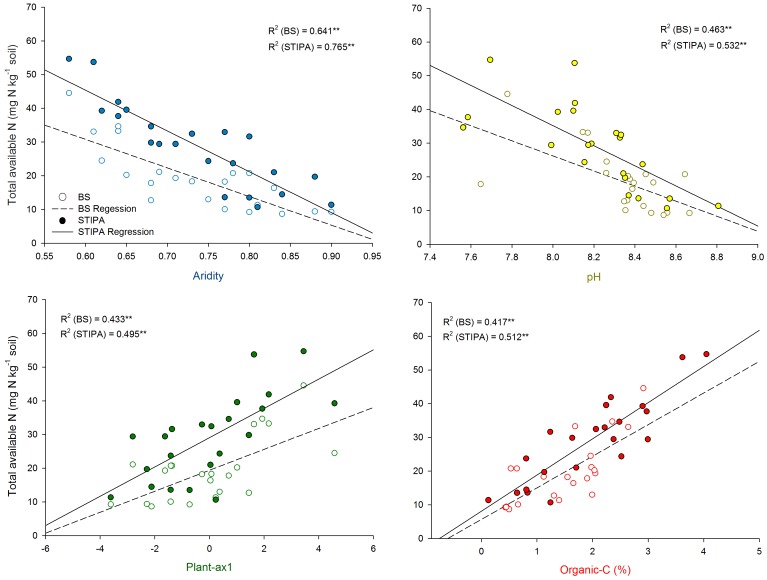
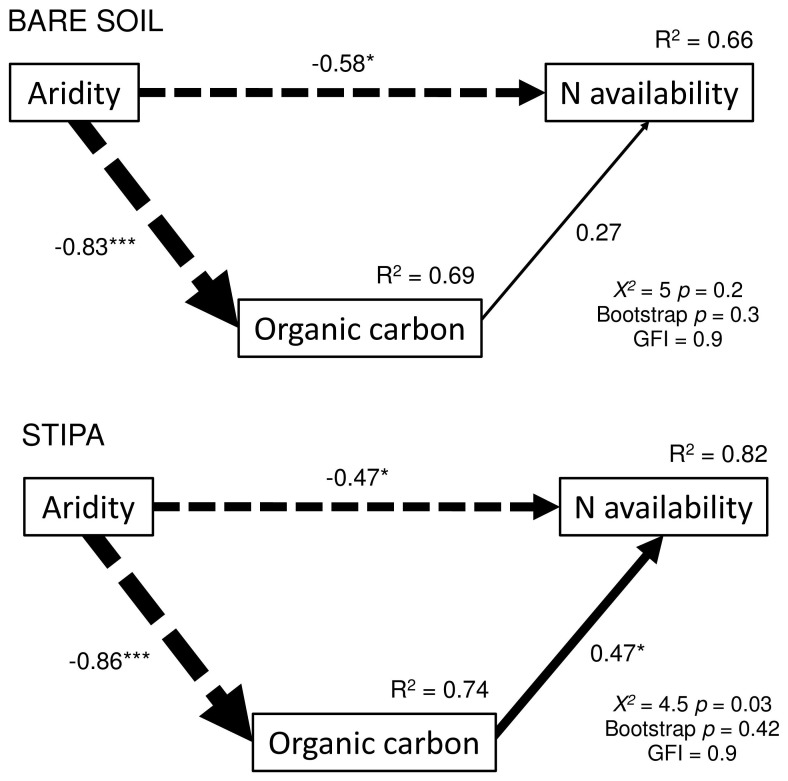
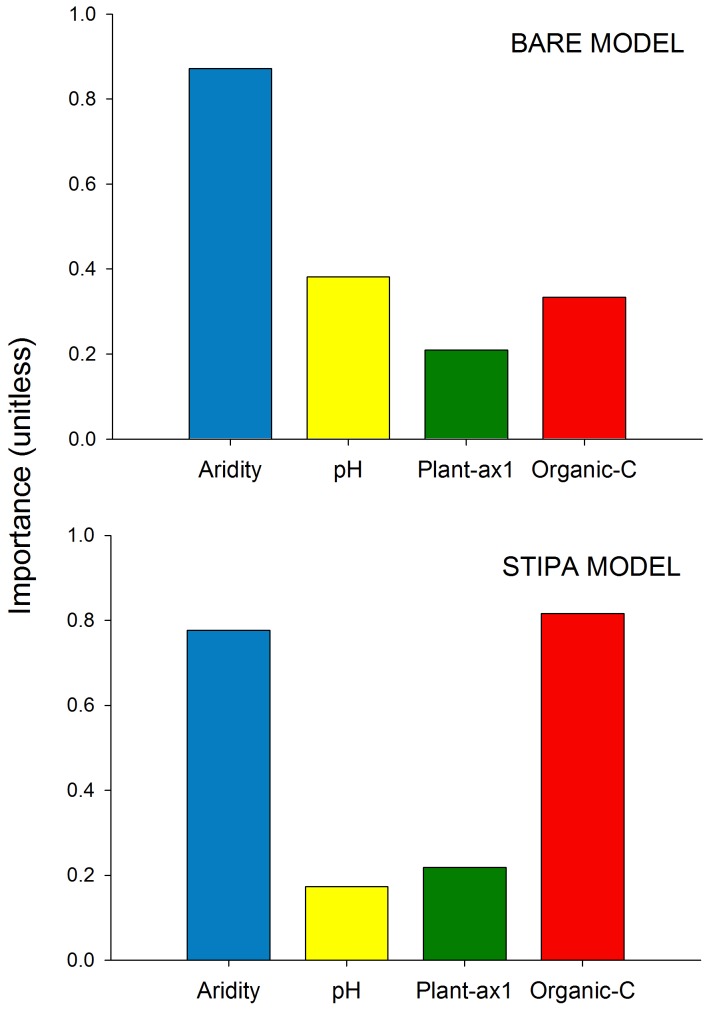
While much is known about the factors that control each component of the terrestrial nitrogen (N) cycle, it is less clear how these factors affect total N availability, the sum of organic and inorganic forms potentially available to microorganisms and plants. This is particularly true for N-poor ecosystems such as drylands, which are highly sensitive to climate change and desertification processes that can lead to the loss of soil nutrients such as N. We evaluated how different climatic, abiotic, plant and nutrient related factors correlate with N availability in semiarid Stipa tenacissima grasslands along a broad aridity gradient from Spain to Tunisia. Aridity had the strongest relationship with N availability, suggesting the importance of abiotic controls on the N cycle in drylands. Aridity appeared to modulate the effects of pH, plant cover and organic C (OC) on N availability. Our results suggest that N transformation rates, which are largely driven by variations in soil moisture, are not the direct drivers of N availability in the studied grasslands. Rather, the strong relationship between aridity and N availability could be driven by indirect effects that operate over long time scales (decades to millennia), including both biotic (e.g. plant cover) and abiotic (e.g. soil OC and pH). If these factors are in fact more important than short-term effects of precipitation on N transformation rates, then we might expect to observe a lagged decrease in N availability in response to increasing aridity. Nevertheless, our results suggest that the increase in aridity predicted with ongoing climate change will reduce N availability in the Mediterranean basin, impacting plant nutrient uptake and net primary production in semiarid grasslands throughout this region.
虽然人们对控制陆地氮(N)循环各个组成部分的因素了解很多,但这些因素如何影响总 N 可利用性(即微生物和植物可利用的有机和无机形式的 N 的总和)还不太清楚。对于氮贫生态系统(如干旱地区)尤其如此,这些生态系统对气候变化和可能导致土壤养分(如 N)丧失的荒漠化过程高度敏感。我们评估了不同的气候、非生物、植物和养分相关因素如何与西班牙到突尼斯广阔干旱梯度上半干旱的硬叶芨芨草草地中的 N 可利用性相关。干旱与 N 可利用性的关系最强,表明非生物控制对干旱地区 N 循环的重要性。干旱似乎调节了 pH 值、植物盖度和有机碳(OC)对 N 可利用性的影响。我们的研究结果表明,氮转化速率主要受土壤水分变化的驱动,而不是研究草地中 N 可利用性的直接驱动因素。相反,干旱与 N 可利用性之间的强关系可能是由长期(数十年到千年)间接作用驱动的,包括生物因素(如植物盖度)和非生物因素(如土壤 OC 和 pH 值)。如果这些因素实际上比降水对氮转化速率的短期影响更为重要,那么我们可能会观察到 N 可利用性随着干旱程度的增加而滞后减少。然而,我们的研究结果表明,与正在进行的气候变化相关的干旱程度增加将减少地中海盆地的 N 可利用性,从而影响整个地区半干旱草地中植物的养分吸收和净初级生产力。