Department of Clinical Sciences, Division of Pathology, Lund University, Skåne University Hospital, Lund 221 85, Sweden.
BMC Urol. 2013 Apr 8;13:17. doi: 10.1186/1471-2490-13-17.
Low nuclear expression of the RNA-binding motif protein 3 (RBM3) has previously been found to be associated with poor prognosis in several cancer forms e.g. breast, ovarian, colorectal, prostate cancer and malignant melanoma. The aim of this study was to examine the prognostic impact of RBM3 expression in urinary bladder cancer.
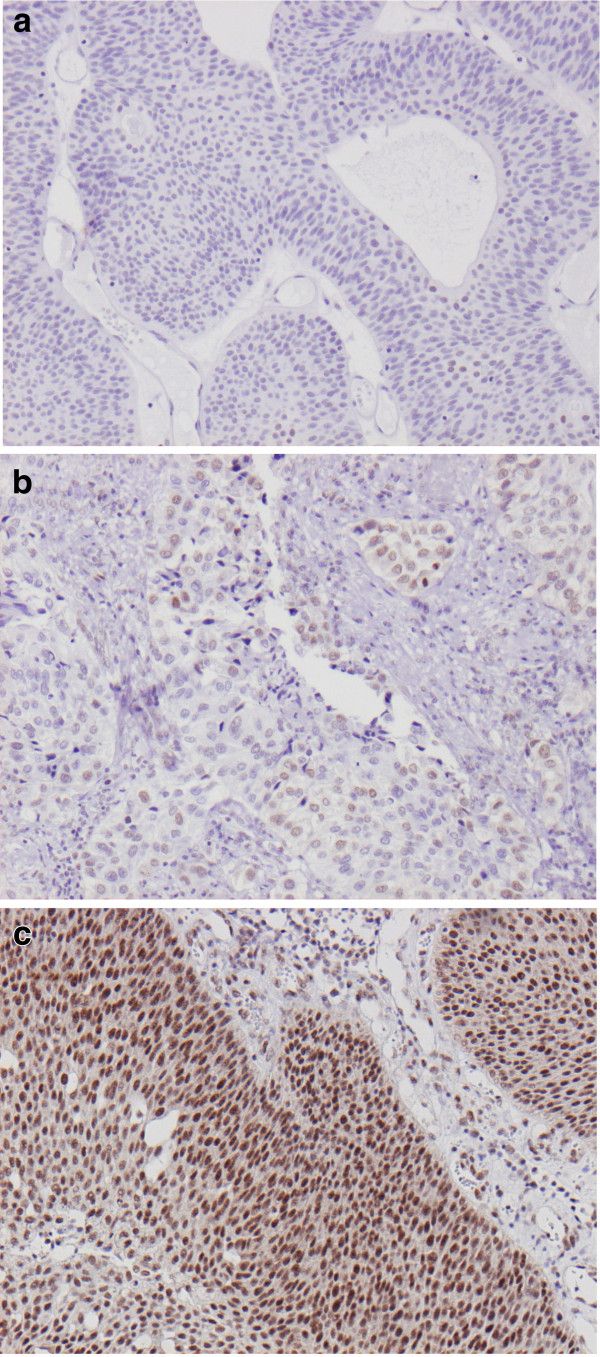
Immunohistochemical RBM3 expression was examined in tumours from 343 patients with urothelial bladder cancer. Chi-square and Spearman's correlation tests were applied to explore associations between RBM3 expression and clinicopathological characteristics. The impact of RBM3 expression on disease-specific survival (DSS), 5-year overall survival (OS) and progression-free survival (PFS) was assessed by Kaplan-Meier analysis and Cox proportional hazards modelling.
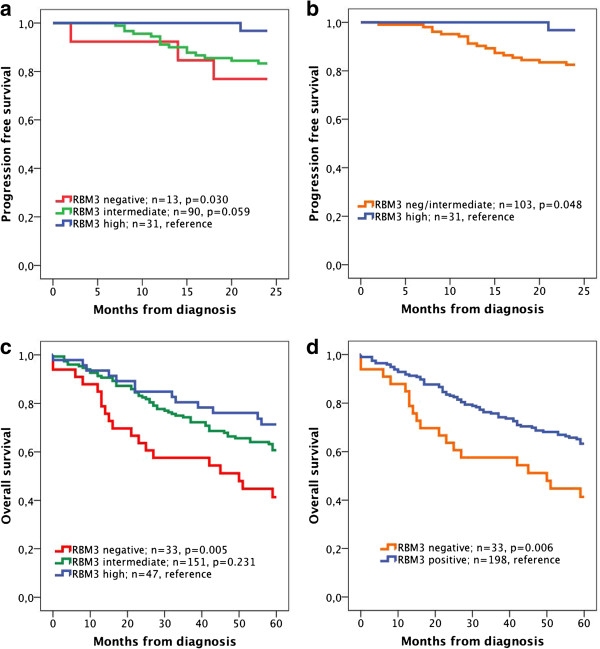
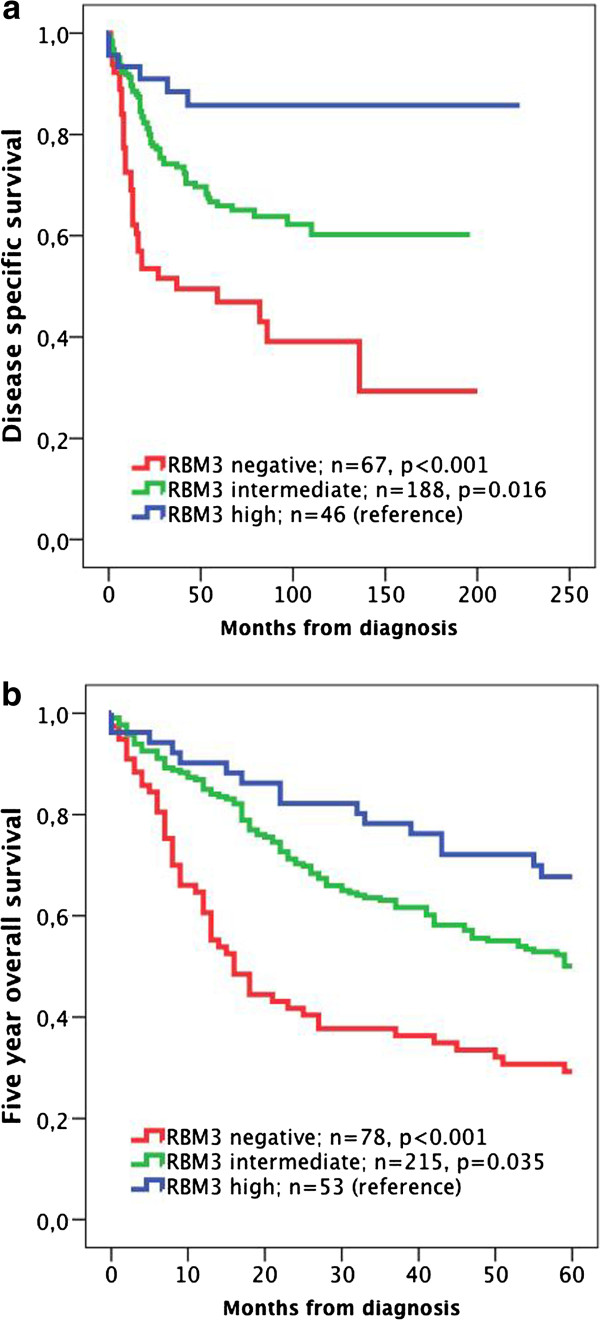
Reduced nuclear RBM3 expression was significantly associated with more advanced tumour (T) stage (p <0.001) and high grade tumours (p=0.004). Negative RBM3 expression was associated with a significantly shorter DSS (HR=2.55; 95% CI 1.68-3.86)) and 5-year OS (HR=2.10; 95% CI 1.56-2.82), also in multivariable analysis (HR=1.65; 95% CI 1.07-2.53 for DSS and HR=1.54; 95% CI 1.13-2.10 for 5-year OS). In patients with Ta and T1 tumours expressing reduced RBM3 levels, Kaplan-Meier analysis revealed a significantly shorter PFS (p=0.048) and 5-year OS (p=0.006).
Loss of RBM3 expression is associated with clinically more aggressive tumours and an independent factor of poor prognosis in patients with urothelial bladder cancer and a potentially useful biomarker for treatment stratification and surveillance of disease progression.
先前的研究发现,RNA 结合基序蛋白 3(RBM3)的核表达水平较低与多种癌症形式(如乳腺癌、卵巢癌、结直肠癌、前列腺癌和恶性黑色素瘤)的预后不良相关。本研究旨在探讨 RBM3 表达在膀胱癌中的预后影响。
对 343 例尿路上皮膀胱癌患者的肿瘤进行免疫组织化学 RBM3 表达检测。应用卡方检验和斯皮尔曼相关性检验来探讨 RBM3 表达与临床病理特征之间的关联。通过 Kaplan-Meier 分析和 Cox 比例风险模型评估 RBM3 表达对疾病特异性生存(DSS)、5 年总生存(OS)和无进展生存(PFS)的影响。
核 RBM3 表达降低与更晚期的肿瘤(T)分期(p<0.001)和高级别肿瘤(p=0.004)显著相关。RBM3 表达阴性与 DSS(HR=2.55;95%CI 1.68-3.86)和 5 年 OS(HR=2.10;95%CI 1.56-2.82)显著缩短相关,在多变量分析中也是如此(DSS 的 HR=1.65;95%CI 1.07-2.53,5 年 OS 的 HR=1.54;95%CI 1.13-2.10)。在表达降低的 RBM3 水平的 Ta 和 T1 肿瘤患者中,Kaplan-Meier 分析显示 PFS(p=0.048)和 5 年 OS(p=0.006)显著缩短。
RBM3 表达缺失与临床上侵袭性更强的肿瘤相关,是尿路上皮膀胱癌患者预后不良的独立因素,可能是治疗分层和疾病进展监测的有用生物标志物。