1. Division of Medical Oncology, British Columbia Cancer Agency, Vernon, BC, Canada;
J Cancer. 2013;4(4):304-14. doi: 10.7150/jca.4192. Epub 2013 Mar 21.
The association between age and outcomes in men with castrate resistant prostate cancer (CRPC) is not well understood.
We aimed to evaluate CRPC patients to determine if their age at initial diagnosis impacted their cancer specific outcomes.
DESIGN, SETTING, AND PARTICIPANTS: A retrospective chart review was conducted on 333 consecutive CRPC patients treated at the Princess Margaret Hospital (PMH) between 1995 and 2005. Patients were divided into 4 age categories, (A) <55, (B) 55-64, (C) 65-74 (reference), and (D) ≥ 75 years (yrs).
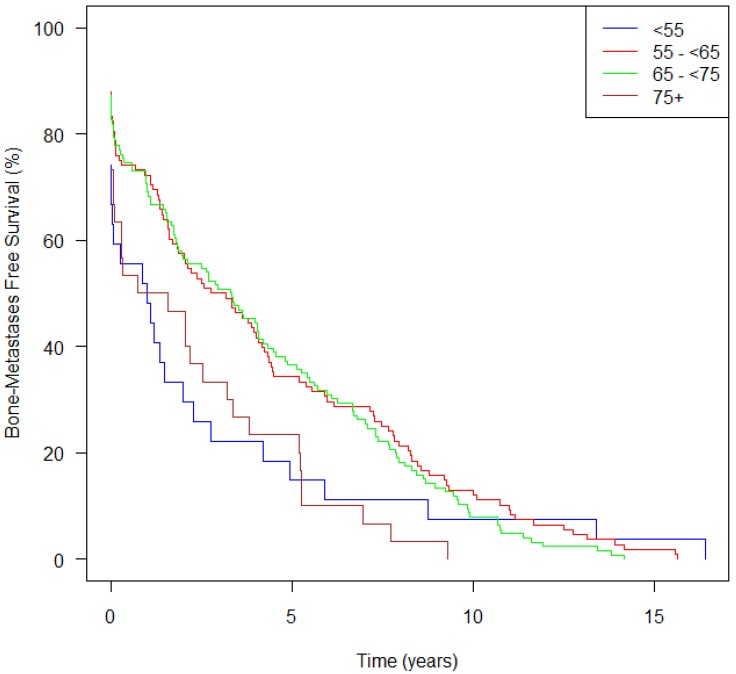
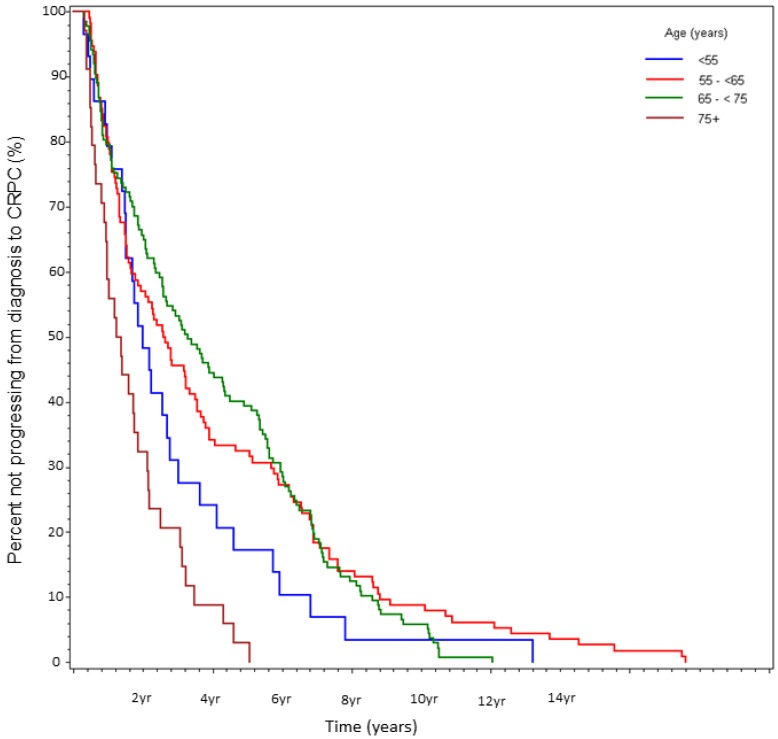
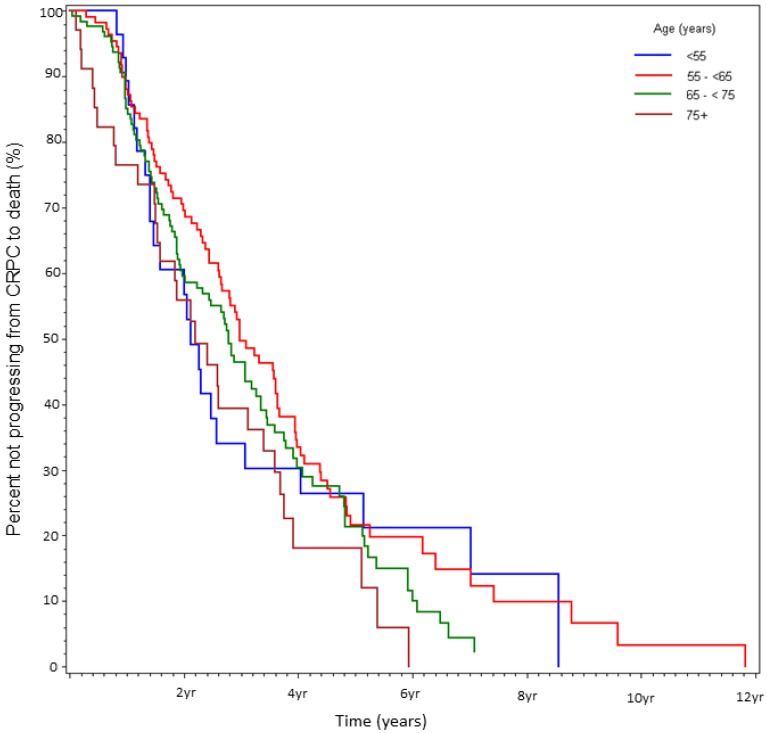
Primary endpoints included impact of age at diagnosis on overall survival (OS) and on prostate cancer specific survival. Secondary endpoints were time from diagnosis to development of CRPC, time from CRPC to death, and time from diagnosis to bone metastases.
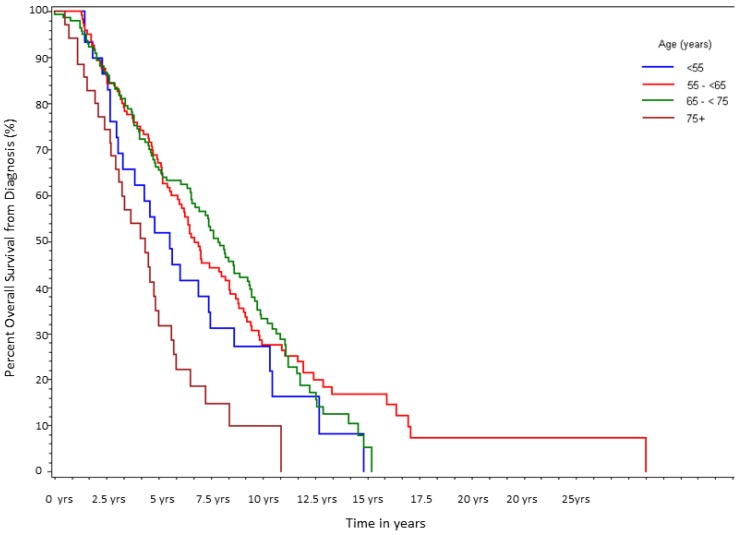
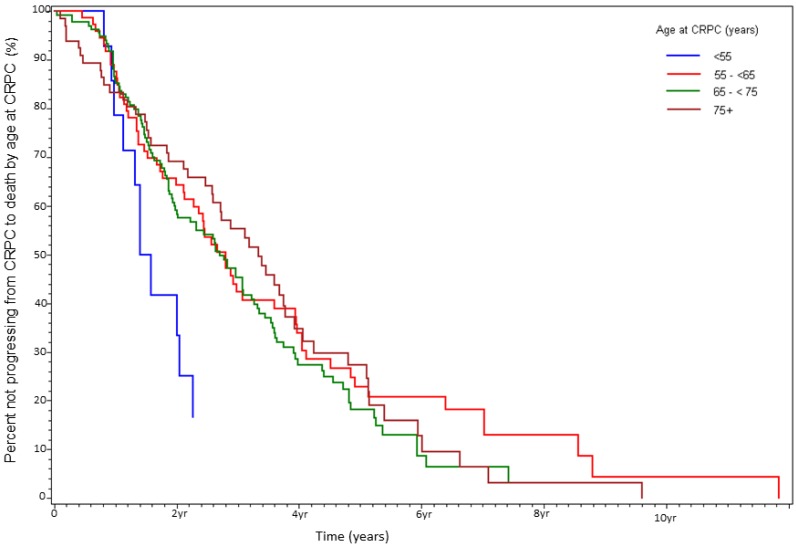
The median OS from diagnosis to death was: Group A 5.5 yrs (95% CI 3.0-7.5); Group B 6.7 yrs (95% CI 5.9-8.4); Group C 7.8 yrs (95% CI 6.6-9.3); and Group D 4.3 years (95% CI 2.9-5.0). The hazard ratio (HR) for death in Group D was 2.58 (95% CI 1.58-4.21, p=0.0002); and in Group A was 1.49 (95% CI 0.90-2.46, p=0.13). The duration of hormone sensitivity in Group D was less and predictive of OS, as was Gleason Score ≥8 and Stage 4 disease at diagnosis.
Age at initial diagnosis appears to impact on outcome of patients who subsequently develop CRPC with a bimodal distribution of risk, with the shortest survivals in the ≥75 and <55 groups.
年龄与去势抵抗性前列腺癌(CRPC)患者的结局之间的关系尚不清楚。
我们旨在评估 CRPC 患者,以确定他们在初始诊断时的年龄是否影响其癌症特异性结局。
设计、设置和参与者:对 1995 年至 2005 年期间在玛格丽特公主医院(PMH)接受治疗的 333 例连续 CRPC 患者进行了回顾性图表审查。患者被分为 4 个年龄组,(A)<55 岁,(B)55-64 岁,(C)65-74 岁(参考),和(D)≥75 岁。
主要终点是诊断时年龄对总生存(OS)和前列腺癌特异性生存的影响。次要终点是从诊断到发展为 CRPC 的时间、从 CRPC 到死亡的时间以及从诊断到骨转移的时间。
从诊断到死亡的中位 OS 为:A 组 5.5 年(95%CI 3.0-7.5);B 组 6.7 年(95%CI 5.9-8.4);C 组 7.8 年(95%CI 6.6-9.3);D 组 4.3 年(95%CI 2.9-5.0)。D 组死亡的风险比(HR)为 2.58(95%CI 1.58-4.21,p=0.0002);A 组为 1.49(95%CI 0.90-2.46,p=0.13)。D 组的激素敏感性持续时间较短,与 OS 相关,Gleason 评分≥8 和诊断时的 4 期疾病也是如此。
初始诊断时的年龄似乎会影响随后发生 CRPC 的患者的结局,风险呈双峰分布,年龄≥75 岁和<55 岁的患者生存时间最短。