Lovinger David M
Laboratory for Integrative Neuroscience at the National Institute on Alcohol Abuse and Alcoholism, Bethesda, Maryland.
Alcohol Res Health. 2008;31(3):196-214.
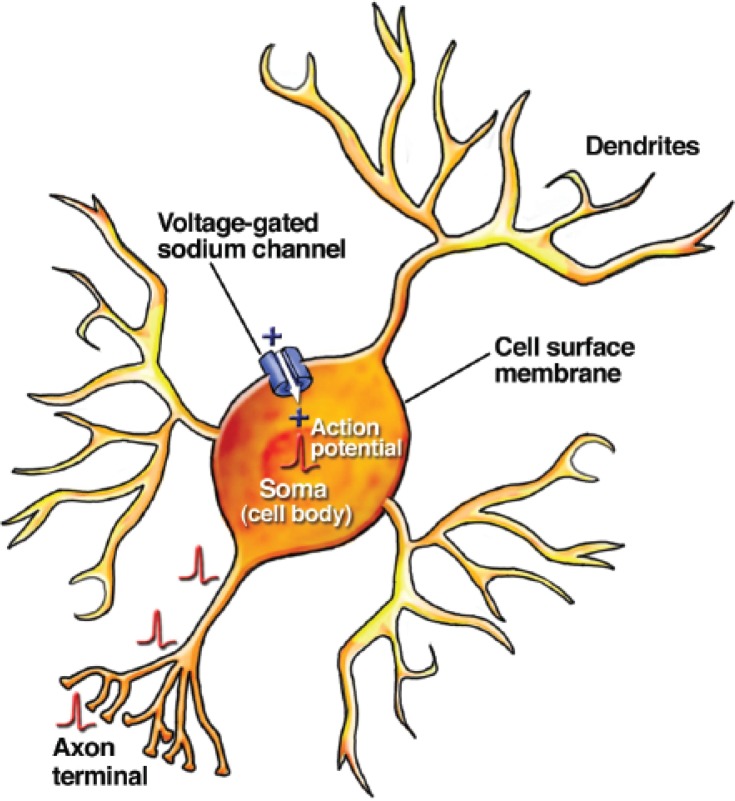
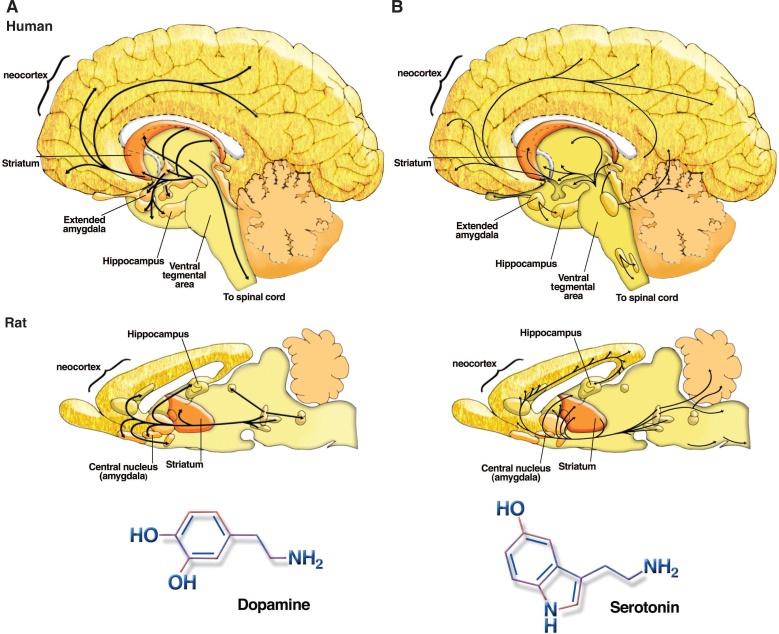
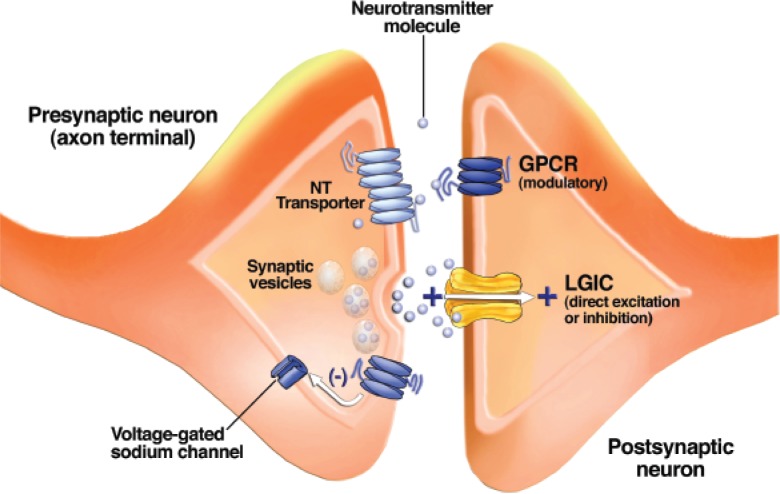
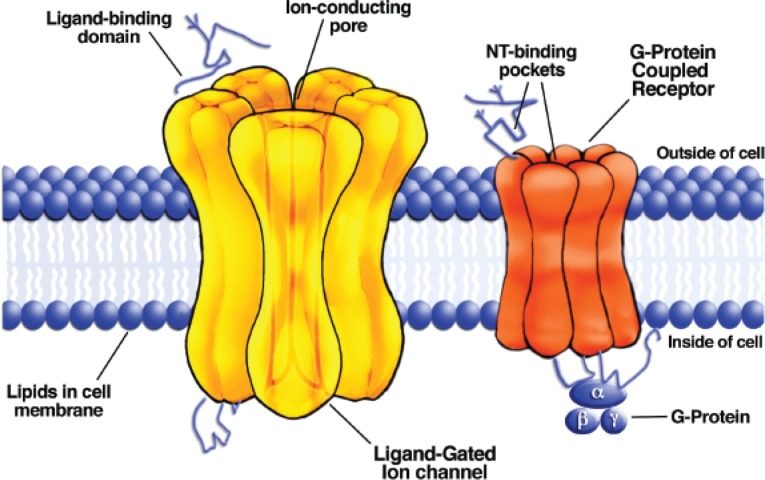
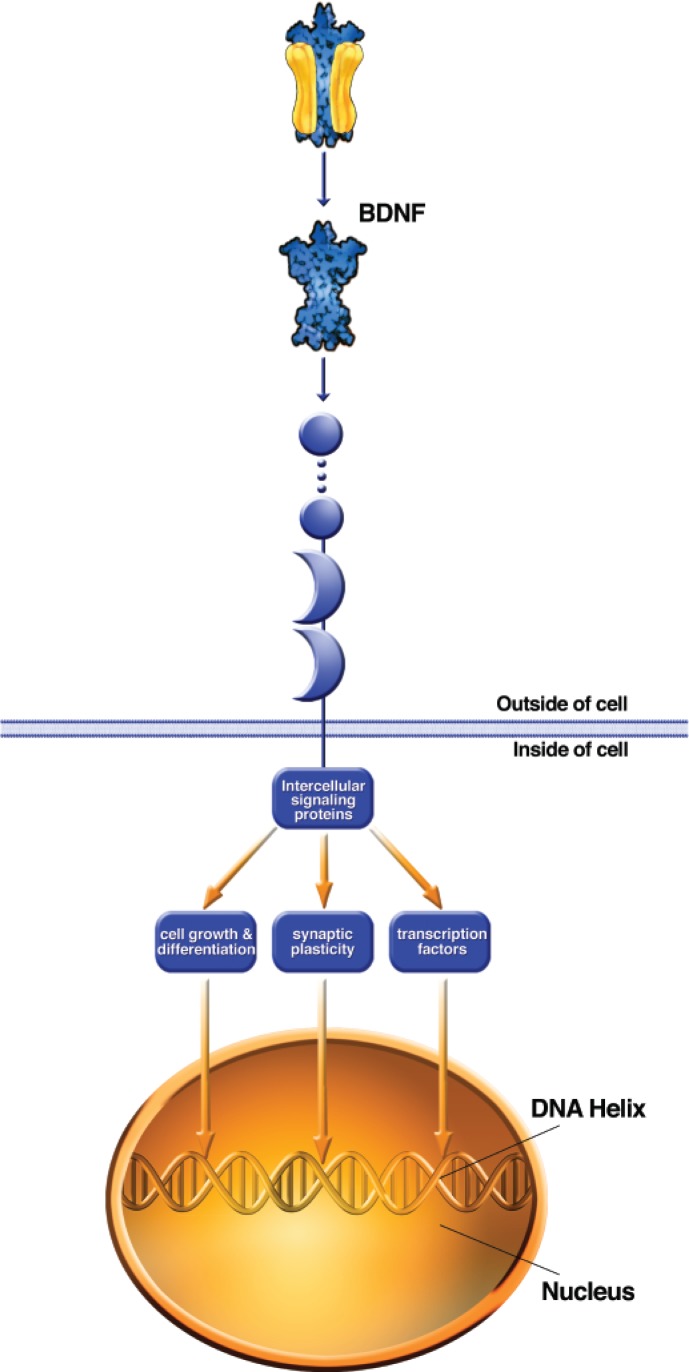
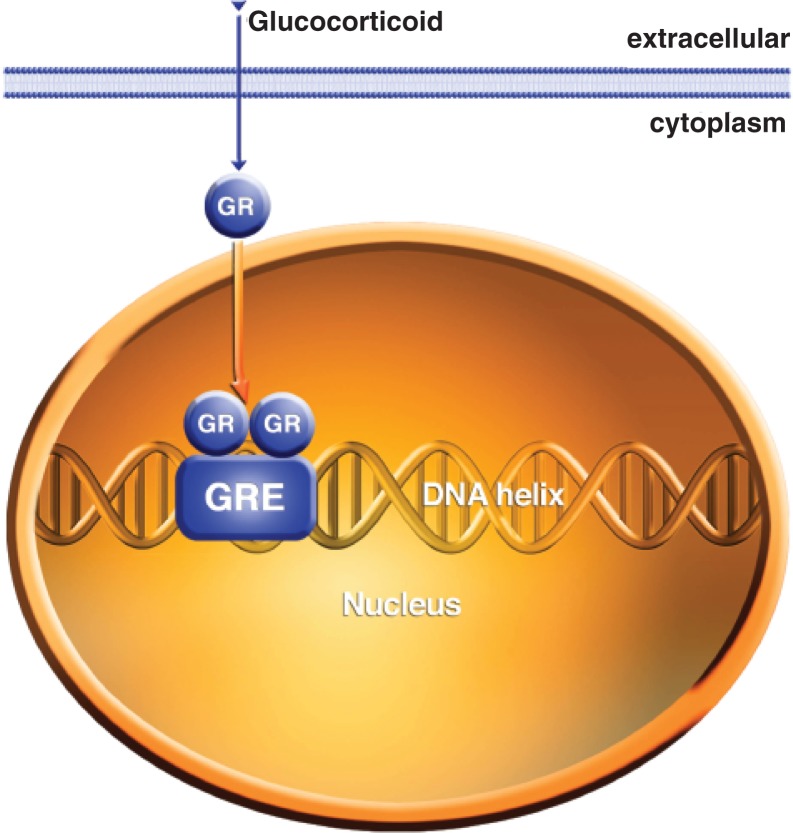
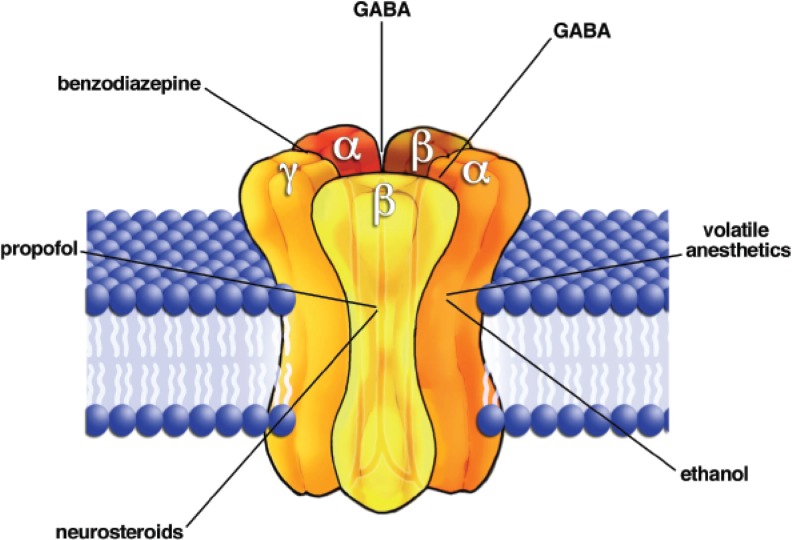
Nerve cells (i.e., neurons) communicate via a combination of electrical and chemical signals. Within the neuron, electrical signals driven by charged particles allow rapid conduction from one end of the cell to the other. Communication between neurons occurs at tiny gaps called synapses, where specialized parts of the two cells (i.e., the presynaptic and postsynaptic neurons) come within nanometers of one another to allow for chemical transmission. The presynaptic neuron releases a chemical (i.e., a neurotransmitter) that is received by the postsynaptic neuron's specialized proteins called neurotransmitter receptors. The neurotransmitter molecules bind to the receptor proteins and alter postsynaptic neuronal function. Two types of neurotransmitter receptors exist-ligand-gated ion channels, which permit rapid ion flow directly across the outer cell membrane, and G-protein-coupled receptors, which set into motion chemical signaling events within the cell. Hundreds of molecules are known to act as neurotransmitters in the brain. Neuronal development and function also are affected by peptides known as neurotrophins and by steroid hormones. This article reviews the chemical nature, neuronal actions, receptor subtypes, and therapeutic roles of several transmitters, neurotrophins, and hormones. It focuses on neurotransmitters with important roles in acute and chronic alcohol effects on the brain, such as those that contribute to intoxication, tolerance, dependence, and neurotoxicity, as well as maintained alcohol drinking and addiction.
神经细胞(即神经元)通过电信号和化学信号的组合进行通信。在神经元内部,由带电粒子驱动的电信号允许从细胞的一端快速传导到另一端。神经元之间的通信发生在称为突触的微小间隙处,两个细胞的特殊部分(即突触前神经元和突触后神经元)彼此相距仅几纳米,以实现化学传递。突触前神经元释放一种化学物质(即神经递质),该化学物质被突触后神经元的称为神经递质受体的特殊蛋白质所接收。神经递质分子与受体蛋白结合并改变突触后神经元的功能。存在两种类型的神经递质受体——配体门控离子通道,它允许离子直接快速穿过细胞膜外层;以及G蛋白偶联受体,它引发细胞内的化学信号事件。已知有数百种分子在大脑中充当神经递质。神经元的发育和功能也受到称为神经营养因子的肽和类固醇激素的影响。本文综述了几种神经递质、神经营养因子和激素的化学性质、神经元作用、受体亚型和治疗作用。它重点关注在急性和慢性酒精对大脑的影响中起重要作用的神经递质,例如那些导致中毒、耐受性、依赖性和神经毒性的神经递质,以及维持饮酒和成瘾的神经递质。