Department of Gastroenterology, Graduate School of Medicine, Kanazawa University, 13-1Takara-machi, Kanazawa 920-0934, Japan.
BMC Cancer. 2013 Apr 15;13:191. doi: 10.1186/1471-2407-13-191.
The acyclic retinoid, peretinoin, has been shown to be effective for suppressing hepatocellular carcinoma (HCC) recurrence after definitive treatment in a small-scale randomized clinical trial. However, little has been documented about the mechanism by which peretinoin exerts its inhibitory effects against recurrent HCC in humans in vivo.
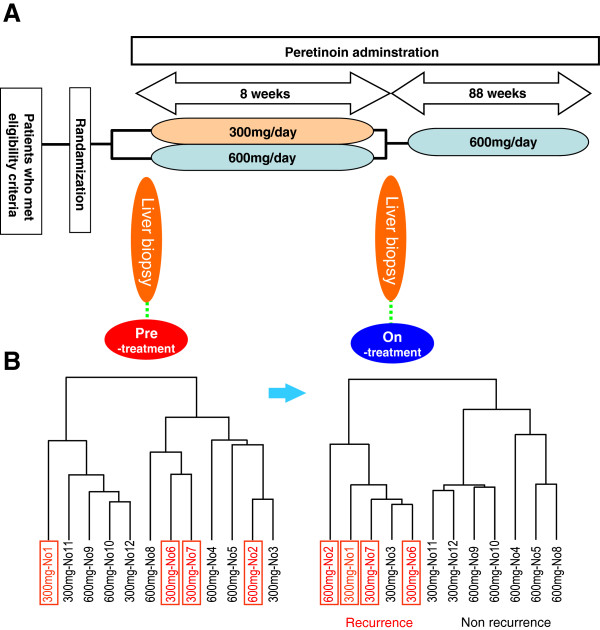
Twelve hepatitis C virus-positive patients whose HCC had been eradicated through curative resection or ablation underwent liver biopsy at baseline and week 8 of treatment with either a daily dose of 300 or 600 mg peretinoin. RNA isolated from biopsy samples was subjected to gene expression profile analysis.
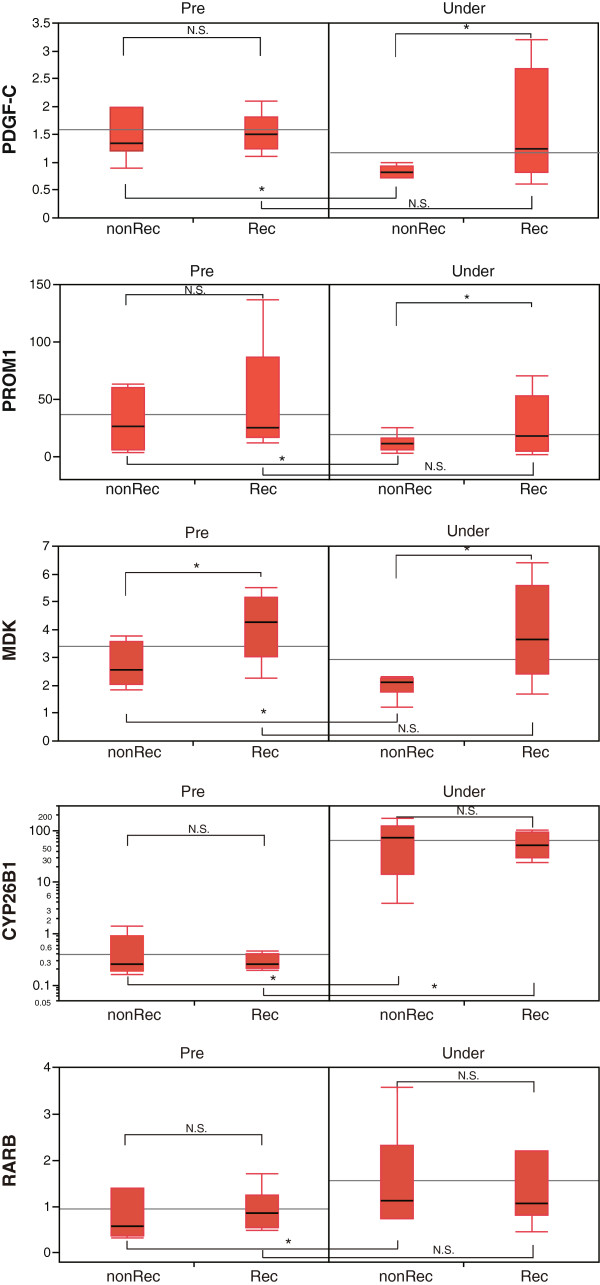
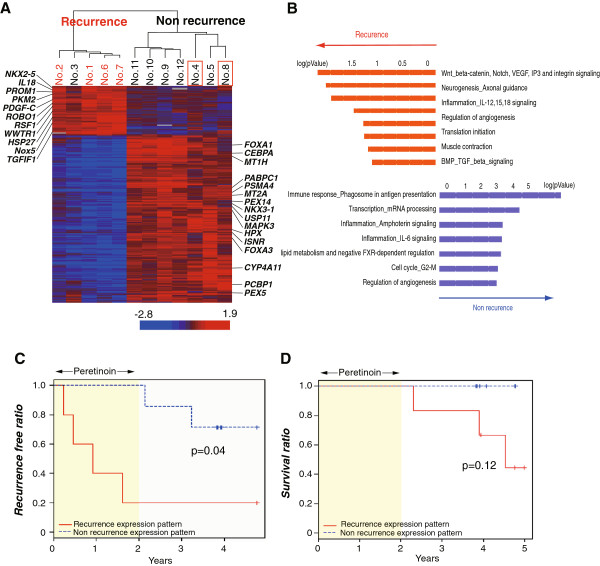
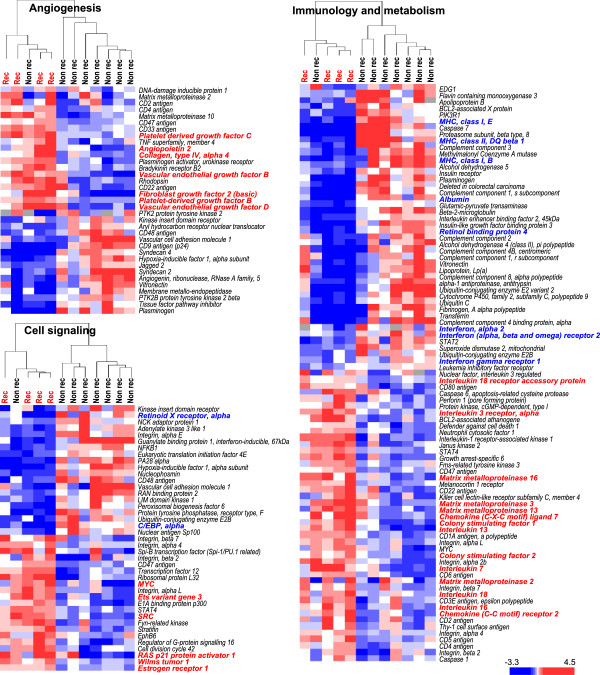
Peretinoin treatment elevated the expression levels of IGFBP6, RBP1, PRB4, CEBPA, G0S2, TGM2, GPRC5A, CYP26B1, and many other retinoid target genes. Elevated expression was also observed for interferon-, Wnt-, and tumor suppressor-related genes. By contrast, decreased expression levels were found for mTOR- and tumor progression-related genes. Interestingly, gene expression profiles for week 8 of peretinoin treatment could be classified into two groups of recurrence and non-recurrence with a prediction accuracy rate of 79.6% (P<0.05). In the liver of patients with non-recurrence, expression of PDGFC and other angiogenesis genes, cancer stem cell marker genes, and genes related to tumor progression was down-regulated, while expression of genes related to hepatocyte differentiation, tumor suppression genes, and other genes related to apoptosis induction was up-regulated.
Gene expression profiling at week 8 of peretinoin treatment could successfully predict HCC recurrence within 2 years. This study is the first to show the effect of peretinoin in suppressing HCC recurrence in vivo based on gene expression profiles and provides a molecular basis for understanding the efficacy of peretinoin.
无环维甲酸类药物丙戊酸已被证明在小范围随机临床试验中对抑制根治性治疗后的肝细胞癌(HCC)复发有效。然而,关于丙戊酸在体内抑制复发性 HCC 的机制,相关记录甚少。
12 例丙型肝炎病毒阳性患者的 HCC 通过根治性切除或消融术得以清除,这些患者在基线时和治疗 8 周时分别接受了每日 300 或 600 mg 丙戊酸治疗,之后对肝活检样本中的 RNA 进行基因表达谱分析。
丙戊酸治疗可提高 IGFBP6、RBP1、PRB4、CEBPA、G0S2、TGM2、GPRC5A、CYP26B1 等许多其他维甲酸靶基因的表达水平,也观察到干扰素、Wnt 和肿瘤抑制相关基因的表达升高。相反,mTOR 和肿瘤进展相关基因的表达水平降低。有趣的是,丙戊酸治疗 8 周后的基因表达谱可以分为复发和非复发两组,预测准确率为 79.6%(P<0.05)。在非复发患者的肝脏中,PDGFC 和其他血管生成基因、癌症干细胞标志物基因以及与肿瘤进展相关的基因表达下调,而与肝细胞分化、肿瘤抑制基因和其他诱导细胞凋亡相关的基因表达上调。
丙戊酸治疗 8 周时的基因表达谱可以成功预测 2 年内 HCC 的复发。本研究首次基于基因表达谱显示了丙戊酸在体内抑制 HCC 复发的效果,并为了解丙戊酸的疗效提供了分子基础。