Department of Disease Control, Hokkaido University, Sapporo, Japan.
Virol J. 2013 Apr 16;10:118. doi: 10.1186/1743-422X-10-118.
The hemagglutinin (HA) of influenza viruses is a possible target for antiviral drugs because of its key roles in the initiation of infection. Although it was found that a natural compound, Stachyflin, inhibited the growth of H1 and H2 but not H3 influenza viruses in MDCK cells, inhibitory activity of the compound has not been assessed against H4-H16 influenza viruses and the precise mechanism of inhibition has not been clarified.
Inhibitory activity of Stachyflin against H4-H16 influenza viruses, as well as H1-H3 viruses was examined in MDCK cells. To identify factors responsible for the susceptibility of the viruses to this compound, Stachyflin-resistant viruses were selected in MDCK cells and used for computer docking simulation.
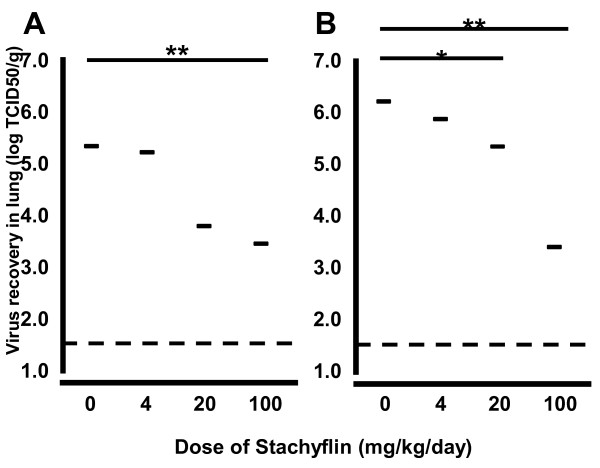
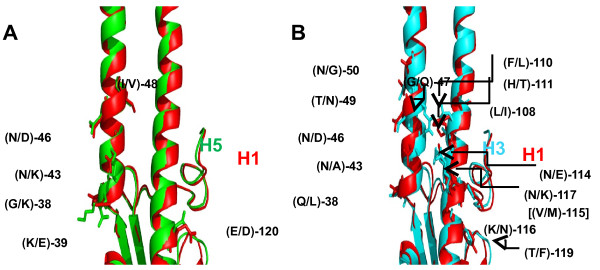
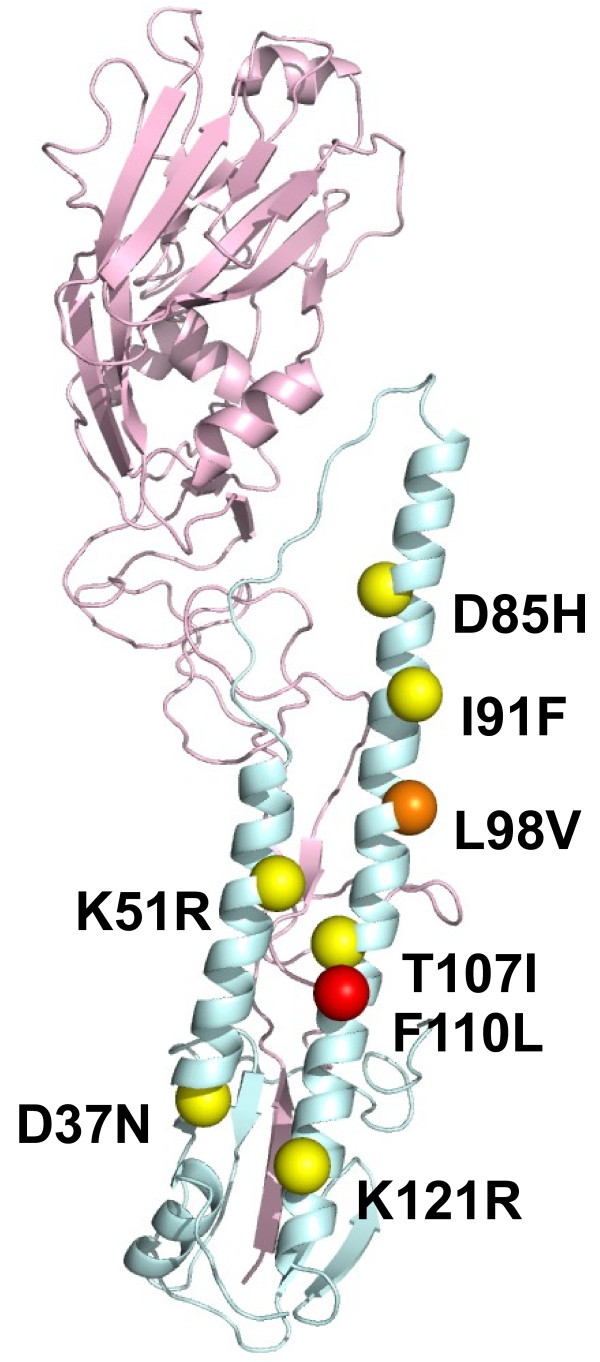
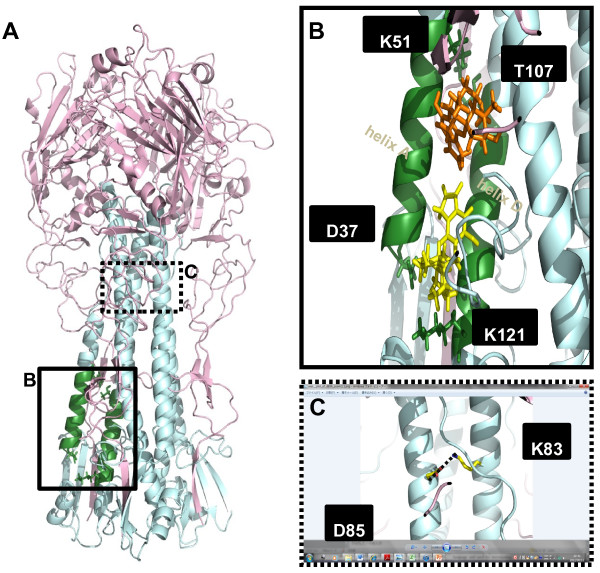
It was found that in addition to antiviral activity of Stachyflin against influenza viruses of H1 and H2 subtypes, it inhibited replication of viruses of H5 and H6 subtypes, as well as A(H1N1)pdm09 virus in MDCK cells. Stachyflin also inhibited the virus growth in the lungs of mice infected with A/WSN/1933 (H1N1) and A/chicken/Ibaraki/1/2005 (H5N2). Substitution of amino acid residues was found on the HA2 subunit of Stachyflin-resistant viruses. Docking simulation indicated that D37, K51, T107, and K121 are responsible for construction of the cavity for the binding of the compound. In addition, 3-dimensional structure of the cavity of the HA of Stachyflin-susceptible virus strains was different from that of insusceptible virus strains.
Antiviral activity of Stachyflin was found against A(H1N1)pdm09, H5, and H6 viruses, and identified a potential binding pocket for Stachyflin on the HA. The present results should provide us with useful information for the development of HA inhibitors with more effective and broader spectrum.
流感病毒的血凝素(HA)是抗病毒药物的一个可能靶点,因为它在感染的启动中起着关键作用。虽然已经发现一种天然化合物——Stachyflin 能够抑制 MDCK 细胞中 H1 和 H2 但不能抑制 H3 流感病毒的生长,但该化合物对 H4-H16 流感病毒的抑制活性尚未得到评估,其确切的抑制机制也尚未阐明。
在 MDCK 细胞中检测 Stachyflin 对 H4-H16 流感病毒以及 H1-H3 病毒的抑制活性。为了鉴定导致病毒对该化合物易感性的因素,在 MDCK 细胞中选择 Stachyflin 抗性病毒,并用于计算机对接模拟。
除了对 H1 和 H2 亚型流感病毒的抗病毒活性外,Stachyflin 还抑制了 MDCK 细胞中 H5 和 H6 亚型以及 A(H1N1)pdm09 病毒的复制。Stachyflin 还抑制了感染 A/WSN/1933(H1N1)和 A/chicken/Ibaraki/1/2005(H5N2)的小鼠肺部的病毒生长。在 Stachyflin 抗性病毒中发现 HA2 亚基上的氨基酸残基取代。对接模拟表明,D37、K51、T107 和 K121 负责构建化合物结合的腔。此外,Stachyflin 敏感病毒株的 HA 腔的三维结构与不敏感病毒株的结构不同。
发现 Stachyflin 对 A(H1N1)pdm09、H5 和 H6 病毒具有抗病毒活性,并鉴定出 HA 上 Stachyflin 的潜在结合口袋。本研究结果为开发更有效、更广谱的 HA 抑制剂提供了有用的信息。