State Key Laboratory of Vegetation and Environmental Change, Institute of Botany, The Chinese Academy of Sciences, Beijing, PR China.
PLoS One. 2013 Apr 8;8(4):e58952. doi: 10.1371/journal.pone.0058952. Print 2013.
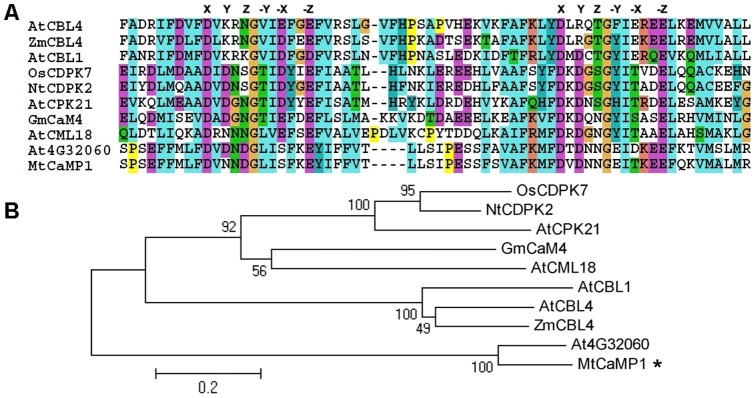
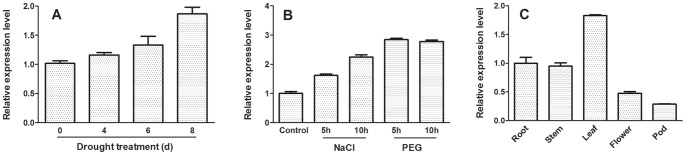
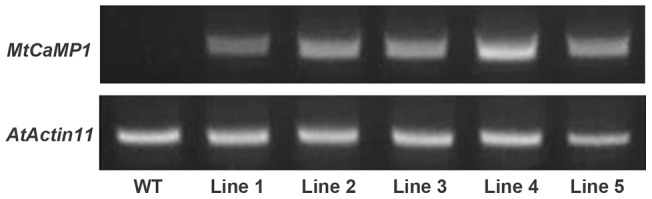
Calcium-binding proteins that contain EF-hand motifs have been reported to play important roles in transduction of signals associated with biotic and abiotic stresses. To functionally characterize genes of EF-hand family in response to abiotic stress, an MtCaMP1 gene belonging to EF-hand family from legume model plant Medicago truncatula was isolated and its function in response to drought and salt stress was investigated by expressing MtCaMP1 in Arabidopsis.
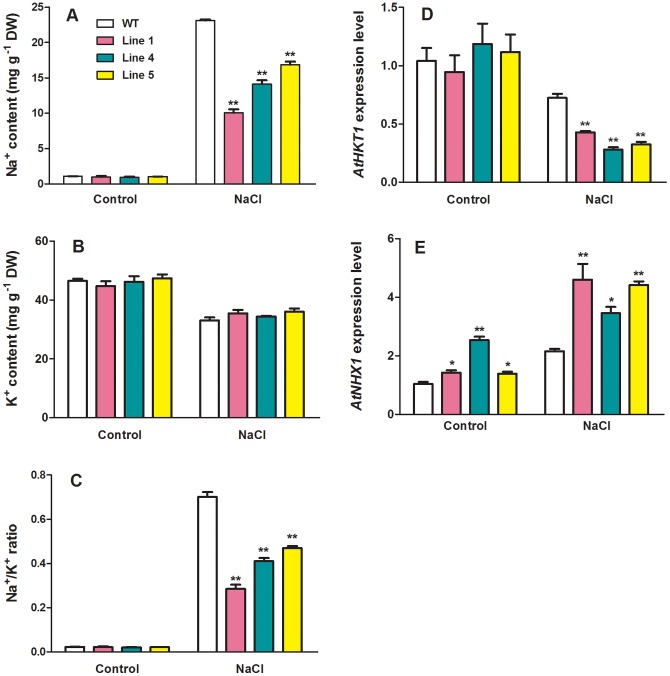
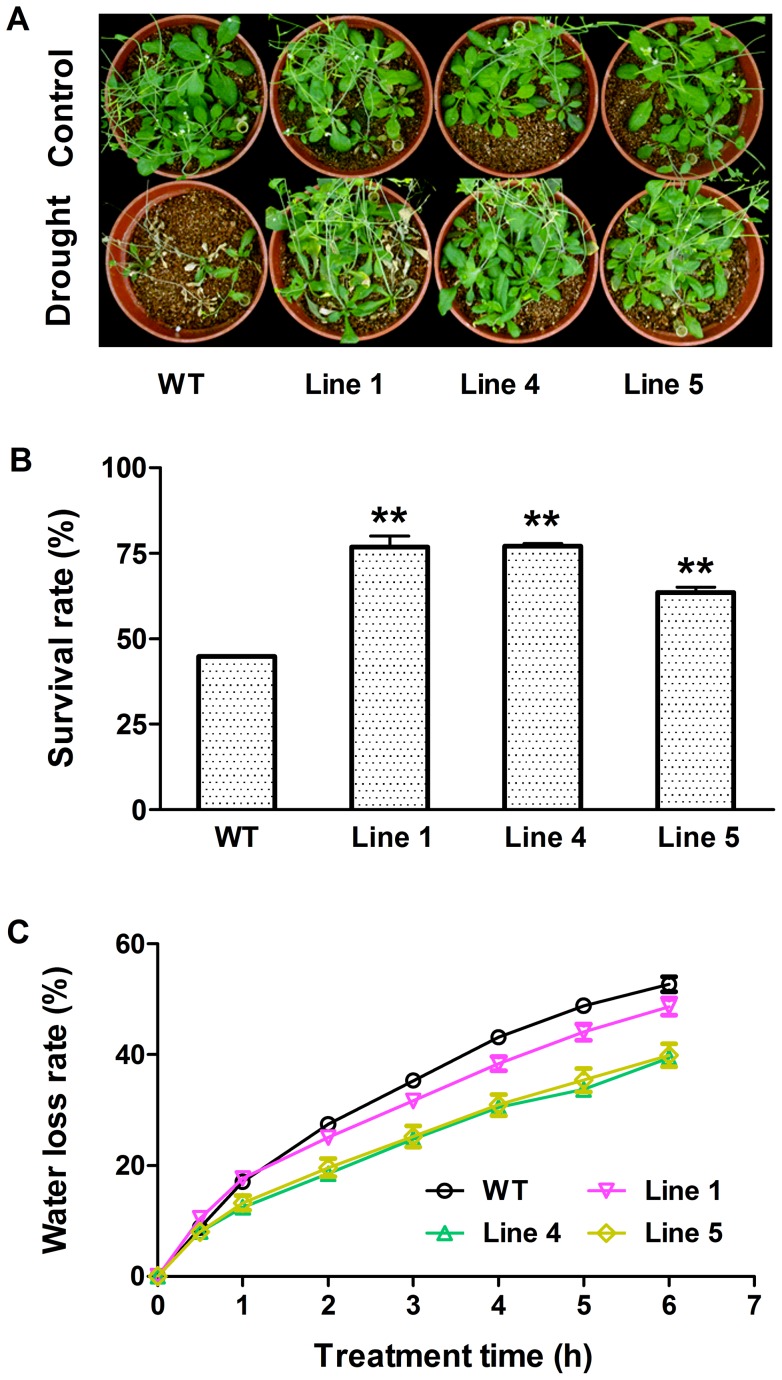
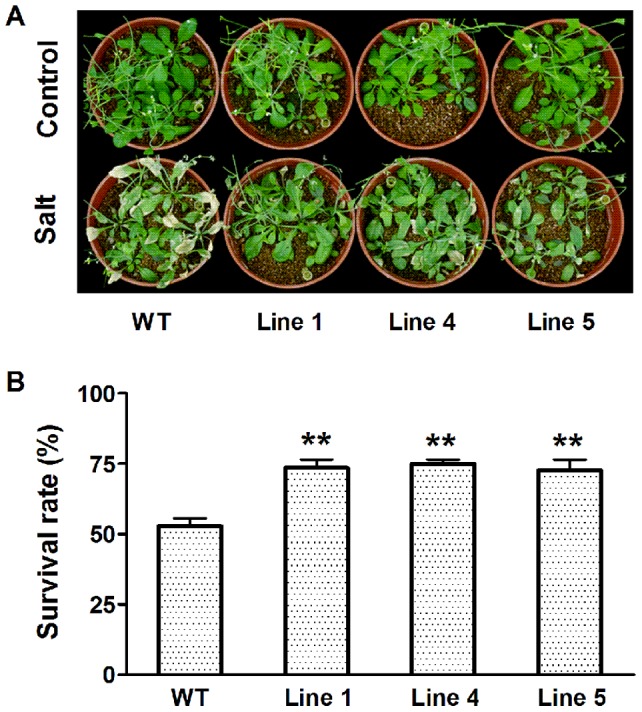
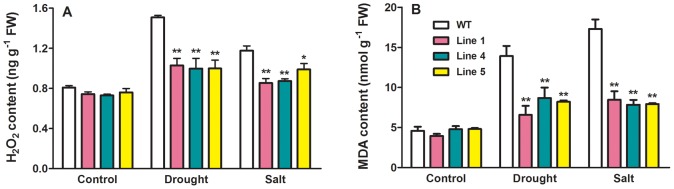
METHODOLOGY/PRINCIPAL FINDINGS: Transgenic Arabidopsis seedlings expressing MtCaMP1 exhibited higher survival rate than wild-type seedlings under drought and salt stress, suggesting that expression of MtCaMP1 confers tolerance of Arabidopsis to drought and salt stress. The transgenic plants accumulated greater amounts of Pro due to up-regulation of P5CS1 and down-regulation of ProDH than wild-type plants under drought stress. There was a less accumulation of Na(+) in the transgenic plants than in WT plants due to reduced up-regulation of AtHKT1 and enhanced regulation of AtNHX1 in the transgenic plants compared to WT plants under salt stress. There was a reduced accumulation of H2O2 and malondialdehyde in the transgenic plants than in WT plants under both drought and salt stress.
CONCLUSIONS/SIGNIFICANCE: The expression of MtCaMP1 in Arabidopsis enhanced tolerance of the transgenic plants to drought and salt stress by effective osmo-regulation due to greater accumulation of Pro and by minimizing toxic Na(+) accumulation, respectively. The enhanced accumulation of Pro and reduced accumulation of Na(+) under drought and salt stress would protect plants from water default and Na(+) toxicity, and alleviate the associated oxidative stress. These findings demonstrate that MtCaMP1 encodes a stress-responsive EF-hand protein that plays a regulatory role in response of plants to drought and salt stress.
含有 EF 手模体的钙结合蛋白已被报道在生物和非生物胁迫相关信号转导中发挥重要作用。为了从功能上鉴定 EF 手家族基因对非生物胁迫的响应,我们从豆科模式植物蒺藜苜蓿中分离到一个属于 EF 手家族的 MtCaMP1 基因,并通过在拟南芥中表达 MtCaMP1 来研究其对干旱和盐胁迫的响应。
方法/主要发现:表达 MtCaMP1 的转基因拟南芥幼苗在干旱和盐胁迫下的存活率高于野生型幼苗,表明 MtCaMP1 的表达赋予了拟南芥对干旱和盐胁迫的耐受性。在干旱胁迫下,由于 P5CS1 的上调和 ProDH 的下调,转基因植物积累了更多的脯氨酸。与野生型相比,在盐胁迫下,AtHKT1 的下调和 AtNHX1 的上调导致转基因植物中 Na+的积累减少。与野生型相比,在干旱和盐胁迫下,转基因植物中 H2O2 和丙二醛的积累减少。
结论/意义:MtCaMP1 在拟南芥中的表达通过有效调节脯氨酸的积累增强了转基因植物对干旱和盐胁迫的耐受性,同时通过减少 Na+的积累减轻了毒性。在干旱和盐胁迫下,脯氨酸的积累增加和 Na+的积累减少可以保护植物免受水分亏缺和 Na+毒性的影响,并减轻相关的氧化应激。这些发现表明 MtCaMP1 编码一种应激响应的 EF 手蛋白,在植物对干旱和盐胁迫的响应中发挥调节作用。