Centro Nacional Patagónico-Consejo Nacional de Investigaciones Científicas y Técnicas, Puerto Madryn, Chubut, Argentina.
PLoS One. 2013 Apr 4;8(4):e61072. doi: 10.1371/journal.pone.0061072. Print 2013.
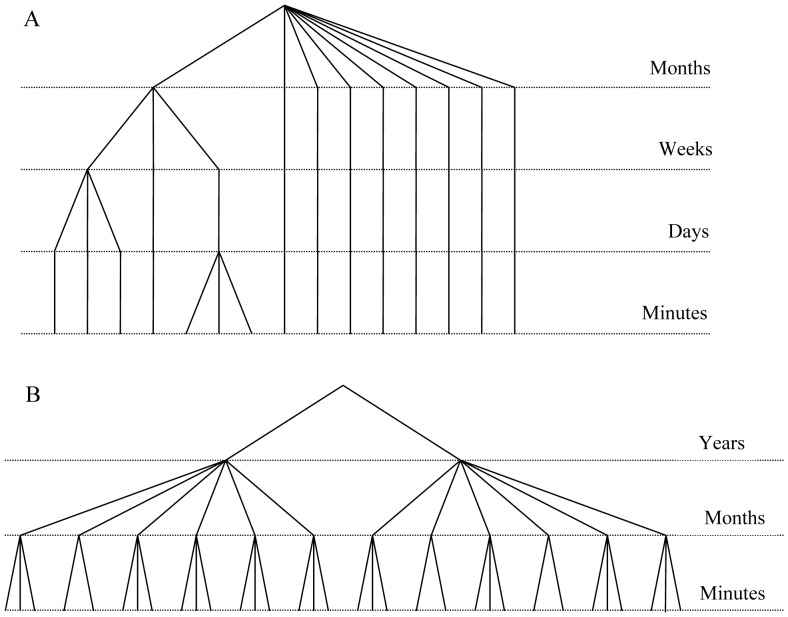
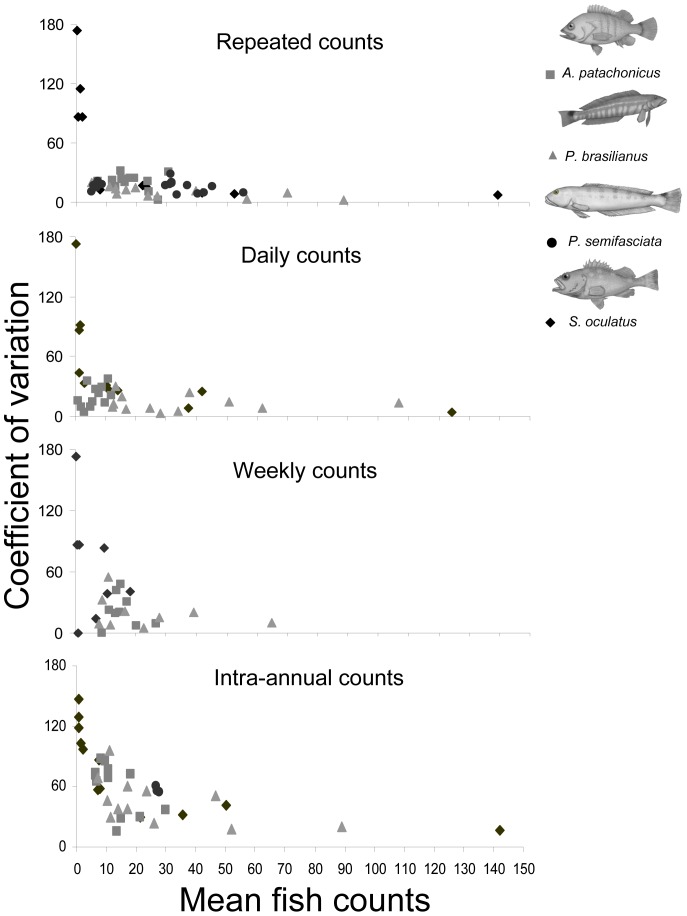
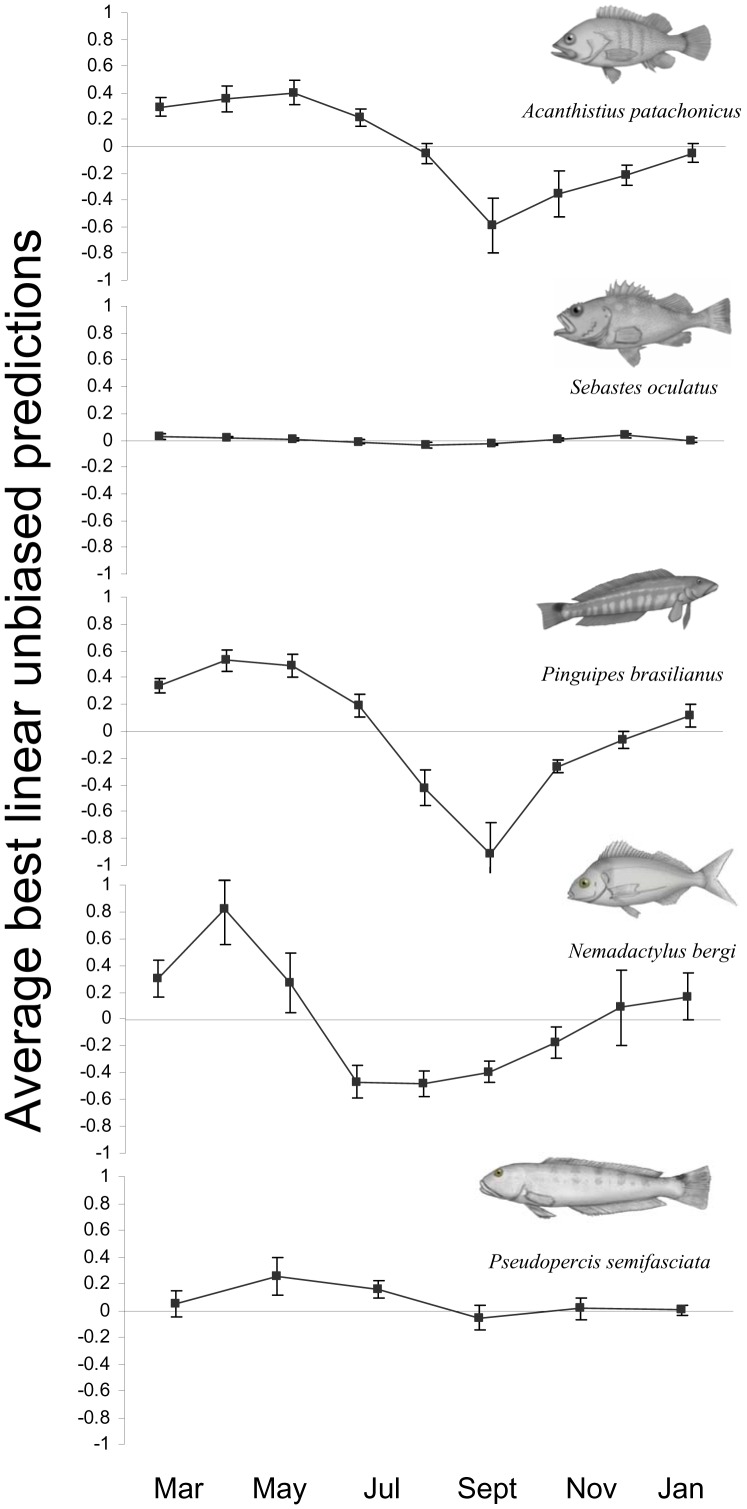
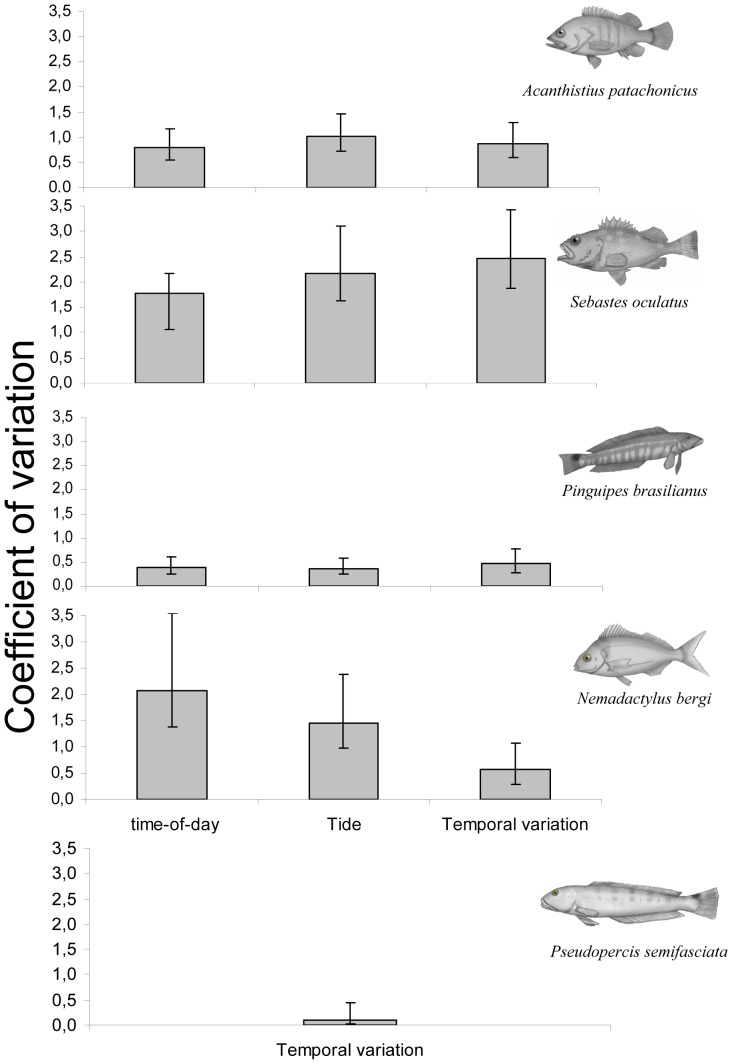
Identifying sources of sampling variation and quantifying their magnitude is critical to the interpretation of ecological field data. Yet, most monitoring programs of reef fish populations based on underwater visual censuses (UVC) consider only a few of the factors that may influence fish counts, such as the diver or census methodology. Recent studies, however, have drawn attention to a broader range of processes that introduce variability at different temporal scales. This study analyzes the magnitude of different sources of variation in UVCs of temperate reef fishes off Patagonia (Argentina). The variability associated with time-of-day, tidal state, and time elapsed between censuses (minutes, days, weeks and months) was quantified for censuses conducted on the five most conspicuous and common species: Pinguipes brasilianus, Pseudopercis semifasciata, Sebastes oculatus, Acanthistius patachonicus and Nemadactylus bergi. Variance components corresponding to spatial heterogeneity and to the different temporal scales were estimated using nested random models. The levels of variability estimated for the different species were related to their life history attributes and behavior. Neither time-of-day nor tidal state had a significant effect on counts, except for the influence of tide on P. brasilianus. Spatial heterogeneity was the dominant source of variance in all but one species. Among the temporal scales, the intra-annual variation was the highest component for most species due to marked seasonal fluctuations in abundance, followed by the weekly and the instantaneous variation; the daily component was not significant. The variability between censuses conducted at different tidal levels and time-of-day was similar in magnitude to the instantaneous variation, reinforcing the conclusion that stochastic variation at very short time scales is non-negligible and should be taken into account in the design of monitoring programs and experiments. The present study provides baseline information to design and interpret results from visual census programs in temperate reefs.
确定采样变异的来源并量化其大小对于解释生态野外数据至关重要。然而,大多数基于水下视觉普查(UVC)的珊瑚礁鱼类种群监测计划仅考虑了一些可能影响鱼类计数的因素,例如潜水员或普查方法。然而,最近的研究引起了人们对更广泛的一系列过程的关注,这些过程在不同的时间尺度上引入了可变性。本研究分析了巴塔哥尼亚(阿根廷)温带珊瑚礁 UVC 中不同来源变异的幅度。对于在五种最明显和最常见的物种上进行的普查,量化了与一天中的时间、潮汐状态以及两次普查之间的时间间隔(分钟、天、周和月)相关的可变性:Pinguipes brasilianus、Pseudopercis semifasciata、Sebastes oculatus、Acanthistius patachonicus 和 Nemadactylus bergi。使用嵌套随机模型估计了与空间异质性和不同时间尺度相关的方差分量。不同物种估计的可变性水平与其生活史特征和行为有关。除了潮汐对 P. brasilianus 的影响外,一天中的时间或潮汐状态对计数没有显著影响。在所有物种中,空间异质性都是方差的主要来源。在所有物种中,除了一种物种外,年内变化是最高的组成部分,这是由于丰度的季节性波动明显,其次是每周和瞬时变化;每日变化不显著。在不同潮汐水平和一天中的时间进行的普查之间的可变性与瞬时变化的幅度相似,这强化了这样的结论,即在非常短的时间尺度上的随机变化不可忽视,并且应该在监测计划和实验的设计中考虑到这一点。本研究为设计和解释温带珊瑚礁中的视觉普查结果提供了基线信息。