Liver Cancer Institute, Zhongshan Hospital, Fudan University, Shanghai, China.
J Exp Clin Cancer Res. 2013 Apr 19;32(1):22. doi: 10.1186/1756-9966-32-22.
Peritumoral activated hepatic stellate cells (HSCs) are versatile myofibroblast-like cells closely related with hepatocellular carcinoma (HCC) progression. So far, comprehensive comparison of gene expression of human HSCs during hepatocarcinogenesis is scanty. Therefore, we identified the phenotypic and genomic characteristics of peritumoral HSCs to explore the valuable information on the prognosis and therapeutic targets of HBV related HCC.
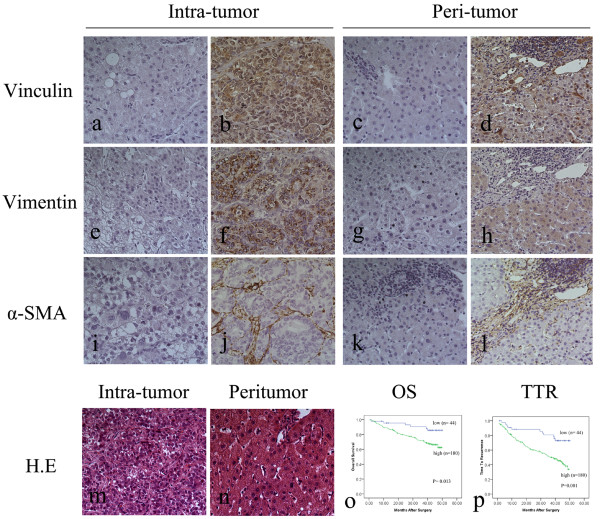
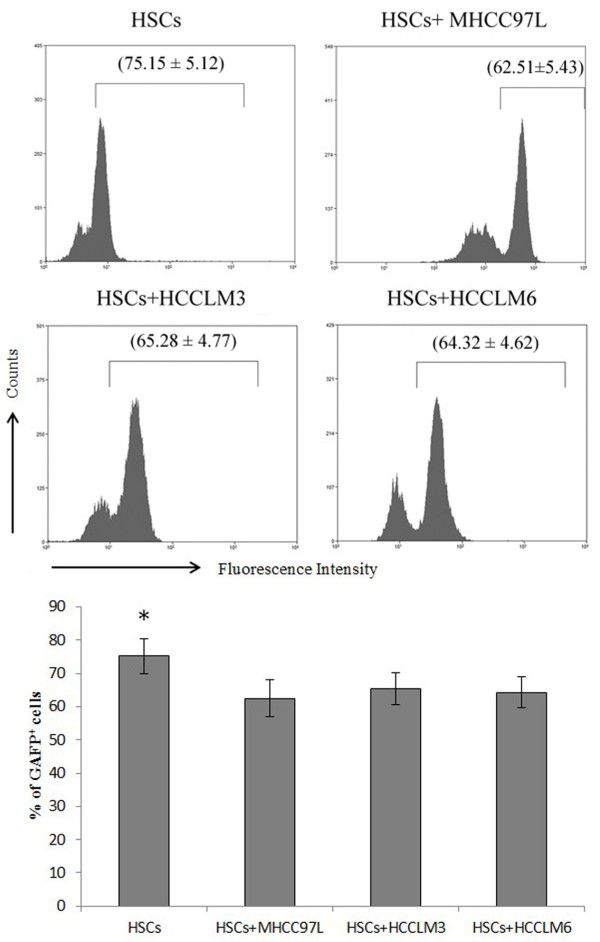
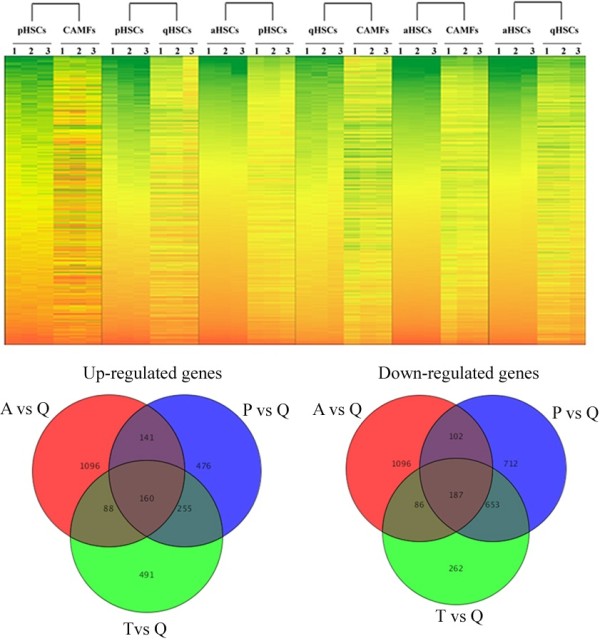
A tissue microarray containing 224 HBV related HCC patients was used to evaluate the expression of phenotype markers of HSCs including α-SMA, glial fibrillary acidic protein (GFAP), desmin, vinculin and vimentin. HSCs and cancer associated myofibroblasts (CAMFs) were isolated from normal, peritumoral human livers and cancer tissues, respectively. Flow cytometry and gene microarray analysis were performed to evaluate the phenotypic changes and gene expression in HCC, respectively.
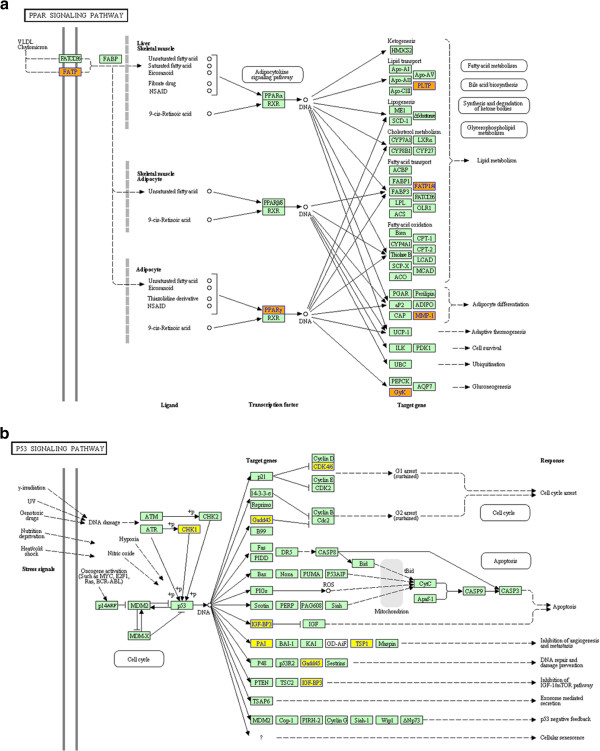
Peritumoral α-SMA positive HSCs showed the prognostic value in time to recurrence (TTR) and overall survival (OS) of HCC patients, especially in early recurrence and AFP-normal HCC patients. Expression of GFAP positive HSCs cell lines LX-2 was significantly decreased after stimulation with tumor conditioned medium. Compared with quiescent HSCs, peritumoral HSCs and intratumoral CAMFs expressed considerable up- and down-regulated genes associated with biological process, cellular component, molecular function and signaling pathways involved in fibrogenesis, inflammation and progress of cancer.
Peritumoral activated HSCs displayed prognostic value in HBV related-HCC, and their genomic characteristics could present rational biomarkers for HCC risk and promising therapeutic targets.
肿瘤周围激活的肝星状细胞(HSCs)是多功能的肌成纤维细胞样细胞,与肝细胞癌(HCC)的进展密切相关。到目前为止,人类 HSCs 在肝癌发生过程中的基因表达的综合比较还很少。因此,我们鉴定了肿瘤周围 HSCs 的表型和基因组特征,以探索有关 HBV 相关 HCC 预后和治疗靶点的有价值信息。
使用包含 224 例 HBV 相关 HCC 患者的组织微阵列来评估 HSCs 的表型标志物,包括α-SMA、胶质纤维酸性蛋白(GFAP)、结蛋白、波形蛋白和波形蛋白的表达。分别从正常、肿瘤周围人和肝癌组织中分离 HSCs 和癌相关肌成纤维细胞(CAMFs)。进行流式细胞术和基因微阵列分析,分别评估 HCC 中的表型变化和基因表达。
肿瘤周围α-SMA 阳性 HSCs 在 HCC 患者的复发时间(TTR)和总生存期(OS)中显示出预后价值,尤其是在早期复发和 AFP 正常的 HCC 患者中。肿瘤条件培养基刺激后,GFAP 阳性 HSCs 细胞系 LX-2 的表达明显降低。与静止 HSCs 相比,肿瘤周围 HSCs 和肿瘤内 CAMFs 表达了大量与纤维化、炎症和癌症进展相关的生物学过程、细胞成分、分子功能和信号通路相关的上调和下调基因。
肿瘤周围激活的 HSCs 在 HBV 相关 HCC 中具有预后价值,其基因组特征可为 HCC 风险提供合理的生物标志物,并为有前途的治疗靶点提供依据。