Department of Clinical Laboratory, Wuxi People's Hospital Affiliated Nanjing Medical University, Wuxi, China.
Front Immunol. 2024 May 10;15:1411161. doi: 10.3389/fimmu.2024.1411161. eCollection 2024.
Hepatitis B virus (HBV) infection is a major risk factor for hepatocellular carcinoma (HCC). Programmed cell death (PCD) is a critical process in suppressing tumor growth, and alterations in PCD-related genes may contribute to the progression of HBV-HCC. This study aims to develop a prognostic model that incorporates genomic and clinical information based on PCD-related genes, providing novel insights into the molecular heterogeneity of HBV-HCC through bioinformatics analysis and experimental validation.
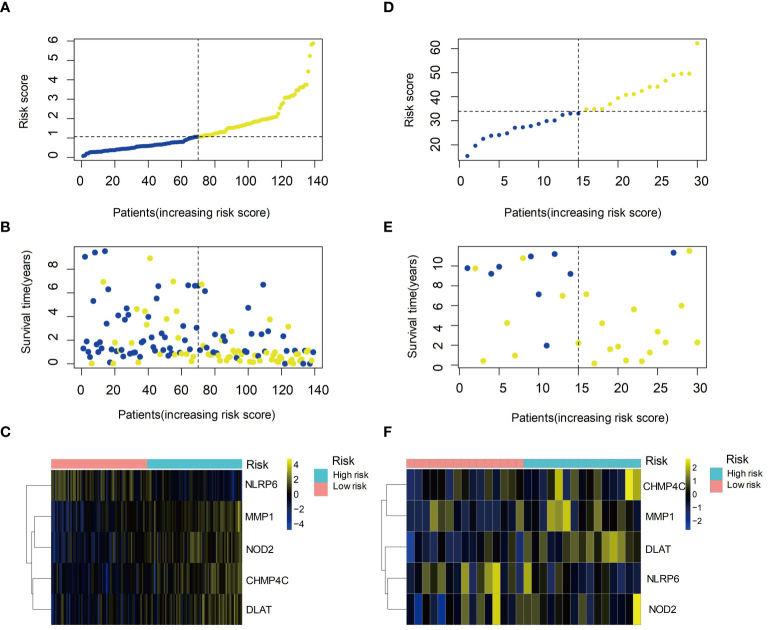
In this study, we analyzed 139 HBV-HCC samples from The Cancer Genome Atlas (TCGA) and validated them with 30 samples from the Gene Expression Omnibus (GEO) database. Various bioinformatics tools, including differential expression analysis, gene set variation analysis, and machine learning algorithms were used for comprehensive analysis of RNA sequencing data from HBV-HCC patients. Furthermore, among the PCD-related genes, we ultimately chose for further research on tissue chips and patient cohorts. Besides, immunohistochemistry, qRT-PCR and Western blot analysis were conducted.
The cluster analysis identified three distinct subgroups of HBV-HCC patients. Among them, Cluster 2 demonstrated significant activation in DNA replication-related pathways and tumor-related processes. Analysis of copy number variations (CNVs) of PCD-related genes also revealed distinct patterns in the three subgroups, which may be associated with differences in pathway activation and survival outcomes. in tumor tissues of HBV-HCC patients is upregulated.
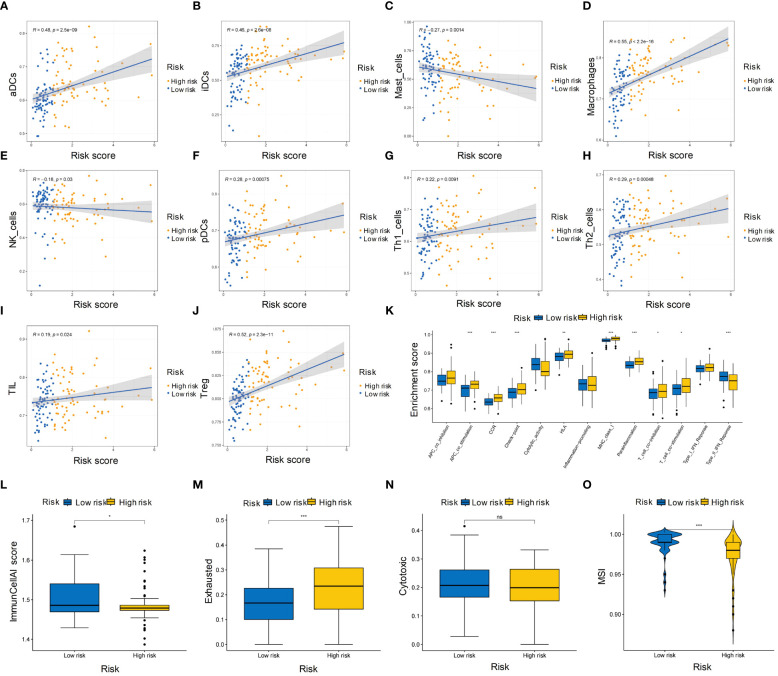
Based on the PCD-related genes, we developed a prognostic model that incorporates genomic and clinical information and provided novel insights into the molecular heterogeneity of HBV-HCC. In our study, we emphasized the significance of PCD-related genes, particularly , which was examined in vitro to explore its potential clinical implications.
乙型肝炎病毒(HBV)感染是肝细胞癌(HCC)的主要危险因素。程序性细胞死亡(PCD)是抑制肿瘤生长的关键过程,PCD 相关基因的改变可能导致 HBV-HCC 的进展。本研究旨在开发一种基于 PCD 相关基因的基因组和临床信息的预后模型,通过生物信息学分析和实验验证,为 HBV-HCC 的分子异质性提供新的见解。
本研究分析了来自癌症基因组图谱(TCGA)的 139 例 HBV-HCC 样本,并在基因表达综合数据库(GEO)中验证了 30 例样本。使用各种生物信息学工具,包括差异表达分析、基因集变异分析和机器学习算法,对 HBV-HCC 患者的 RNA 测序数据进行综合分析。此外,在 PCD 相关基因中,我们最终选择 进行组织芯片和患者队列的进一步研究。此外,还进行了免疫组织化学、qRT-PCR 和 Western blot 分析。
聚类分析确定了 HBV-HCC 患者的三个不同亚群。其中,第 2 组显示 DNA 复制相关途径和肿瘤相关过程的显著激活。对 PCD 相关基因的拷贝数变异(CNV)分析也揭示了三个亚组中的不同模式,这可能与途径激活和生存结果的差异有关。在 HBV-HCC 患者的肿瘤组织中,上调。
基于 PCD 相关基因,我们开发了一种包含基因组和临床信息的预后模型,并为 HBV-HCC 的分子异质性提供了新的见解。在我们的研究中,我们强调了 PCD 相关基因的重要性,特别是 ,我们在体外研究了它,以探索其潜在的临床意义。