School of the Environment, Natural Resources, & Geography, Bangor University, Bangor, Gwynedd, United Kingdom.
PLoS One. 2013 Apr 15;8(4):e62058. doi: 10.1371/journal.pone.0062058. Print 2013.
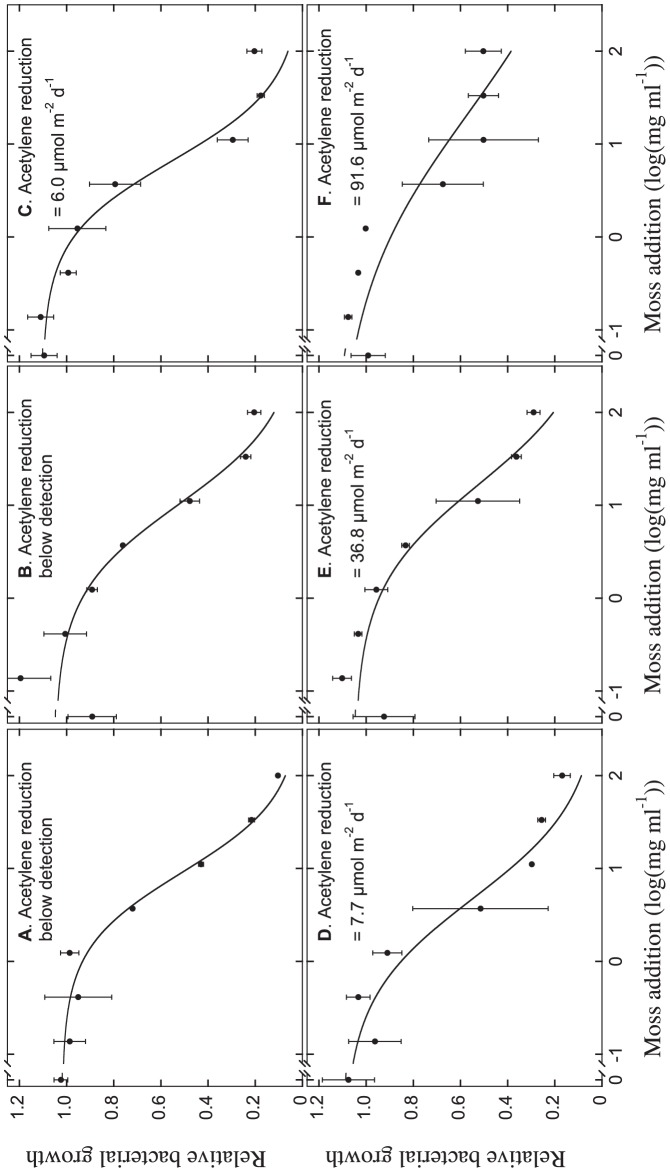
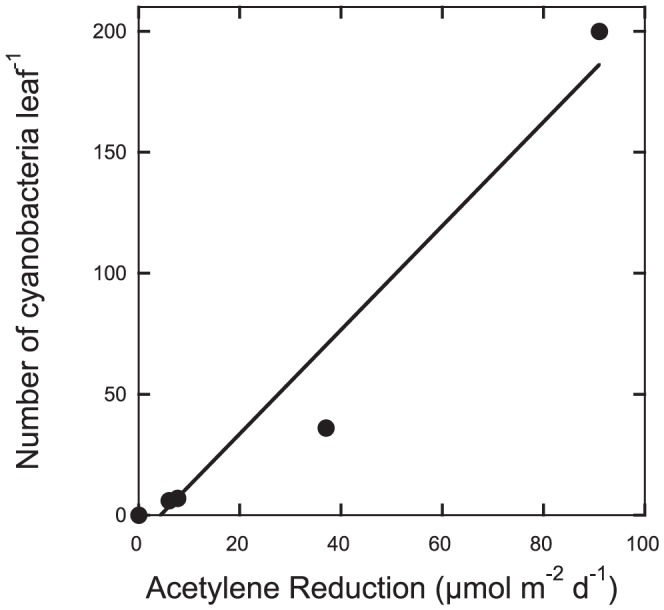
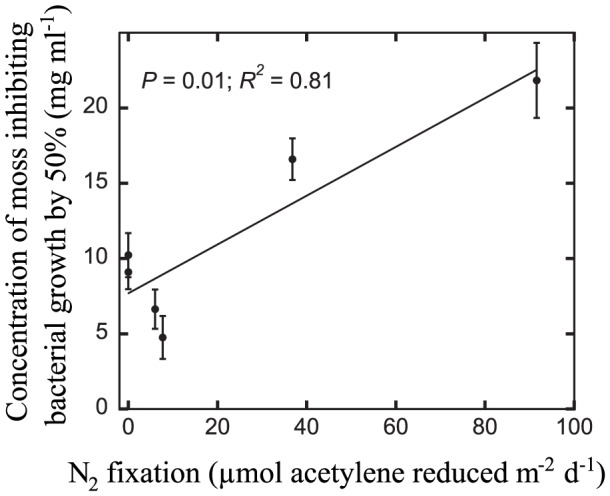
Cyanobacteria-plant symbioses play an important role in many ecosystems due to the fixation of atmospheric nitrogen (N) by the cyanobacterial symbiont. The ubiquitous feather moss Pleurozium schreberi (Brid.) Mitt. is colonized by cyanobacteria in boreal systems with low N deposition. Here, cyanobacteria fix substantial amounts of N₂ and represent a potential N source. The feather moss appears to be resistant to decomposition, which could be partly a result of toxins produced by cyanobacteria. To assess how cyanobacteria modulated the toxicity of moss, we measured inhibition of bacterial growth. Moss with varying numbers of cyanobacteria was added to soil bacteria to test the inhibition of their growth using the thymidine incorporation technique. Moss could universally inhibit bacterial growth, but moss toxicity did not increase with N₂ fixation rates (numbers of cyanobacteria). Instead, we see evidence for a negative relationship between moss toxicity to bacteria and N₂ fixation, which could be related to the ecological mechanisms that govern the cyanobacteria-moss relationship. We conclude that cyanobacteria associated with moss do not contribute to the resistance to decomposition of moss, and from our results emerges the question as to what type of relationship the moss and cyanobacteria share.
蓝细菌-植物共生体在许多生态系统中起着重要作用,因为蓝细菌共生体固定了大气中的氮 (N)。在氮沉降量低的北方系统中,无处不在的羽藓 Pleurozium schreberi (Brid.) Mitt. 被蓝细菌定殖。这里,蓝细菌固定了大量的 N₂ ,并代表了一个潜在的 N 源。羽藓似乎不易分解,这可能部分是由于蓝细菌产生的毒素。为了评估蓝细菌如何调节苔藓的毒性,我们测量了细菌生长的抑制情况。将具有不同数量蓝细菌的苔藓添加到土壤细菌中,使用胸苷掺入技术测试其生长的抑制情况。苔藓普遍可以抑制细菌的生长,但苔藓的毒性并没有随着 N₂ 固定率(蓝细菌的数量)的增加而增加。相反,我们看到苔藓对细菌的毒性和 N₂ 固定之间存在负相关关系的证据,这可能与控制蓝细菌-苔藓关系的生态机制有关。我们的结论是,与苔藓相关的蓝细菌不会增加苔藓对分解的抵抗力,并且我们的结果提出了一个问题,即苔藓和蓝细菌之间存在什么样的关系。