Graduate Institute of Physiology, National Taiwan University, Taipei, Taiwan.
PLoS One. 2013 Apr 17;8(4):e62383. doi: 10.1371/journal.pone.0062383. Print 2013.
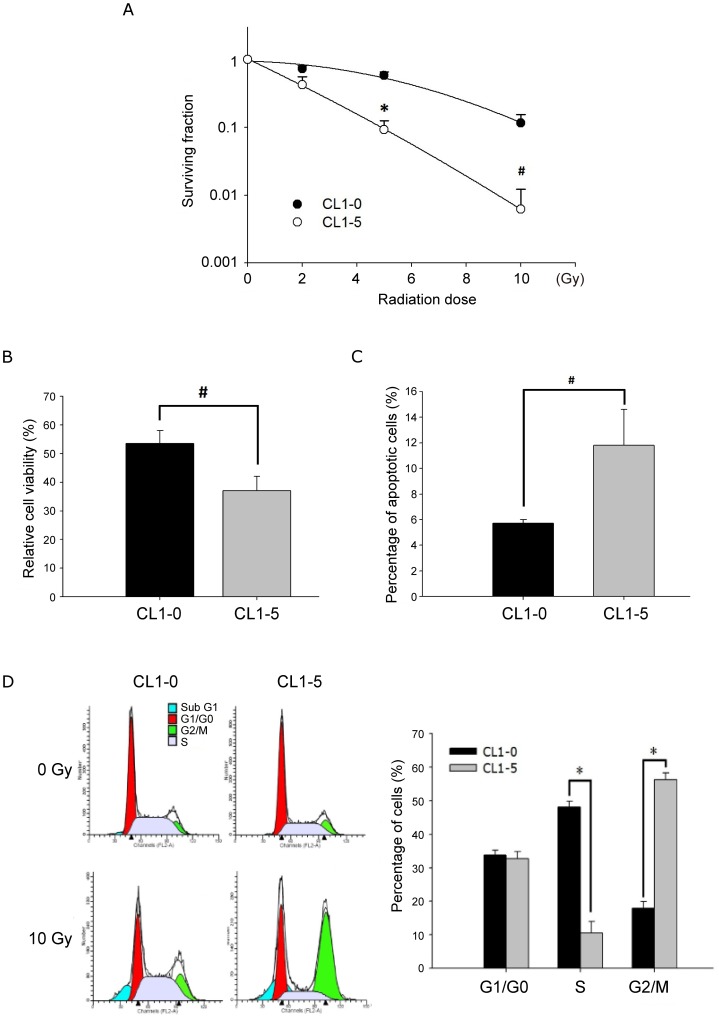
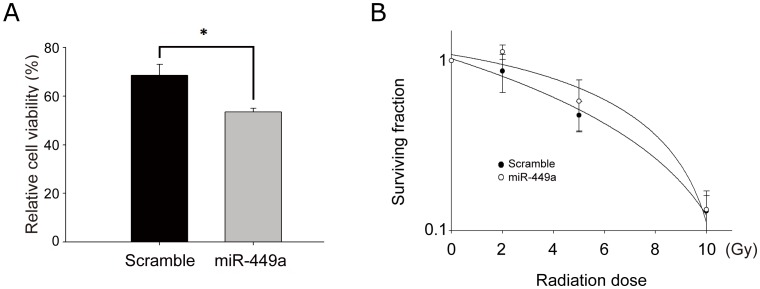
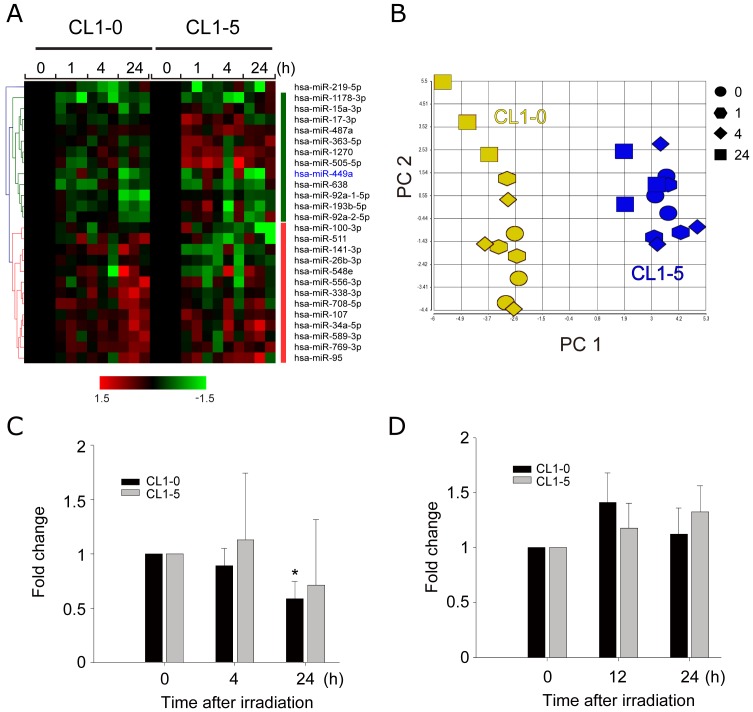
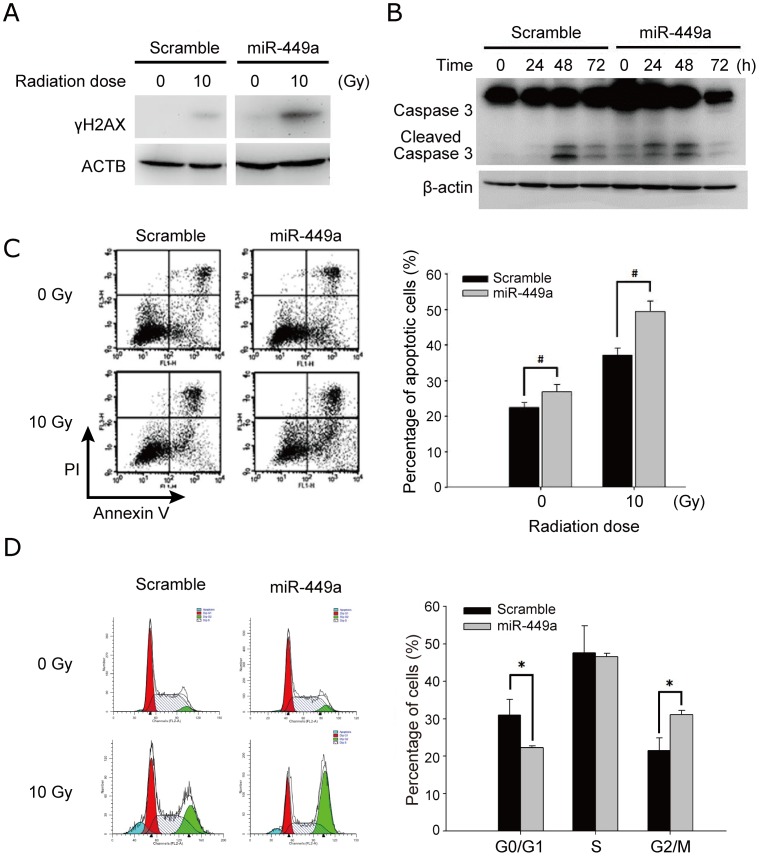
Lung cancer is the leading cause of cancer-related mortality worldwide. Radiotherapy is often applied for treating lung cancer, but it often fails because of the relative non-susceptibility of lung cancer cells to radiation. MicroRNAs (miRNAs) have been reported to modulate the radiosensitivity of lung cancer cells and have the potential to improve the efficacy of radiotherapy. The purpose of this study was to identify a miRNA that can adjust radiosensitivity in lung adenocarcinoma cells. Two lung adenocarcinoma cell lines (CL1-0 and CL1-5) with different metastatic ability and radiosensitivity were used. In order to understand the regulatory mechanisms of differential radiosensitivity in these isogenic tumor cells, both CL1-0 and CL1-5 were treated with 10 Gy radiation, and were harvested respectively at 0, 1, 4, and 24 h after radiation exposure. The changes in expression of miRNA upon irradiation were examined using Illumina Human microRNA BeadChips. Twenty-six miRNAs were identified as having differential expression post-irradiation in CL1-0 or CL1-5 cells. Among these miRNAs, miR-449a, which was down-regulated in CL1-0 cells at 24 h after irradiation, was chosen for further investigation. Overexpression of miR-449a in CL1-0 cells effectively increased irradiation-induced DNA damage and apoptosis, altered the cell cycle distribution and eventually led to sensitization of CL1-0 to irradiation.
肺癌是全球癌症相关死亡的主要原因。放射治疗常用于治疗肺癌,但由于肺癌细胞对辐射的相对不敏感性,放射治疗往往失败。microRNAs (miRNAs) 已被报道能调节肺癌细胞的放射敏感性,并有可能提高放射治疗的疗效。本研究旨在鉴定一种能调节肺腺癌细胞放射敏感性的 miRNA。使用了两种具有不同转移能力和放射敏感性的肺腺癌细胞系(CL1-0 和 CL1-5)。为了了解这些同基因肿瘤细胞中差异放射敏感性的调节机制,用 10 Gy 辐射处理 CL1-0 和 CL1-5 细胞,分别在辐射暴露后 0、1、4 和 24 h 收获。用 Illumina Human microRNA BeadChips 检测照射后 miRNA 的表达变化。在 CL1-0 或 CL1-5 细胞中,有 26 种 miRNA 被鉴定为在照射后表达差异。在这些 miRNA 中,miR-449a 在照射后 24 h 时在 CL1-0 细胞中下调,被选为进一步研究的对象。在 CL1-0 细胞中过表达 miR-449a 可有效增加照射诱导的 DNA 损伤和凋亡,改变细胞周期分布,最终导致 CL1-0 对照射的敏感性增加。