Chang Yu-Chan, Chan Ming-Hsien, Li Chien-Hsiu, Yang Chih-Jen, Tseng Yu-Wen, Tsai Hsing-Fang, Chiou Jean, Hsiao Michael
Deparment of Biomedical Imaging and Radiological Sciences, National Yang-Ming University, Taipei, Taiwan.
Deparment of Biomedical Imaging and Radiological Sciences, National Yang Ming Chiao Tung University, Taipei, Taiwan.
Cell Death Discov. 2021 Jun 5;7(1):135. doi: 10.1038/s41420-021-00520-1.
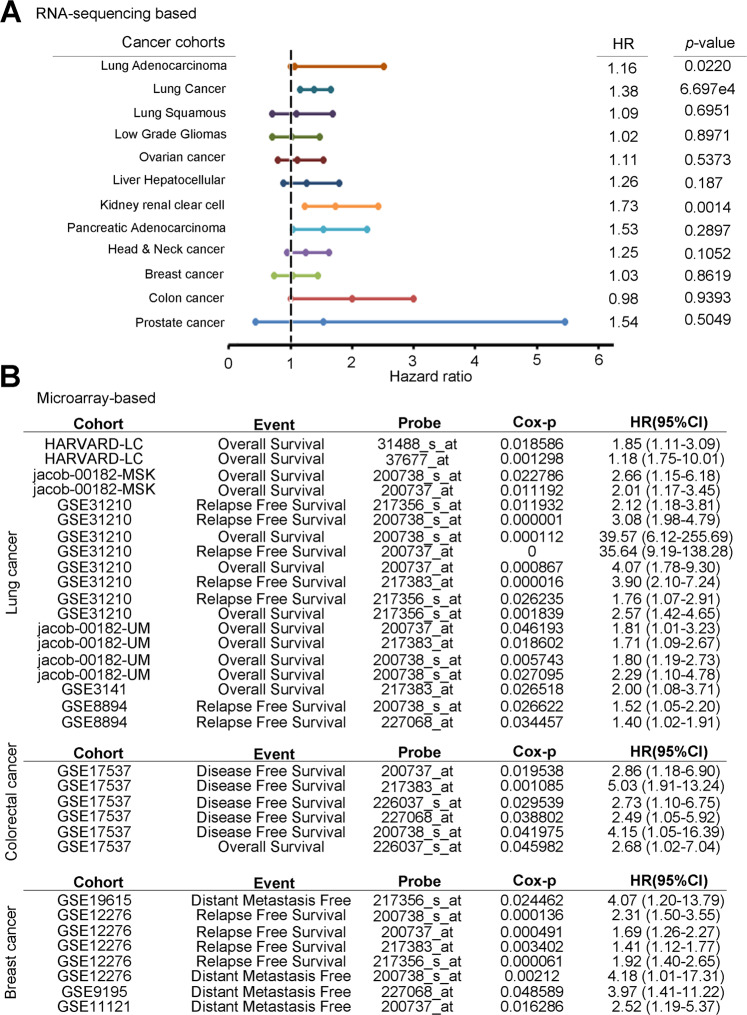
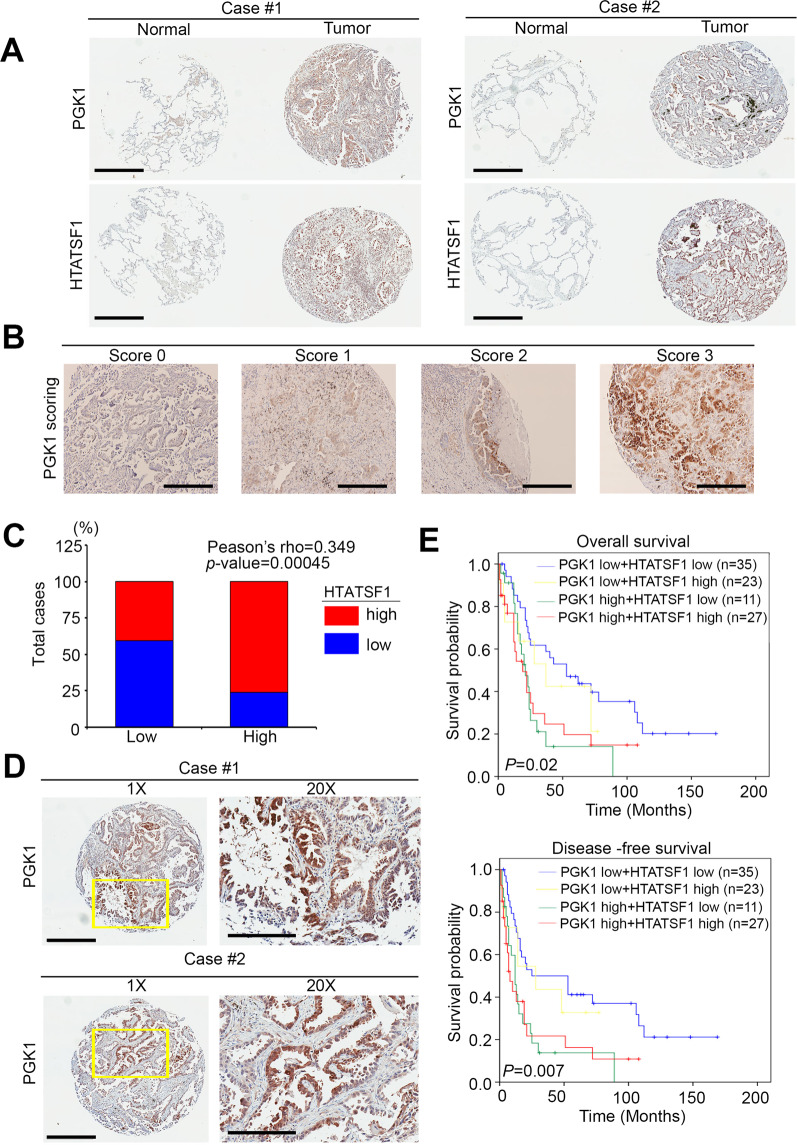
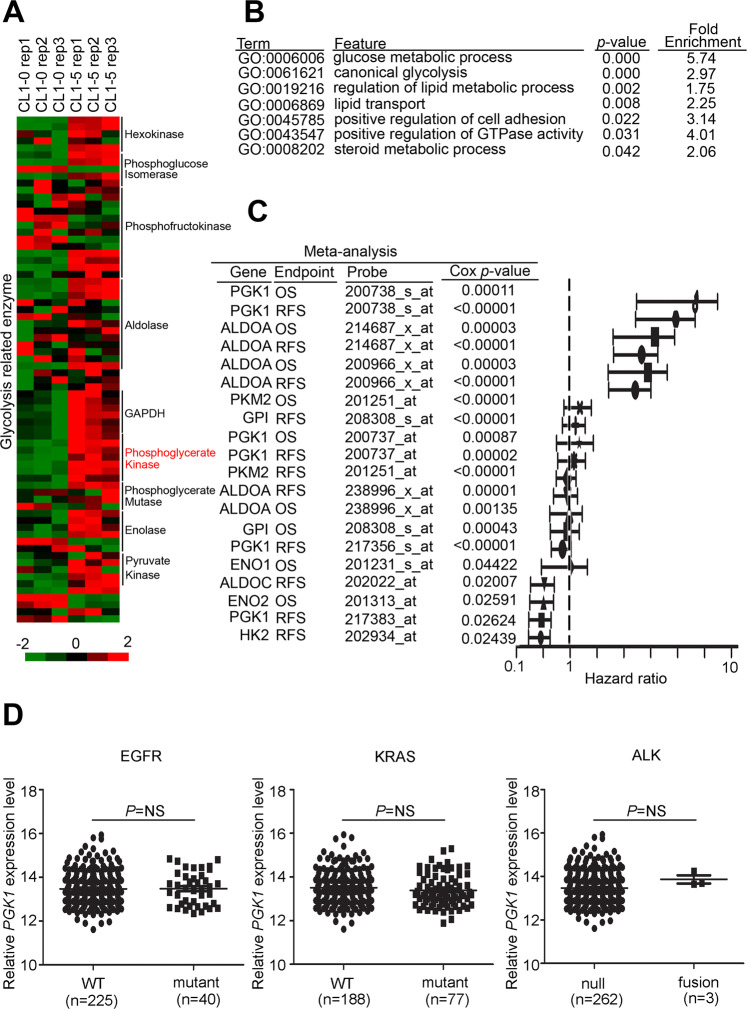
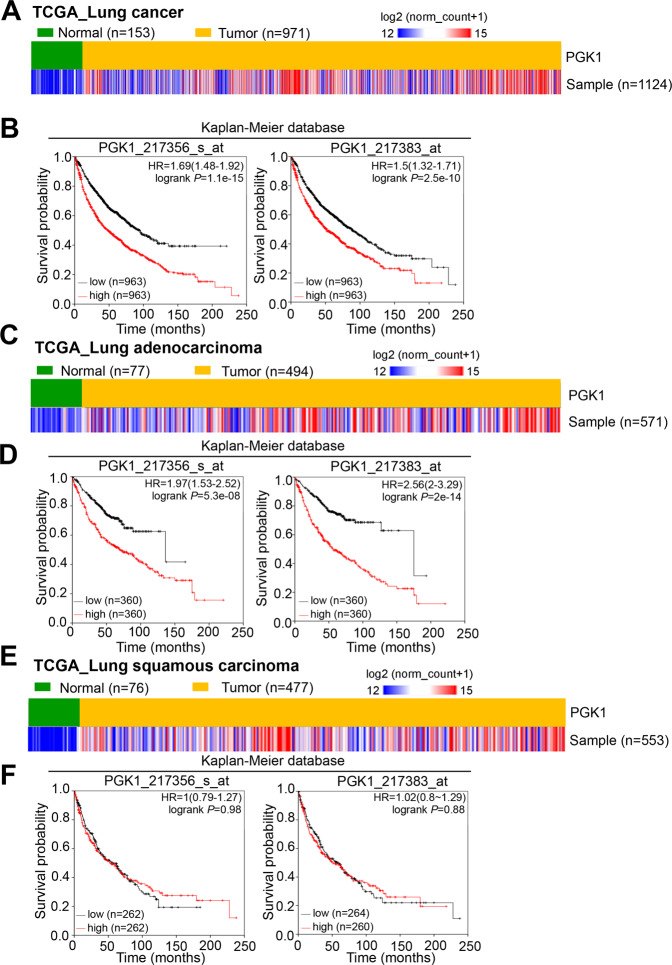
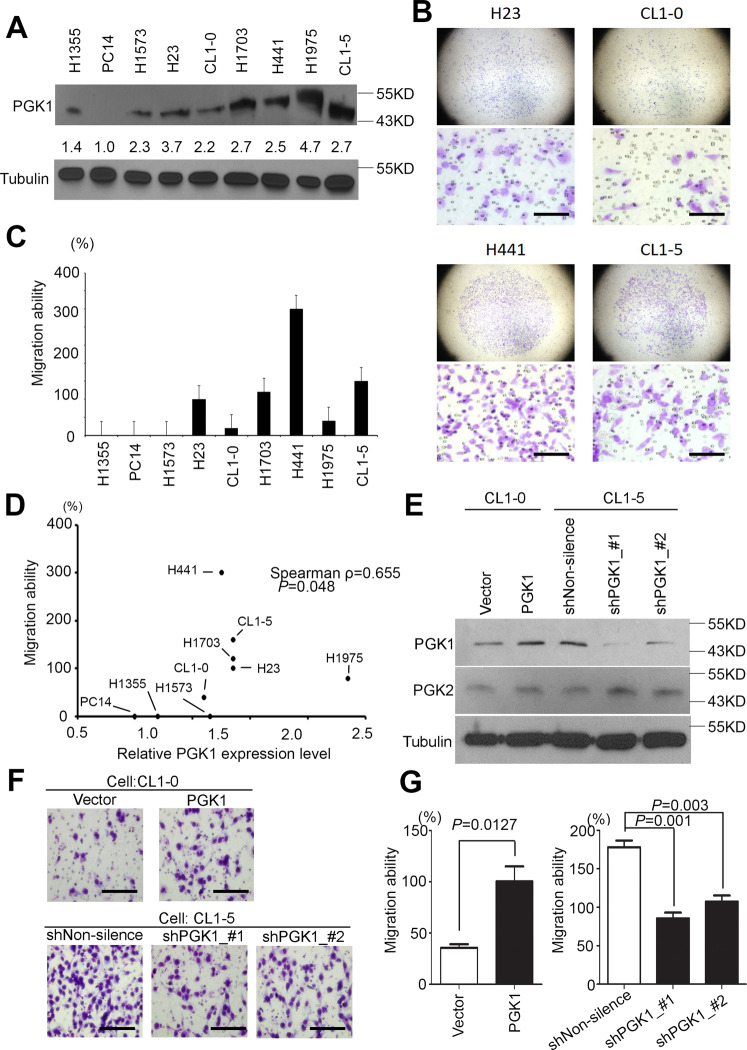
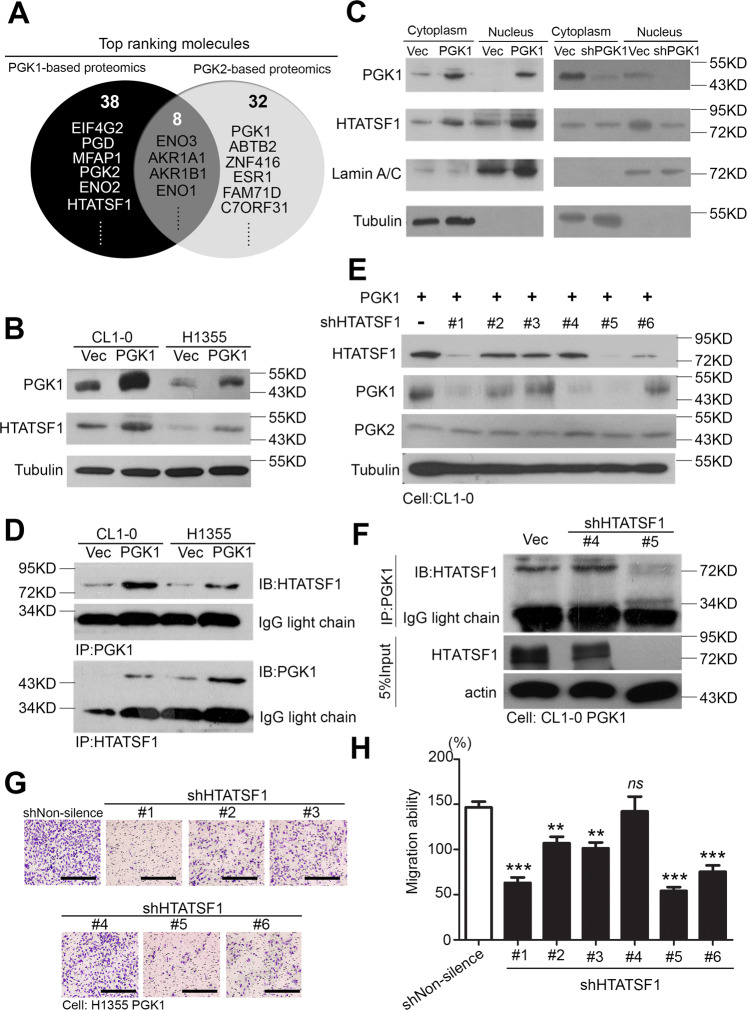
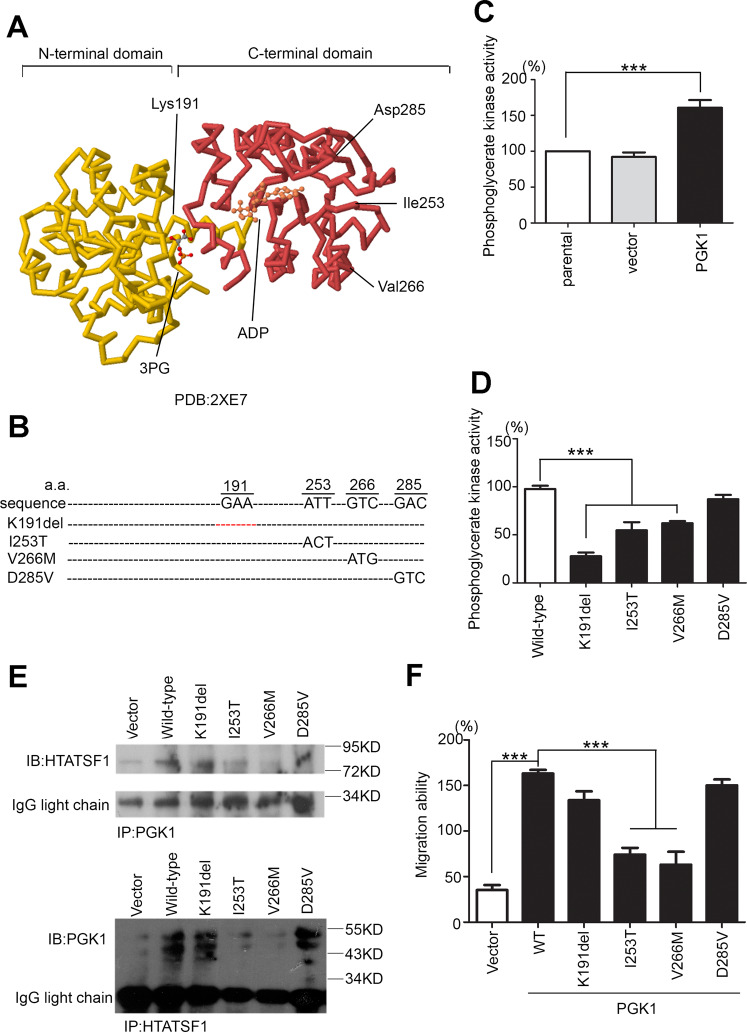
Phosphoglycerate kinase (PGK) is involved in glycolytic and various metabolic events. Dysfunction of PGK may induce metabolic reprogramming and the Warburg effect. In this study, we demonstrated that PGK1, but not PGK2, may play a key role in tumorigenesis and is associated with metastasis. We observed an inverse correlation between PGK1 and the survival rate in several clinical cohorts through bioinformatics statistical and immunohistochemical staining analyses. Surprisingly, we found that PGK1 was significantly increased in adenocarcinoma compared with other subtypes. Thus, we established a PGK1-based proteomics dataset by a pull-down assay. We further investigated HIV-1 Tat Specific Factor 1 (HTATSF1), a potential binding partner, through protein-protein interactions. Then, we confirmed that PGK1 indeed bound to HTATSF1 by two-way immunoprecipitation experiments. In addition, we generated several mutant clones of PGK1 through site-directed mutagenesis, including mutagenesis of the N-terminal region, the enzyme catalytic domain, and the C-terminal region. We observed that even though the phosphoglycerate kinase activity had been inhibited, the migration ability induced by PGK1 was maintained. Moreover, our immunofluorescence staining also indicated the translocation of PGK1 from the cytoplasm to the nucleus and its colocalization with HTATSF1. From the results presented in this study, we propose a novel model in which the PGK1 binds to HTATSF1 and exerts functional control of cancer metastasis. In addition, we also showed a nonenzymatic function of PGK1.
磷酸甘油酸激酶(PGK)参与糖酵解和各种代谢过程。PGK功能障碍可能诱导代谢重编程和瓦伯格效应。在本研究中,我们证明PGK1而非PGK2可能在肿瘤发生中起关键作用并与转移相关。通过生物信息学统计和免疫组化染色分析,我们在几个临床队列中观察到PGK1与生存率呈负相关。令人惊讶的是,我们发现腺癌中PGK1相比于其他亚型显著升高。因此,我们通过下拉实验建立了基于PGK1的蛋白质组学数据集。我们通过蛋白质-蛋白质相互作用进一步研究了潜在的结合伴侣HIV-1反式激活因子特异性因子1(HTATSF1)。然后,我们通过双向免疫沉淀实验证实PGK1确实与HTATSF1结合。此外,我们通过定点诱变产生了几个PGK1突变克隆,包括N端区域、酶催化结构域和C端区域的诱变。我们观察到,即使磷酸甘油酸激酶活性受到抑制,PGK1诱导的迁移能力仍得以维持。此外,我们的免疫荧光染色还表明PGK1从细胞质易位至细胞核并与HTATSF1共定位。根据本研究呈现的结果,我们提出了一个新模型,即PGK1与HTATSF1结合并对癌症转移发挥功能控制作用。此外,我们还展示了PGK1的非酶功能。