Department of Molecular Microbiology and Immunology, Johns Hopkins University Bloomberg School of Public Health, Baltimore, MD 21205, USA.
Mol Biol Cell. 2013 Jun;24(12):1974-95. doi: 10.1091/mbc.E12-11-0827. Epub 2013 Apr 24.
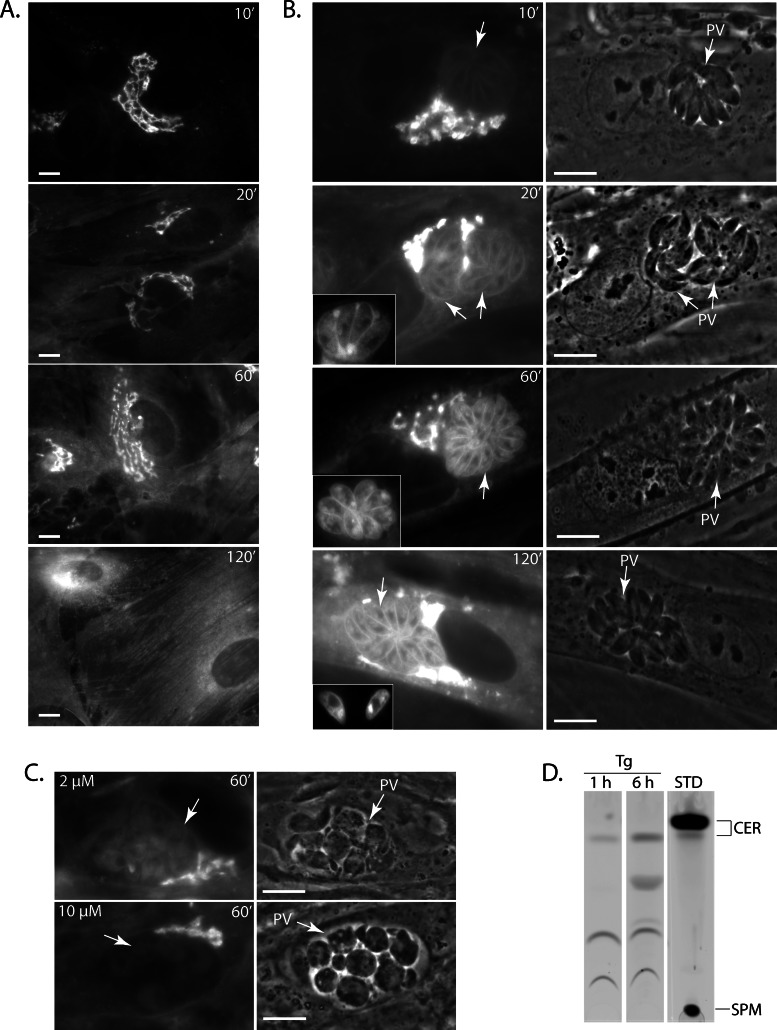
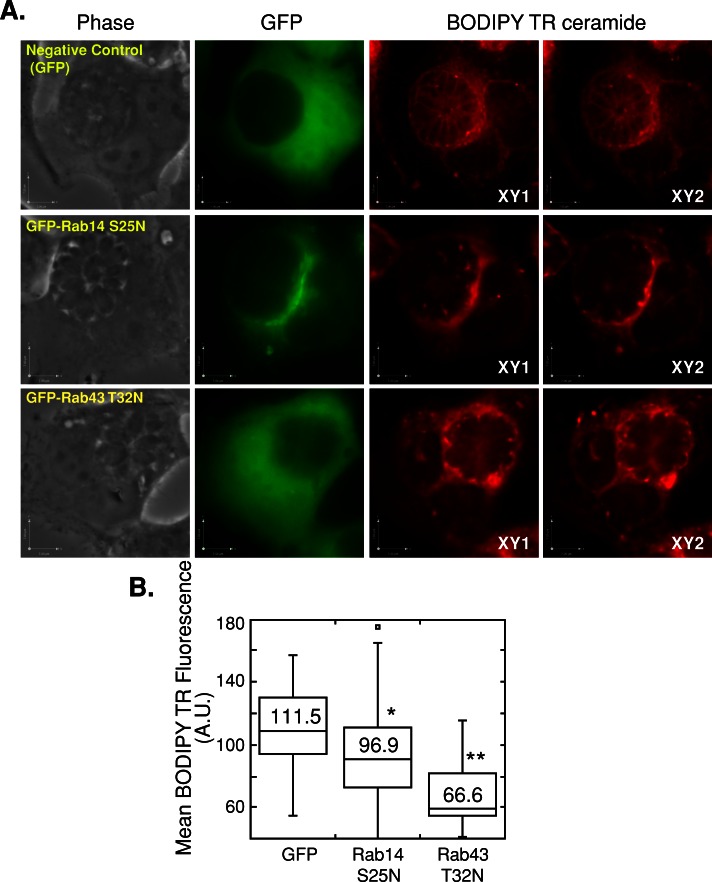
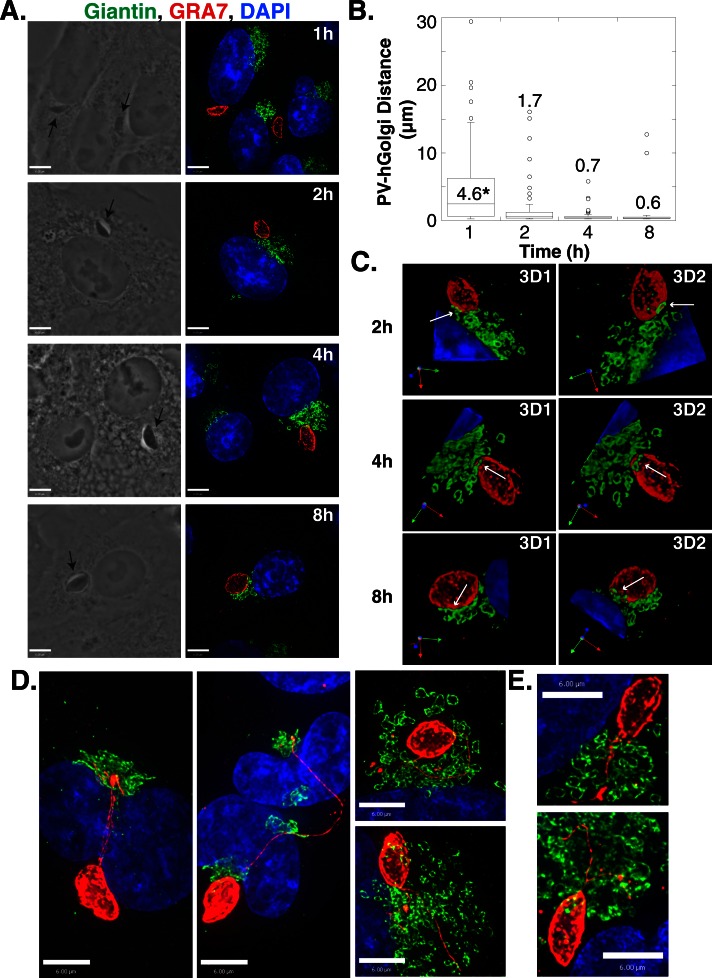
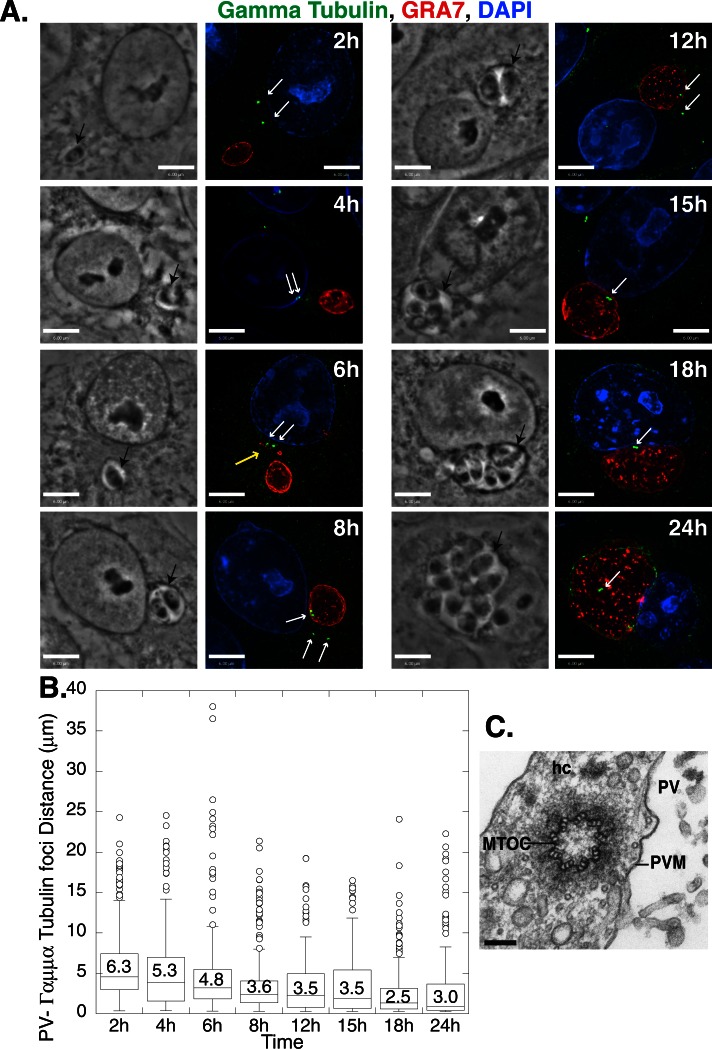
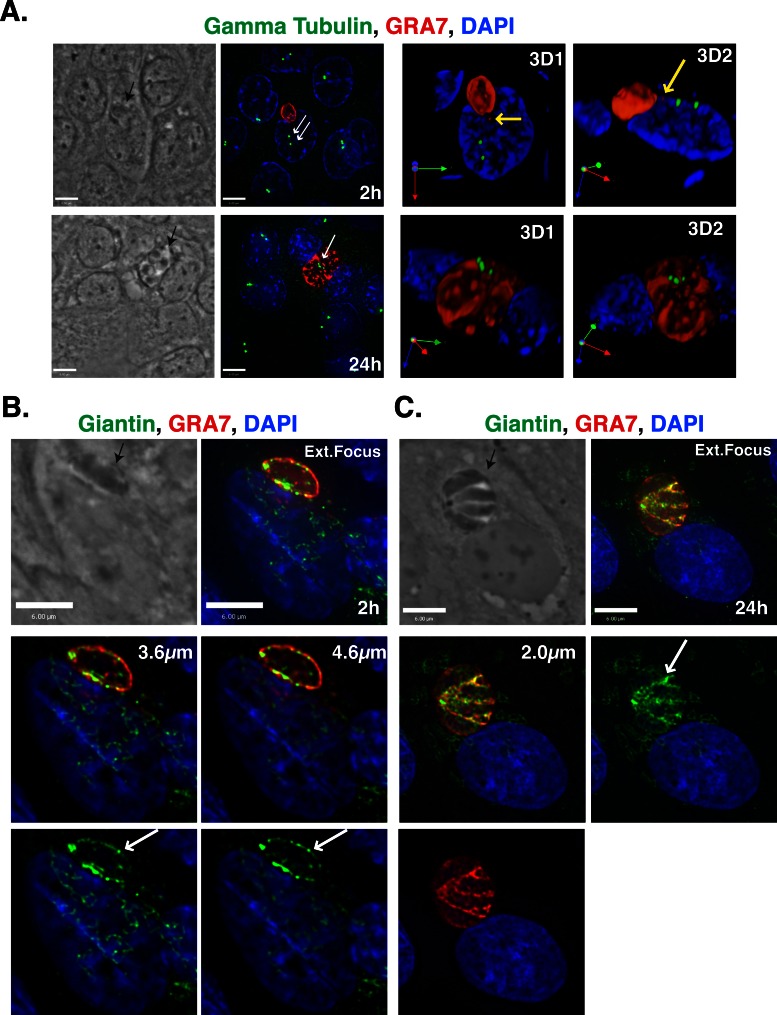
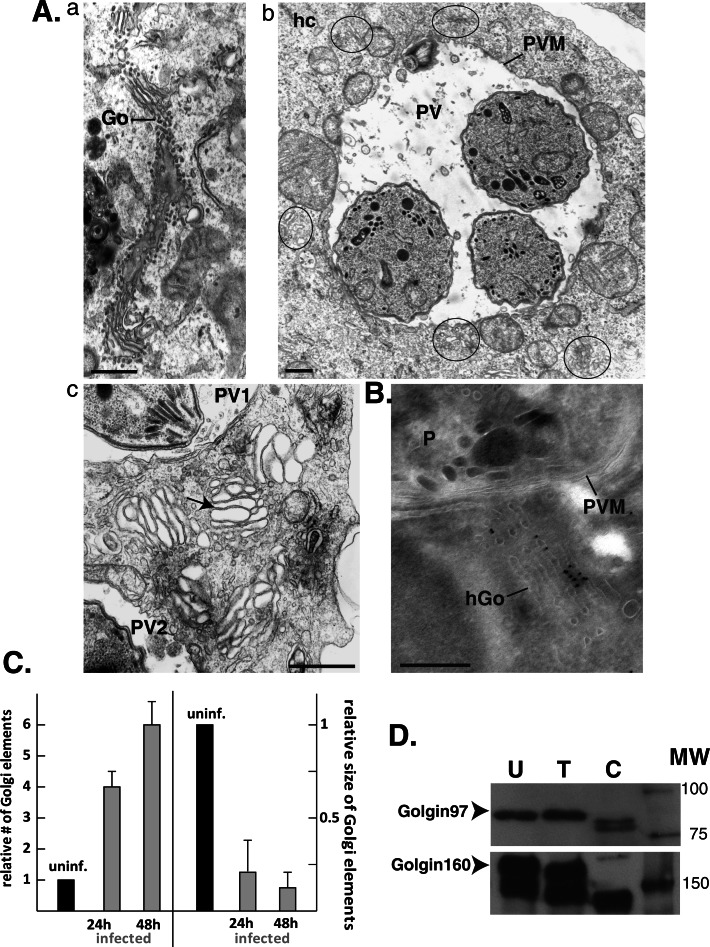
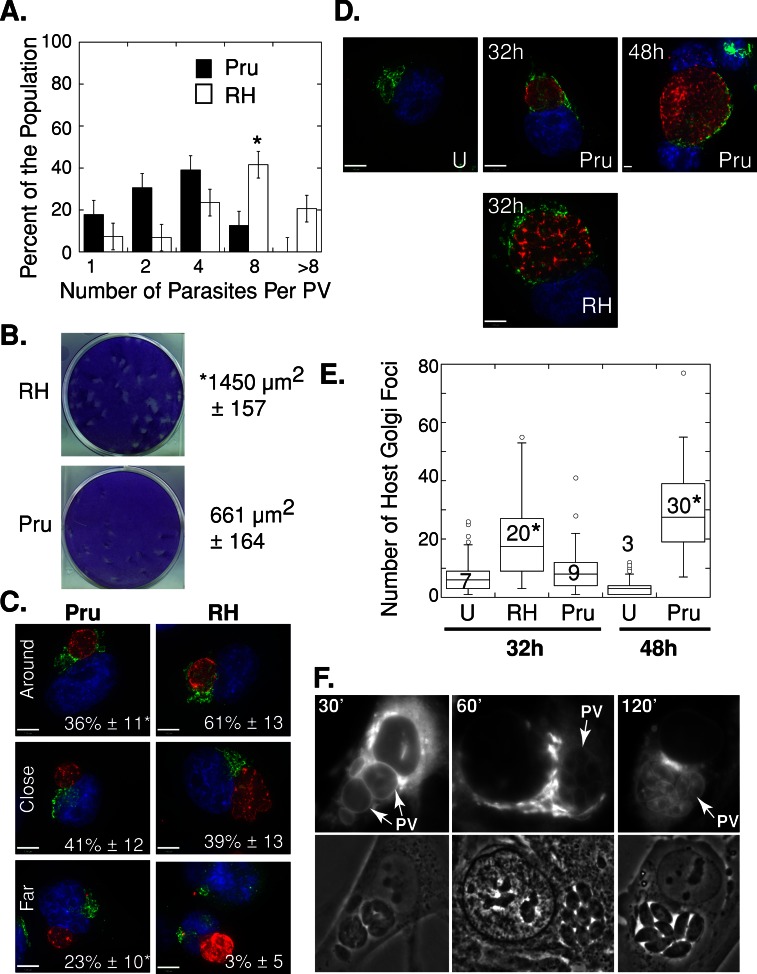
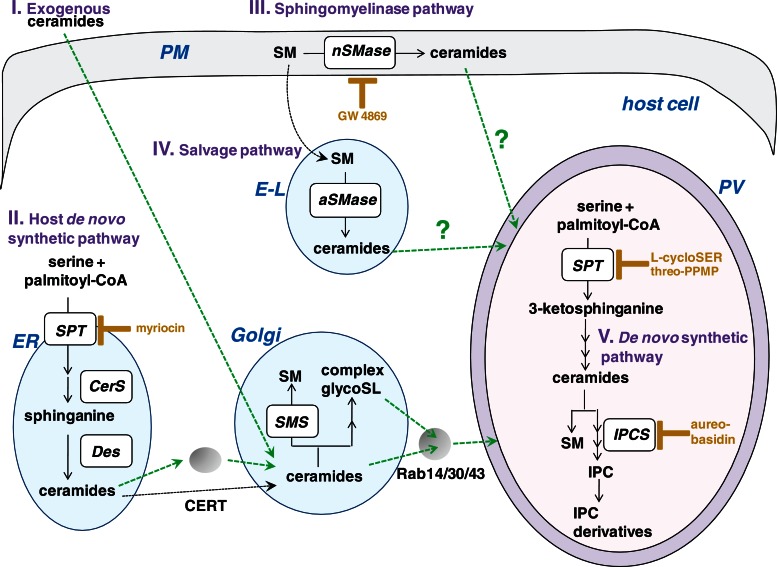
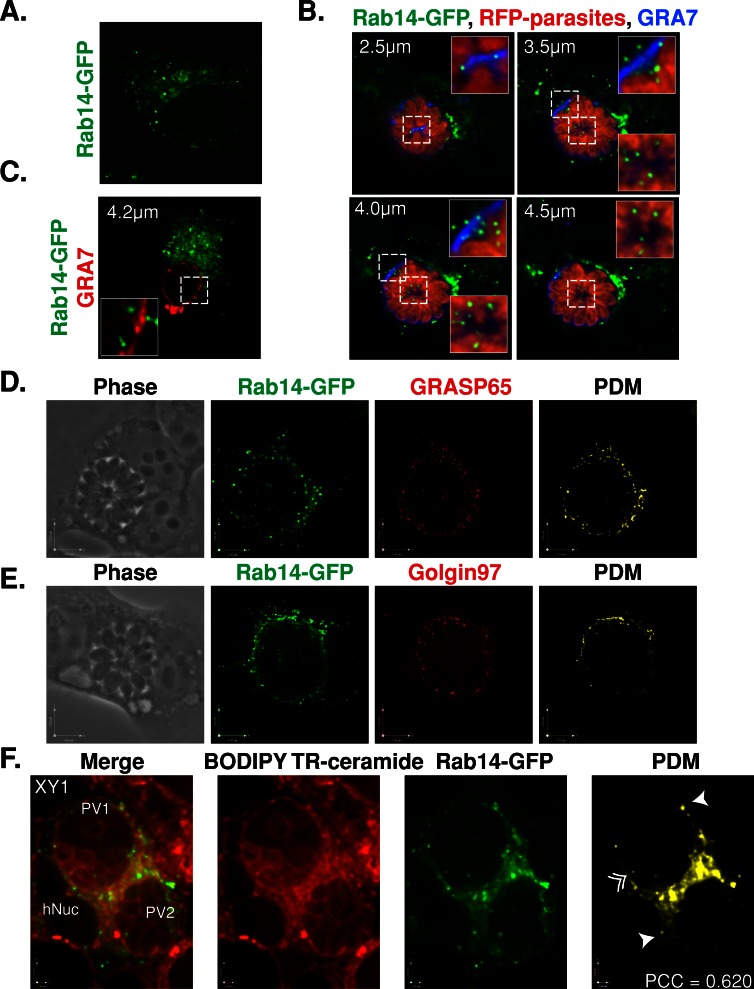
The obligate intracellular protozoan Toxoplasma gondii actively invades mammalian cells and, upon entry, forms its own membrane-bound compartment, named the parasitophorous vacuole (PV). Within the PV, the parasite replicates and scavenges nutrients, including lipids, from host organelles. Although T. gondii can synthesize sphingolipids de novo, it also scavenges these lipids from the host Golgi. How the parasite obtains sphingolipids from the Golgi remains unclear, as the PV avoids fusion with host organelles. In this study, we explore the host Golgi-PV interaction and evaluate the importance of host-derived sphingolipids for parasite growth. We demonstrate that the PV preferentially localizes near the host Golgi early during infection and remains closely associated with this organelle throughout infection. The parasite subverts the structure of the host Golgi, resulting in its fragmentation into numerous ministacks, which surround the PV, and hijacks host Golgi-derived vesicles within the PV. These vesicles, marked with Rab14, Rab30, or Rab43, colocalize with host-derived sphingolipids in the vacuolar space. Scavenged sphingolipids contribute to parasite replication since alterations in host sphingolipid metabolism are detrimental for the parasite's growth. Thus our results reveal that T. gondii relies on host-derived sphingolipids for its development and scavenges these lipids via Golgi-derived vesicles.
专性细胞内原生动物刚地弓形虫主动侵袭哺乳动物细胞,并在进入后形成自己的膜结合区室,称为寄生空泡 (PV)。在 PV 内,寄生虫复制并从宿主细胞器中掠夺营养物质,包括脂质。尽管刚地弓形虫可以从头合成鞘脂,但它也从宿主高尔基体中掠夺这些脂质。寄生虫如何从高尔基体获得鞘脂仍不清楚,因为 PV 避免与宿主细胞器融合。在这项研究中,我们探讨了宿主高尔基体-PV 相互作用,并评估了宿主衍生鞘脂对寄生虫生长的重要性。我们证明,在感染早期,PV 优先定位于宿主高尔基体附近,并在整个感染过程中与该细胞器保持密切关联。寄生虫颠覆了宿主高尔基体的结构,导致其碎片化为数个小堆栈,围绕着 PV,并劫持了 PV 内来自宿主高尔基体的囊泡。这些囊泡标记有 Rab14、Rab30 或 Rab43,与空泡内的宿主衍生鞘脂共定位。掠夺的鞘脂有助于寄生虫的复制,因为改变宿主鞘脂代谢对寄生虫的生长有害。因此,我们的结果表明,刚地弓形虫依赖宿主衍生的鞘脂来发育,并通过高尔基体衍生的囊泡来掠夺这些脂质。