Marín Carmen, Yubero-Serrano Elena M, López-Miranda José, Pérez-Jiménez Francisco
Lipids and Atherosclerosis Unit, Maimonides Institute for Research in Biomedicina at Cordoba (IMIBIC)/Reina Sofia University Hospital/University of Cordoba and CIBER Fisiopatologia Obesidad y Nutricion (CIBERobn), Instituto de Salud Carlos III, Cordoba, 14004, Spain.
Int J Mol Sci. 2013 Apr 24;14(5):8869-89. doi: 10.3390/ijms14058869.
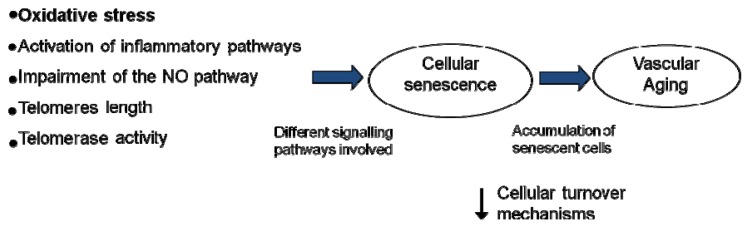
Aging is a condition which favors the development of atherosclerosis, which has been associated with a breakdown in repair processes that occurs in response to cell damage. The dysregulation of the biological systems associated with aging are produced partly through damage which accumulates over time. One major source of this injury is oxidative stress, which can impair biological structures and the mechanisms by which they are repaired. These mechanisms are based on the pathogenesis of endothelial dysfunction, which in turn is associated with cardiovascular disease, carcinogenesis and aging. The dependent dysfunction of aging has been correlated with a reduction in the number and/or functional activity of endothelial progenitor cells, which could hinder the repair and regeneration of the endothelium. In addition, aging, inflammation and oxidative stress are endogenous factors that cause telomere shortening, which is dependent on oxidative cell damage. Moreover, telomere length correlates with lifestyle and the consumption of a healthy diet. Thus, diseases associated with aging and age may be caused by the long-term effects of oxidative damage, which are modified by genetic and environmental factors. Considering that diet is a very important source of antioxidants, in this review we will analyze the relationship between oxidative stress, aging, and the mechanisms which may be involved in a higher survival rate and a lower incidence of the diseases associated with aging in populations which follow a healthy diet.
衰老这种状况有利于动脉粥样硬化的发展,而动脉粥样硬化与细胞损伤后发生的修复过程崩溃有关。与衰老相关的生物系统失调部分是由随时间积累的损伤产生的。这种损伤的一个主要来源是氧化应激,它会损害生物结构及其修复机制。这些机制基于内皮功能障碍的发病机制,而内皮功能障碍又与心血管疾病、致癌作用和衰老相关。衰老相关的功能障碍与内皮祖细胞数量和/或功能活性的减少有关,这可能会阻碍内皮的修复和再生。此外,衰老、炎症和氧化应激是导致端粒缩短的内源性因素,端粒缩短依赖于氧化性细胞损伤。而且,端粒长度与生活方式和健康饮食的摄入有关。因此,与衰老相关的疾病可能是由氧化损伤的长期影响引起的,并受到遗传和环境因素的影响。鉴于饮食是抗氧化剂非常重要的来源,在本综述中,我们将分析氧化应激、衰老以及遵循健康饮食人群中较高生存率和较低衰老相关疾病发病率可能涉及的机制之间的关系。