Flavivirology Laboratory, Department of Microbiology, National University of Singapore, 5 Science Drive 2, Singapore, 117597, Singapore.
Virol J. 2013 Apr 24;10:129. doi: 10.1186/1743-422X-10-129.
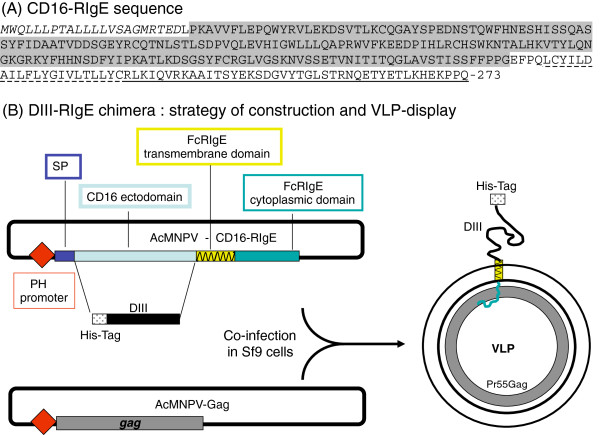
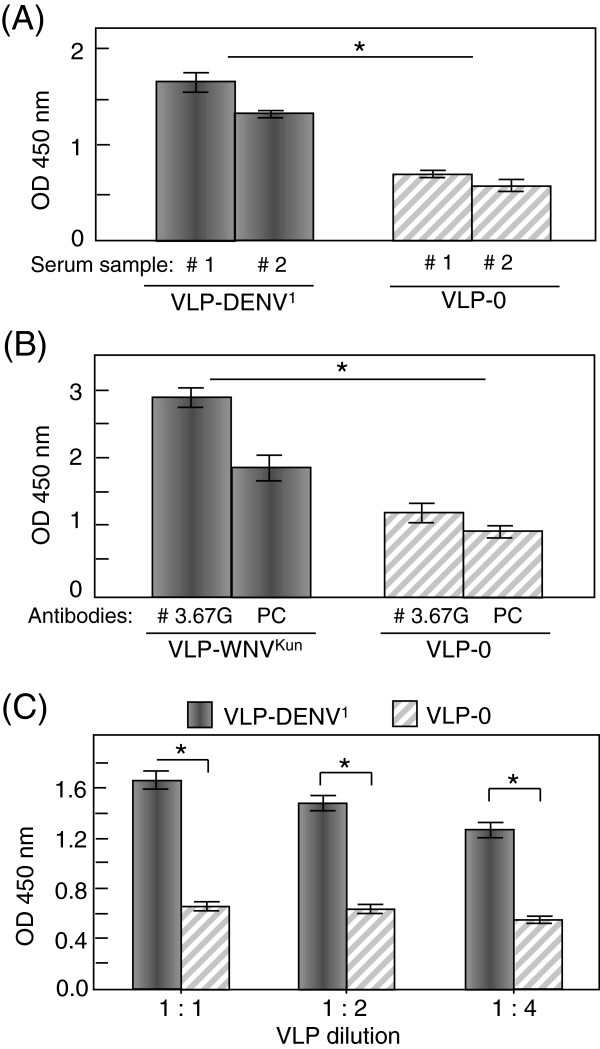
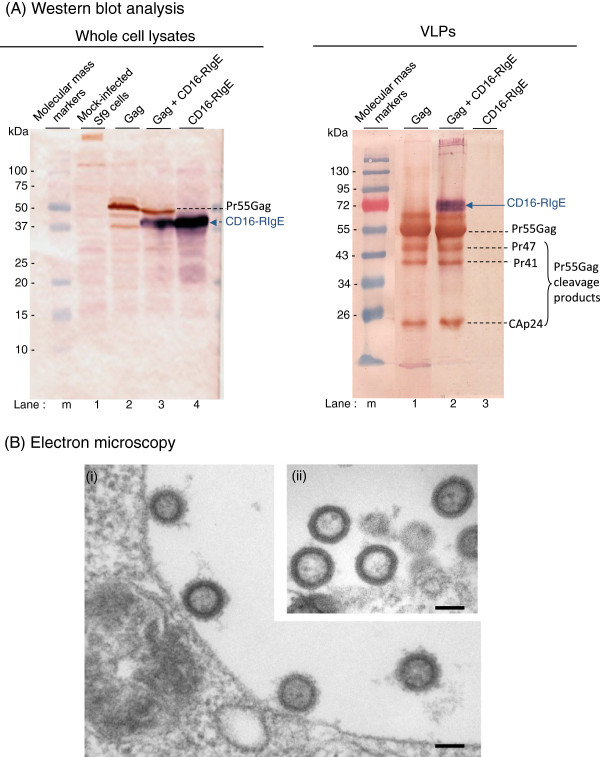
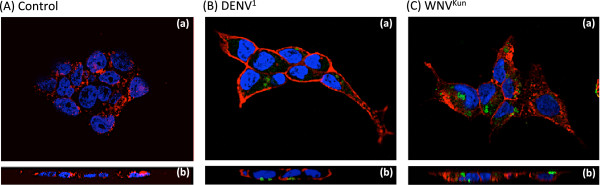
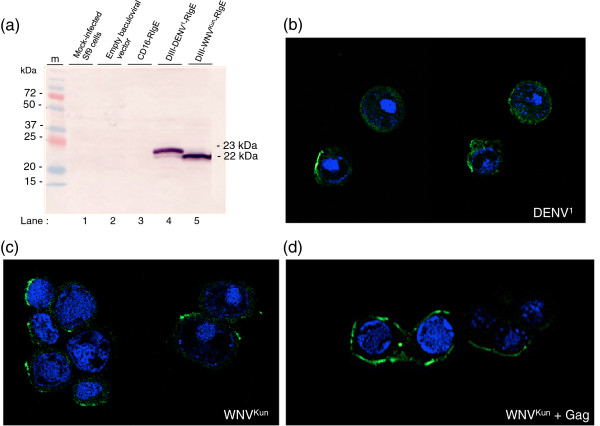
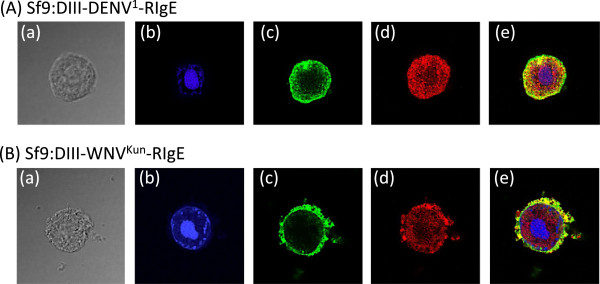
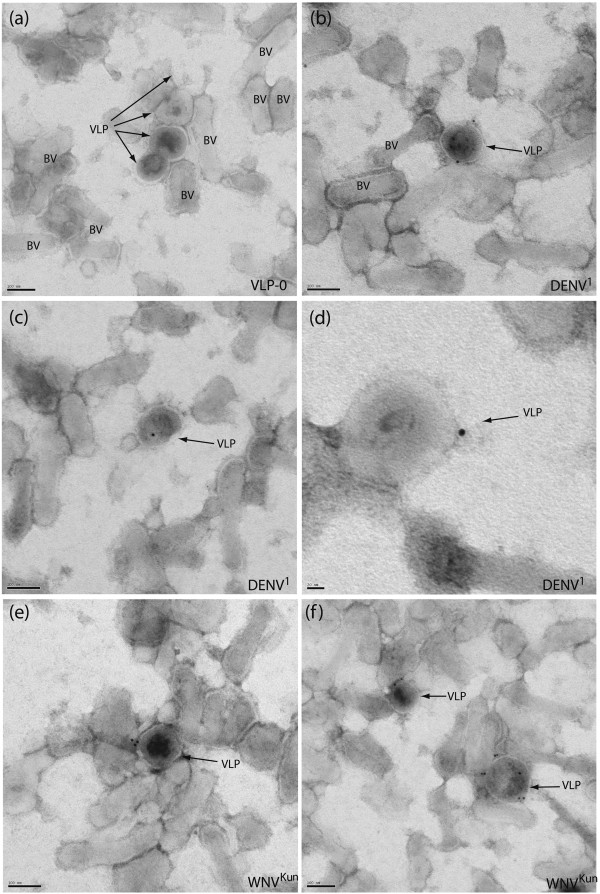
CD16-RIgE is a chimeric human membrane glycoprotein consisting of the CD16 ectodomain fused to the transmembrane domain and cytoplasmic tail of the gamma chain of the high affinity receptor of IgE (RIgE). Coexpression of CD16-RIgE and HIV-1 Pr55Gag polyprotein precursor (Pr55GagHIV) in insect cells resulted in the incorporation of CD16-RIgE glycoprotein into the envelope of extracellular virus-like particles (VLPs), a phenomenon known as pseudotyping. Taking advantage of this property, we replaced the CD16 ectodomain of CD16-RIgE by the envelope glycoprotein domain III (DIII) of dengue virus serotype 1 (DENV1) or West Nile virus Kunjin (WNVKun). The two resulting chimeric proteins, DIII-DENV1-RIgE and DIII-WNVKun-RIgE, were addressed to the plasma membrane, exposed at the surface of human and insect cells, and incorporated into extracellular VLPs when coexpressed with Pr55GagHIV in insect cells. The DIII domains were accessible at the surface of retroviral VLPs, as shown by their reactivity with specific antibodies, and notably antibodies from patient sera. The DIII-RIgE proteins were found to be incorporated in VLPs made of SIV, MLV, or chimeric MLV-HIV Gag precursors, indicating that DIII-RIgE could pseudotype a wide variety of retroviral VLPs. VLP-displayed DIII were capable of inducing specific neutralizing antibodies against DENV and WNV in mice. Although the neutralization response was modest, our data confirmed the capability of DIII to induce a flavivirus neutralization response, and suggested that our VLP-displayed CD16-RIgE-based platform could be developed as a vaccine vector against different flaviviruses and other viral pathogens.
CD16-RIgE 是一种嵌合人细胞膜糖蛋白,由 CD16 胞外域与 IgE 高亲和力受体的 γ 链的跨膜域和胞质尾融合而成(RIgE)。在昆虫细胞中共表达 CD16-RIgE 和 HIV-1 Pr55Gag 多蛋白前体(Pr55GagHIV)导致 CD16-RIgE 糖蛋白掺入细胞外病毒样颗粒(VLPs)的包膜中,这种现象称为假型化。利用这一特性,我们用登革热病毒血清型 1(DENV1)或西尼罗河病毒 Kunjin(WNVKun)的包膜糖蛋白结构域 III(DIII)取代了 CD16-RIgE 的 CD16 胞外域。两种嵌合蛋白,DIII-DENV1-RIgE 和 DIII-WNVKun-RIgE,被定位到质膜上,在人和昆虫细胞的表面暴露,并在昆虫细胞中与 Pr55GagHIV 共表达时掺入细胞外 VLPs 中。DIII 结构域在逆转录病毒 VLPs 的表面是可及的,如它们与特异性抗体的反应性所示,特别是来自患者血清的抗体。发现 DIII-RIgE 蛋白被掺入由 SIV、MLV 或嵌合 MLV-HIV Gag 前体制成的 VLPs 中,表明 DIII-RIgE 可以假型化各种逆转录病毒 VLPs。VLP 展示的 DIII 能够在小鼠中诱导针对 DENV 和 WNV 的特异性中和抗体。尽管中和反应较弱,但我们的数据证实了 DIII 诱导黄病毒中和反应的能力,并表明我们基于 VLP 展示的 CD16-RIgE 平台可以开发为针对不同黄病毒和其他病毒病原体的疫苗载体。