Department of Medicine, Wexner Medical Center, The Ohio State University, Columbus, Ohio, USA.
PLoS One. 2013 Apr 19;8(4):e61398. doi: 10.1371/journal.pone.0061398. Print 2013.
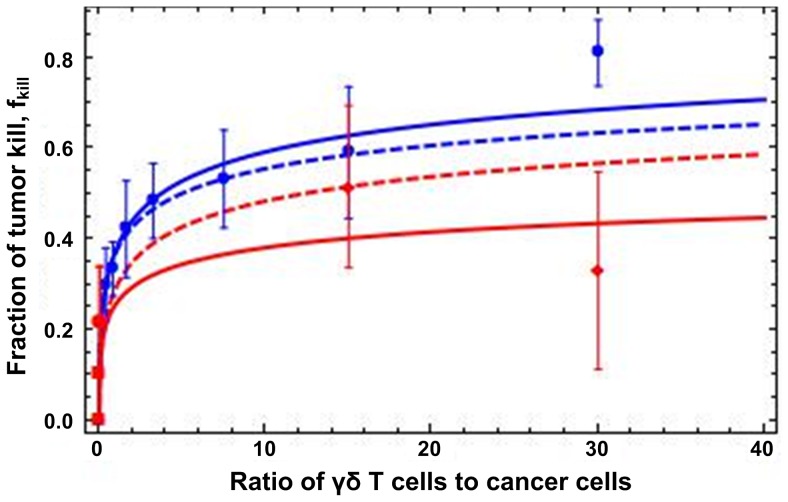
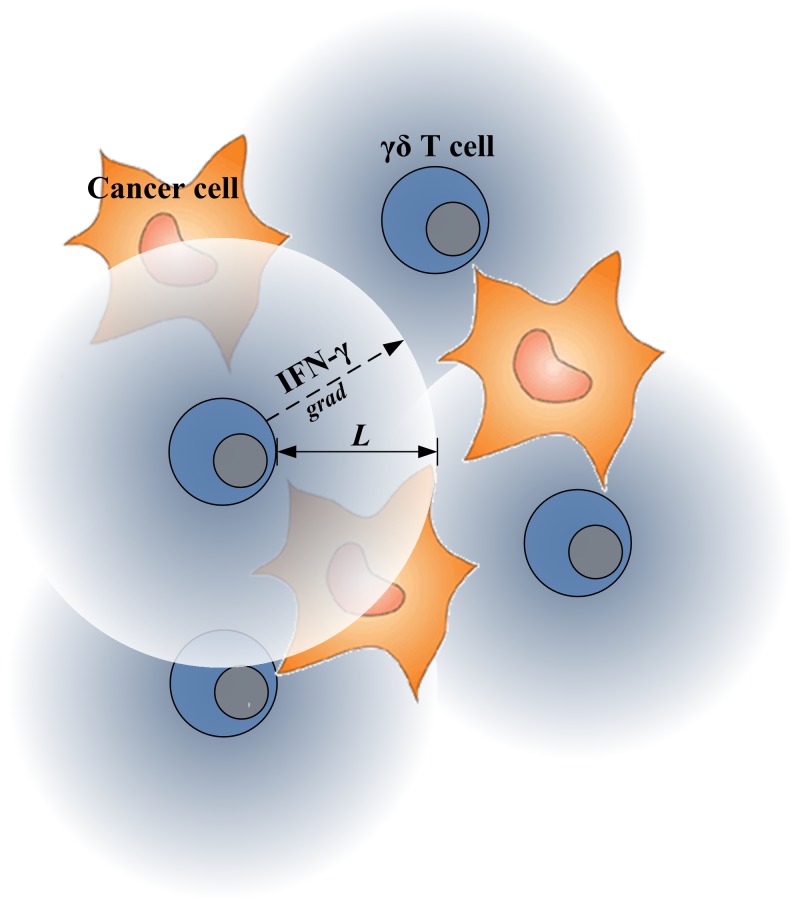
Molecular-focused cancer therapies, e.g., molecularly targeted therapy and immunotherapy, so far demonstrate only limited efficacy in cancer patients. We hypothesize that underestimating the role of biophysical factors that impact the delivery of drugs or cytotoxic cells to the target sites (for associated preferential cytotoxicity or cell signaling modulation) may be responsible for the poor clinical outcome. Therefore, instead of focusing exclusively on the investigation of molecular mechanisms in cancer cells, convection-diffusion of cytotoxic molecules and migration of cancer-killing cells within tumor tissue should be taken into account to improve therapeutic effectiveness. To test this hypothesis, we have developed a mathematical model of the interstitial diffusion and uptake of small cytotoxic molecules secreted by T-cells, which is capable of predicting breast cancer growth inhibition as measured both in vitro and in vivo. Our analysis shows that diffusion barriers of cytotoxic molecules conspire with γδ T-cell scarcity in tissue to limit the inhibitory effects of γδ T-cells on cancer cells. This may increase the necessary ratios of γδ T-cells to cancer cells within tissue to unrealistic values for having an intended therapeutic effect, and decrease the effectiveness of the immunotherapeutic treatment.
分子靶向治疗和免疫治疗等以分子为靶点的癌症疗法,迄今为止在癌症患者中仅显示出有限的疗效。我们假设,低估影响药物或细胞毒性细胞递送至靶部位的生物物理因素的作用(与相关的优先细胞毒性或细胞信号转导调节有关)可能是临床疗效不佳的原因。因此,除了专门研究癌细胞中的分子机制外,还应考虑细胞毒性分子的对流-扩散和杀伤癌细胞在肿瘤组织内的迁移,以提高治疗效果。为了验证这一假设,我们开发了一个数学模型,用于研究 T 细胞分泌的小分子细胞毒性物质的间质扩散和摄取,该模型能够预测体外和体内测量的乳腺癌生长抑制作用。我们的分析表明,细胞毒性分子的扩散屏障与组织中 γδ T 细胞的缺乏共同限制了 γδ T 细胞对癌细胞的抑制作用。这可能会增加组织中 γδ T 细胞与癌细胞的必要比例,使其达到实现预期治疗效果的不切实际的数值,并降低免疫治疗的效果。