Laboratory of Developmental Engineering, Department of Life Sciences, School of Agriculture, Meiji University, Kawasaki, Japan.
PLoS One. 2013 Apr 23;8(4):e61900. doi: 10.1371/journal.pone.0061900. Print 2013.
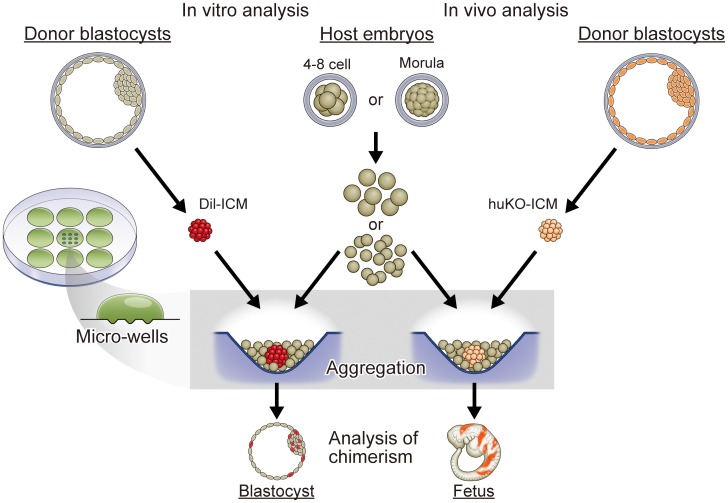
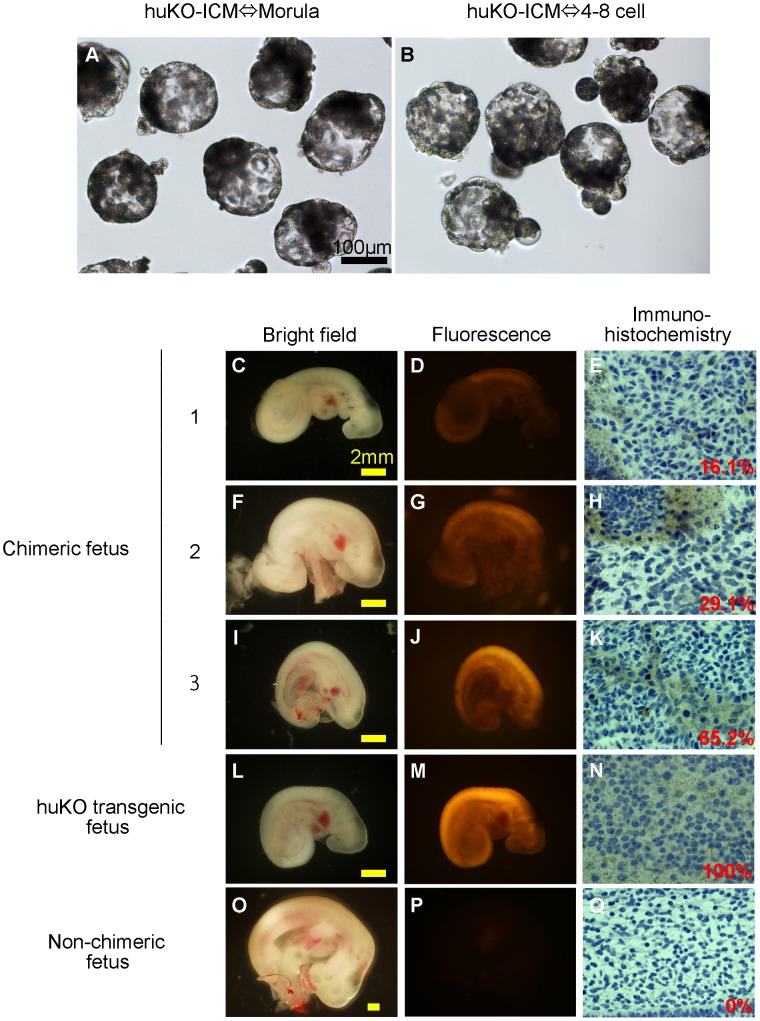
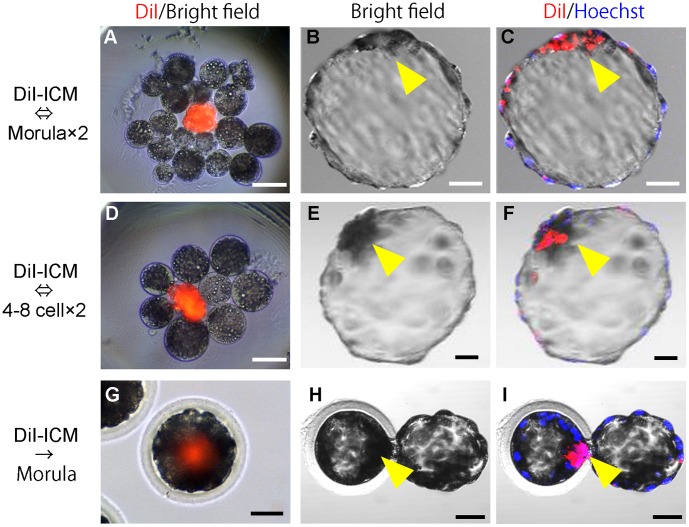
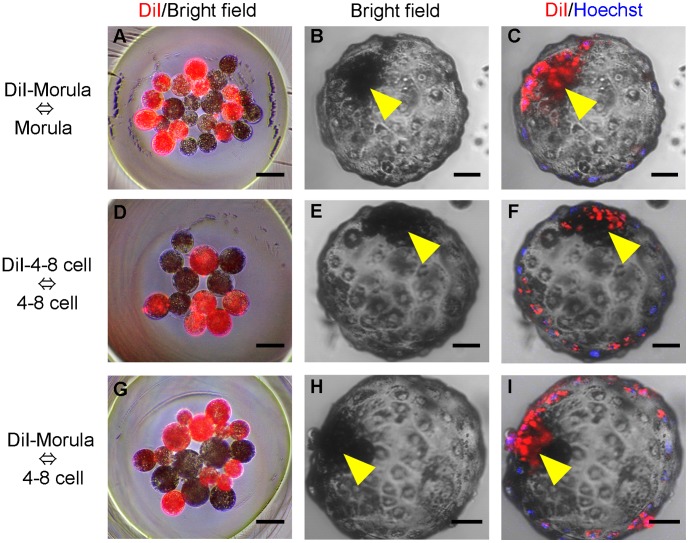
The development and validation of stem cell therapies using induced pluripotent stem (iPS) cells can be optimized through translational research using pigs as large animal models, because pigs have the closest characteristics to humans among non-primate animals. As the recent investigations have been heading for establishment of the human iPS cells with naïve type characteristics, it is an indispensable challenge to develop naïve type porcine iPS cells. The pluripotency of the porcine iPS cells can be evaluated using their abilities to form chimeras. Here, we describe a simple aggregation method using parthenogenetic host embryos that offers a reliable and effective means of determining the chimera formation ability of pluripotent porcine cells. METHODOLOGY/SIGNIFICANT PRINCIPAL FINDINGS: In this study, we show that a high yield of chimeric blastocysts can be achieved by aggregating the inner cell mass (ICM) from porcine blastocysts with parthenogenetic porcine embryos. ICMs cultured with morulae or 4-8 cell-stage parthenogenetic embryos derived from in vitro-matured (IVM) oocytes can aggregate to form chimeric blastocysts that can develop into chimeric fetuses after transfer. The rate of production of chimeric blastocysts after aggregation with host morulae (20/24, 83.3%) was similar to that after the injection of ICMs into morulae (24/29, 82.8%). We also found that 4-8 cell-stage embryos could be used; chimeric blastocysts were produced with a similar efficiency (17/26, 65.4%). After transfer into recipients, these blastocysts yielded chimeric fetuses at frequencies of 36.0% and 13.6%, respectively.
CONCLUSION/SIGNIFICANCE: Our findings indicate that the aggregation method using parthenogenetic morulae or 4-8 cell-stage embryos offers a highly reproducible approach for producing chimeric fetuses from porcine pluripotent cells. This method provides a practical and highly accurate system for evaluating pluripotency of undifferentiated cells, such as iPS cells, based on their ability to form chimeras.
通过使用诱导多能干细胞(iPS)细胞作为大型动物模型的转化研究,可以优化干细胞疗法的开发和验证,因为猪在非灵长类动物中与人类的特征最接近。由于最近的研究一直致力于建立具有原始特征的人类 iPS 细胞,因此开发原始型猪 iPS 细胞是一项不可或缺的挑战。猪 iPS 细胞的多能性可以通过其形成嵌合体的能力来评估。在这里,我们描述了一种使用孤雌生殖宿主胚胎的简单聚集方法,该方法为确定多能猪细胞的嵌合体形成能力提供了一种可靠且有效的手段。
方法/主要发现:在这项研究中,我们表明,通过聚集猪囊胚的内细胞团(ICM)与孤雌生殖的猪胚胎,可以获得高产的嵌合囊胚。用体外成熟(IVM)卵母细胞获得的孤雌生殖胚胎的桑椹胚或 4-8 细胞期培养的 ICM 可以聚集形成嵌合囊胚,这些囊胚可以在转移后发育成嵌合胎儿。与宿主桑椹胚聚集后产生嵌合囊胚的产率(20/24,83.3%)与将 ICM 注射到桑椹胚中的产率(24/29,82.8%)相似。我们还发现可以使用 4-8 细胞期的胚胎;嵌合囊胚的产生效率相似(17/26,65.4%)。将这些囊胚转移到受体中后,分别以 36.0%和 13.6%的频率产生嵌合胎儿。
我们的发现表明,使用孤雌生殖桑椹胚或 4-8 细胞期胚胎的聚集方法为从猪多能细胞产生嵌合胎儿提供了一种高度可重复的方法。该方法为评估未分化细胞(如 iPS 细胞)的多能性提供了一种实用且高度准确的系统,其依据是它们形成嵌合体的能力。