Department of Microbiology, Biochemistry, and Immunology, Morehouse School of Medicine, Atlanta, Georgia, United States of America.
PLoS One. 2013 Apr 5;8(4):e60898. doi: 10.1371/journal.pone.0060898. Print 2013.
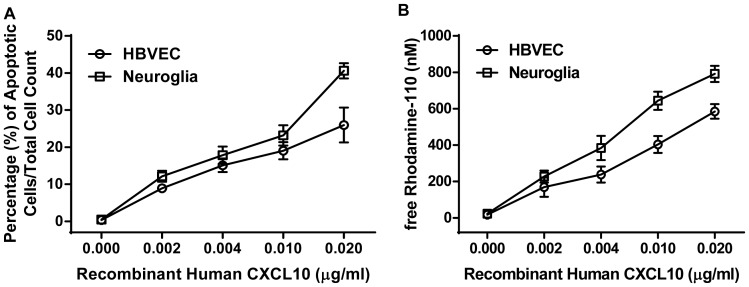
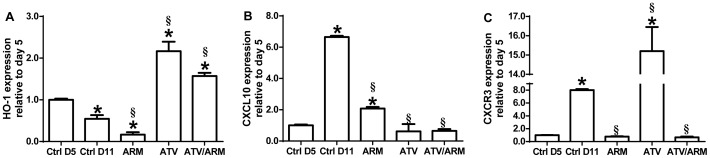
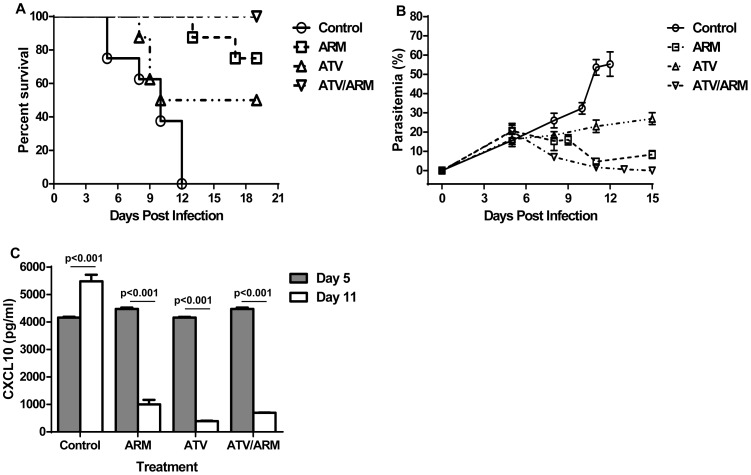
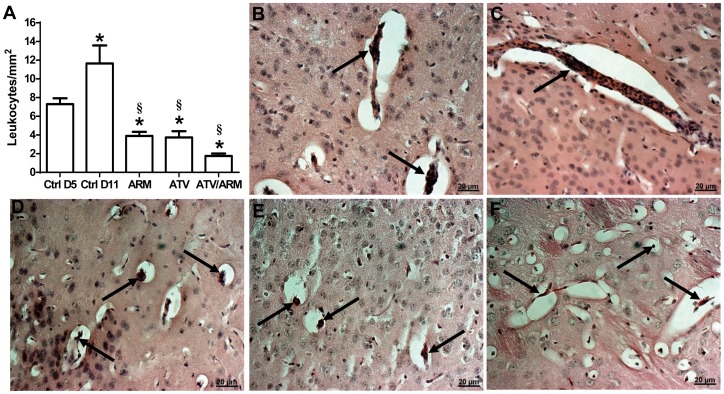
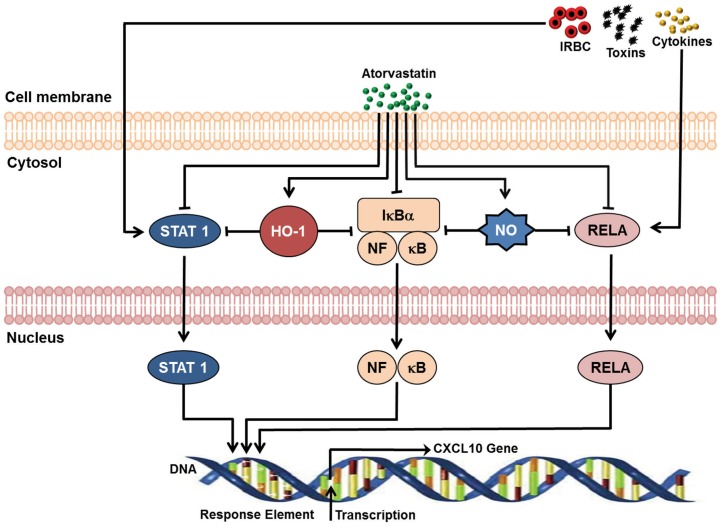
Despite appropriate anti-malarial treatment, cerebral malaria (CM)-associated mortalities remain as high as 30%. Thus, adjunctive therapies are urgently needed to prevent or reduce such mortalities. Overproduction of CXCL10 in a subset of CM patients has been shown to be tightly associated with fatal human CM. Mice with deleted CXCL10 gene are partially protected against experimental cerebral malaria (ECM) mortality indicating the importance of CXCL10 in the pathogenesis of CM. However, the direct effect of increased CXCL10 production on brain cells is unknown. We assessed apoptotic effects of CXCL10 on human brain microvascular endothelial cells (HBVECs) and neuroglia cells in vitro. We tested the hypothesis that reducing overexpression of CXCL10 with a synthetic drug during CM pathogenesis will increase survival and reduce mortality. We utilized atorvastatin, a widely used synthetic blood cholesterol-lowering drug that specifically targets and reduces plasma CXCL10 levels in humans, to determine the effects of atorvastatin and artemether combination therapy on murine ECM outcome. We assessed effects of atorvastatin treatment on immune determinants of severity, survival, and parasitemia in ECM mice receiving a combination therapy from onset of ECM (day 6 through 9 post-infection) and compared results with controls. The results indicate that CXCL10 induces apoptosis in HBVECs and neuroglia cells in a dose-dependent manner suggesting that increased levels of CXCL10 in CM patients may play a role in vasculopathy, neuropathogenesis, and brain injury during CM pathogenesis. Treatment of ECM in mice with atorvastatin significantly reduced systemic and brain inflammation by reducing the levels of the anti-angiogenic and apoptotic factor (CXCL10) and increasing angiogenic factor (VEGF) production. Treatment with a combination of atorvastatin and artemether improved survival (100%) when compared with artemether monotherapy (70%), p<0.05. Thus, adjunctively reducing CXCL10 levels and inflammation by atorvastatin treatment during anti-malarial therapy may represent a novel approach to treating CM patients.
尽管进行了适当的抗疟治疗,脑型疟疾(CM)相关死亡率仍高达 30%。因此,迫切需要辅助治疗来预防或减少此类死亡率。在一部分 CM 患者中,CXCL10 的过度产生已被证明与致命性人类 CM 密切相关。缺乏 CXCL10 基因的小鼠对实验性脑型疟疾(ECM)死亡率有部分保护作用,表明 CXCL10 在 CM 发病机制中的重要性。然而,CXCL10 产量增加对脑细胞的直接影响尚不清楚。我们评估了 CXCL10 对体外人脑微血管内皮细胞(HBVEC)和神经胶质细胞的凋亡作用。我们检验了这样一个假设,即在 CM 发病过程中,用一种合成药物降低 CXCL10 的过度表达,将增加存活率并降低死亡率。我们利用阿托伐他汀(一种广泛用于降低血液胆固醇的合成药物),它可以特异性靶向并降低人类血浆中的 CXCL10 水平,来确定阿托伐他汀和青蒿素联合治疗对实验性 ECM 结果的影响。我们评估了阿托伐他汀治疗对 ECM 小鼠免疫决定因素的影响,这些小鼠从 ECM 发病开始(感染后第 6 天至第 9 天)接受联合治疗,并与对照组进行比较。结果表明,CXCL10 以剂量依赖性方式诱导 HBVEC 和神经胶质细胞凋亡,这表明 CM 患者中 CXCL10 水平升高可能在 CM 发病过程中的血管病变、神经发病机制和脑损伤中起作用。阿托伐他汀治疗显著降低了 ECM 小鼠的全身和脑部炎症,通过降低抗血管生成和凋亡因子(CXCL10)的水平和增加血管生成因子(VEGF)的产生。与青蒿素单药治疗(70%)相比,阿托伐他汀和青蒿素联合治疗可显著提高存活率(100%),p<0.05。因此,在抗疟治疗过程中通过阿托伐他汀治疗降低 CXCL10 水平和炎症可能代表治疗 CM 患者的一种新方法。