Department of Microbiology, Biochemistry and Immunology, Morehouse School of Medicine, Atlanta, GA, USA.
J Neuroinflammation. 2014 Jan 17;11:9. doi: 10.1186/1742-2094-11-9.
Cerebral Malaria (CM) is a diffuse encephalopathy caused by Plasmodium falciparum infection. Despite availability of antimalarial drugs, CM-associated mortality remains high at approximately 30% and a subset of survivors develop neurological and cognitive disabilities. While antimalarials are effective at clearing Plasmodium parasites they do little to protect against CM pathophysiology and parasite-induced brain inflammation that leads to seizures, coma and long-term neurological sequelae in CM patients. Thus, there is urgent need to explore therapeutics that can reduce or prevent CM pathogenesis and associated brain inflammation to improve survival. Neuregulin-1 (NRG-1) is a neurotrophic growth factor shown to protect against brain injury associated with acute ischemic stroke (AIS) and neurotoxin exposure. However, this drug has not been tested against CM-associated brain injury. Since CM-associated brain injuries and AIS share similar pathophysiological features, we hypothesized that NRG-1 will reduce or prevent neuroinflammation and brain damage as well as improve survival in mice with late-stage experimental cerebral malaria (ECM).
We tested the effects of NRG-1 on ECM-associated brain inflammation and mortality in P. berghei ANKA (PbA)-infected mice and compared to artemether (ARM) treatment; an antimalarial currently used in various combination therapies against malaria.
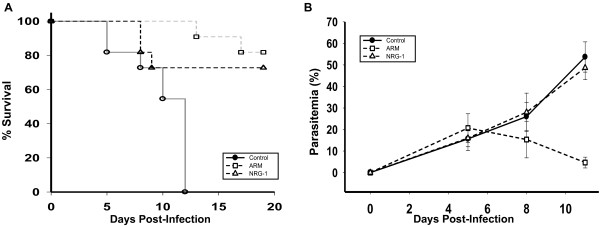
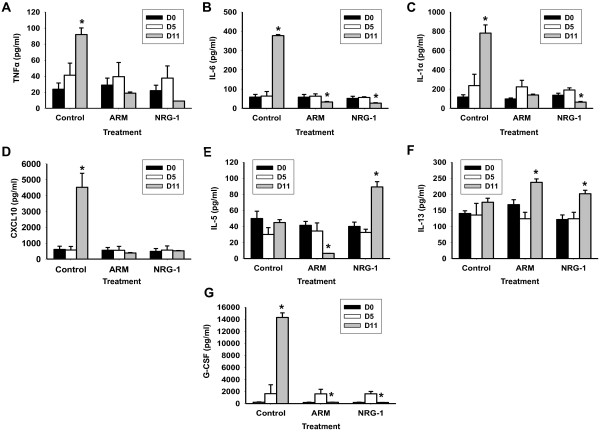
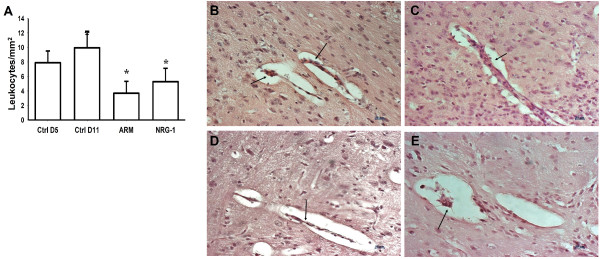
Treatment with ARM (25 mg/kg/day) effectively cleared parasites and reduced mortality in PbA-infected mice by 82%. Remarkably, NRG-1 therapy (1.25 ng/kg/day) significantly improved survival against ECM by 73% despite increase in parasite burden within NRG-1-treated mice. Additionally, NRG-1 therapy reduced systemic and brain pro-inflammatory factors TNFalpha, IL-6, IL-1alpha and CXCL10 and enhanced anti-inflammatory factors, IL-5 and IL-13 while decreasing leukocyte accumulation in brain microvessels.
This study suggests that NRG-1 attenuates ECM-associated brain inflammation and injuries and may represent a novel supportive therapy for the management of CM.
脑型疟疾(CM)是由恶性疟原虫感染引起的弥漫性脑病。尽管有抗疟药物可用,但 CM 相关死亡率仍高达约 30%,一部分幸存者会出现神经和认知障碍。虽然抗疟药物在清除疟原虫方面非常有效,但它们对 CM 病理生理学和寄生虫引起的脑炎症几乎没有作用,这种炎症会导致 CM 患者癫痫发作、昏迷和长期神经后遗症。因此,迫切需要探索能够减轻或预防 CM 发病机制和相关脑炎症的治疗方法,以提高生存率。神经调节蛋白-1(NRG-1)是一种神经营养生长因子,已被证明可预防与急性缺血性中风(AIS)和神经毒素暴露相关的脑损伤。然而,这种药物尚未在 CM 相关脑损伤中进行测试。由于 CM 相关脑损伤和 AIS 具有相似的病理生理特征,我们假设 NRG-1 将减少或预防神经炎症和脑损伤,并提高晚期实验性脑疟疾(ECM)小鼠的生存率。
我们测试了 NRG-1 对 PbA 感染小鼠 ECM 相关脑炎症和死亡率的影响,并与青蒿琥酯(ARM)治疗进行了比较;ARM 是目前用于各种疟疾联合疗法的抗疟药物。
ARM(25mg/kg/天)治疗可有效清除寄生虫,并使 PbA 感染小鼠的死亡率降低 82%。值得注意的是,NRG-1 治疗(1.25ng/kg/天)尽管增加了 NRG-1 治疗小鼠的寄生虫负荷,但仍使 ECM 生存率显著提高 73%。此外,NRG-1 治疗可降低系统和脑组织促炎因子 TNFalpha、IL-6、IL-1alpha 和 CXCL10,并增强抗炎因子 IL-5 和 IL-13,同时减少脑微血管中的白细胞聚集。
本研究表明,NRG-1 可减轻 ECM 相关脑炎症和损伤,可能代表 CM 管理的一种新型支持性治疗方法。