Department of Biological Sciences, Auburn University, Auburn, Alabama, United States of America.
PLoS One. 2013 Apr 22;8(4):e62146. doi: 10.1371/journal.pone.0062146. Print 2013.
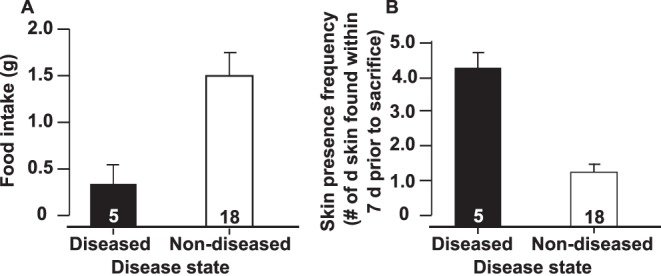
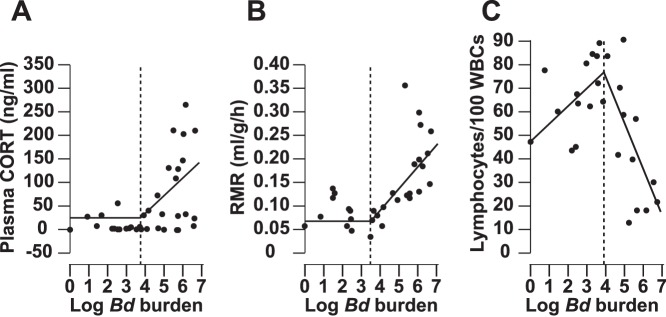
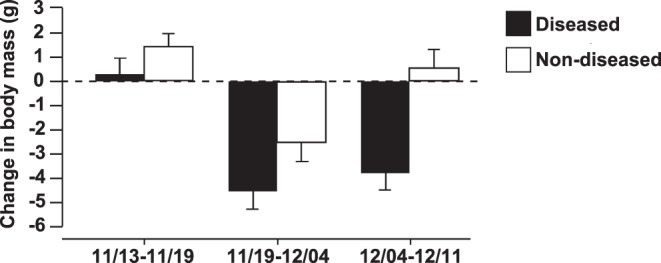
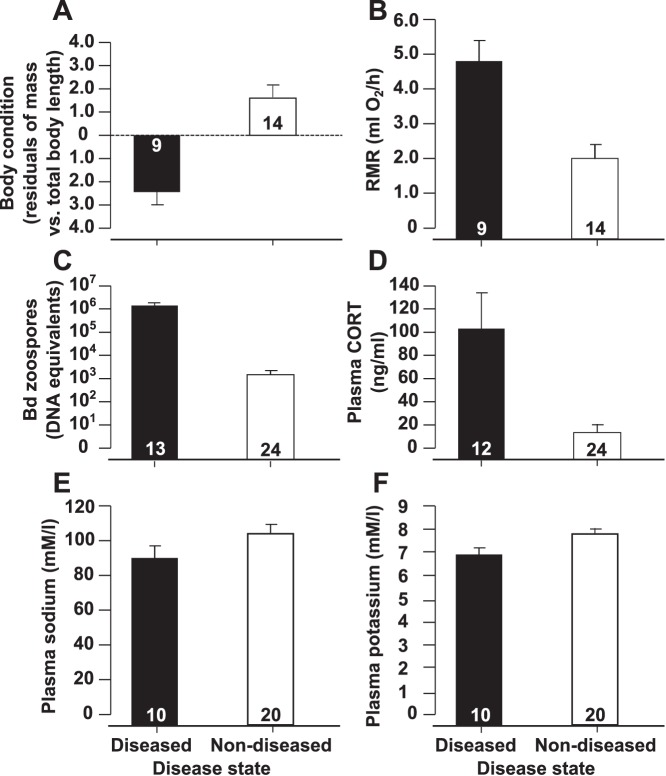
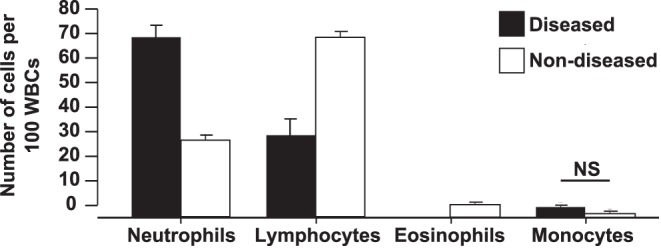
Chytridiomycosis, a disease caused by Batrachochytrium dendrobatidis, has contributed to worldwide amphibian population declines; however, the pathogenesis of this disease is still somewhat unclear. Previous studies suggest that infection disrupts cutaneous sodium transport, which leads to hyponatremia and cardiac failure. However, infection is also correlated with unexplained effects on appetite, skin shedding, and white blood cell profiles. Glucocorticoid hormones may be the biochemical connection between these disparate effects, because they regulate ion homeostasis and can also influence appetite, skin shedding, and white blood cells. During a laboratory outbreak of B. dendrobatidis in Australian Green Tree Frogs, Litoria caerulea, we compared frogs showing clinical signs of chytridiomycosis to infected frogs showing no signs of disease and determined that diseased frogs had elevated baseline corticosterone, decreased plasma sodium and potassium, and altered WBC profiles. Diseased frogs also showed evidence of poorer body condition and elevated metabolic rates compared with frogs showing no signs of disease. Prior to displaying signs of disease, we also observed changes in appetite, body mass, and the presence of shed skin associated with infected but not yet diseased frogs. Collectively, these results suggest that elevated baseline corticosterone is associated with chytridiomycosis and correlates with some of the deleterious effects observed during disease development.
蛙壶菌病是一种由蛙壶菌引起的疾病,它导致了全球范围内的两栖动物数量减少;然而,这种疾病的发病机制仍有些不清楚。先前的研究表明,感染会破坏皮肤中的钠转运,导致低钠血症和心力衰竭。然而,感染也与不明原因的食欲、蜕皮和白细胞谱变化有关。糖皮质激素可能是这些不同影响之间的生化联系,因为它们调节离子稳态,也可以影响食欲、蜕皮和白细胞。在澳大利亚绿树蛙发生的蛙壶菌实验室爆发中,我们比较了表现出蛙壶菌病临床症状的青蛙与没有表现出疾病迹象的感染青蛙,并确定患病青蛙的基础皮质醇升高,血浆钠和钾降低,白细胞谱改变。与没有疾病迹象的青蛙相比,患病青蛙的身体状况较差,代谢率也较高。在出现疾病迹象之前,我们还观察到与感染但尚未患病的青蛙相关的食欲、体重和蜕皮变化。总的来说,这些结果表明,基础皮质醇升高与蛙壶菌病有关,并与疾病发展过程中观察到的一些有害影响有关。