Funktionelle Genomforschung der Mikroorganismen, Heinrich-Heine Universität, Düsseldorf, Germany.
PLoS Pathog. 2013;9(4):e1003325. doi: 10.1371/journal.ppat.1003325. Epub 2013 Apr 25.
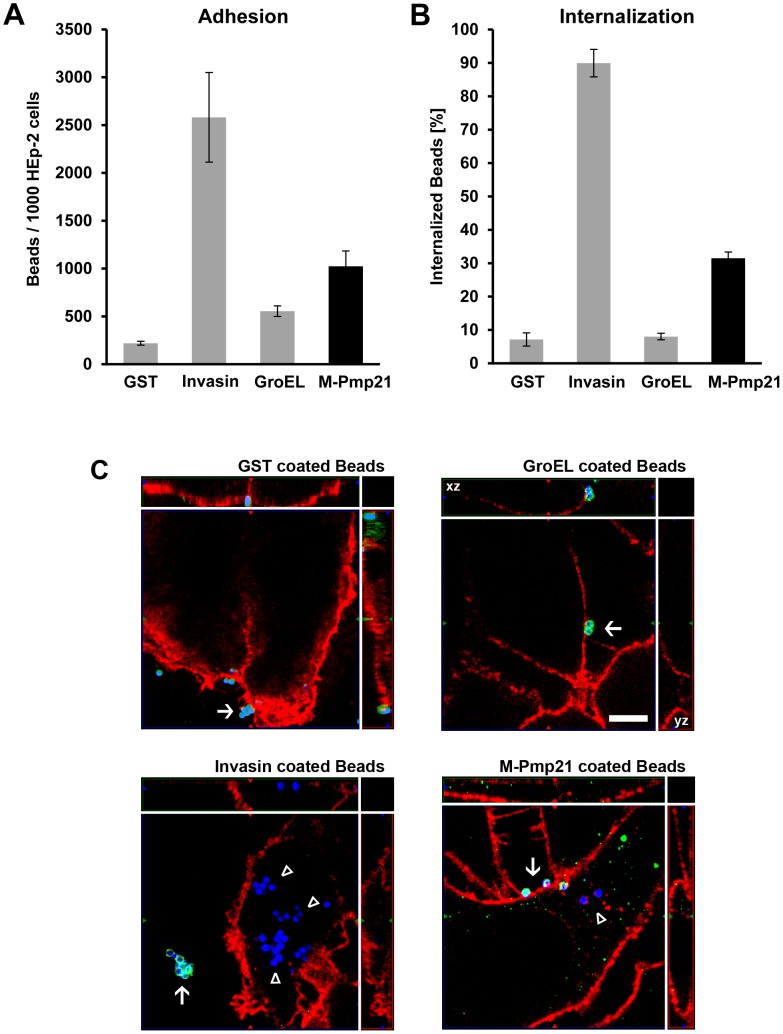
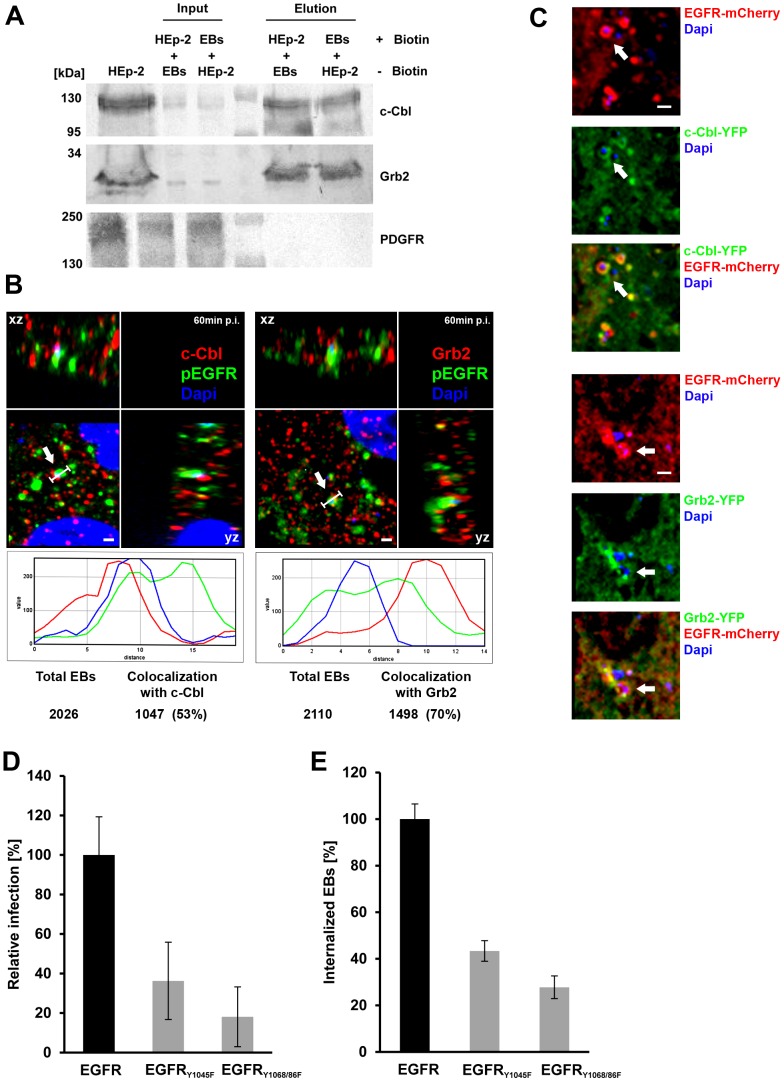
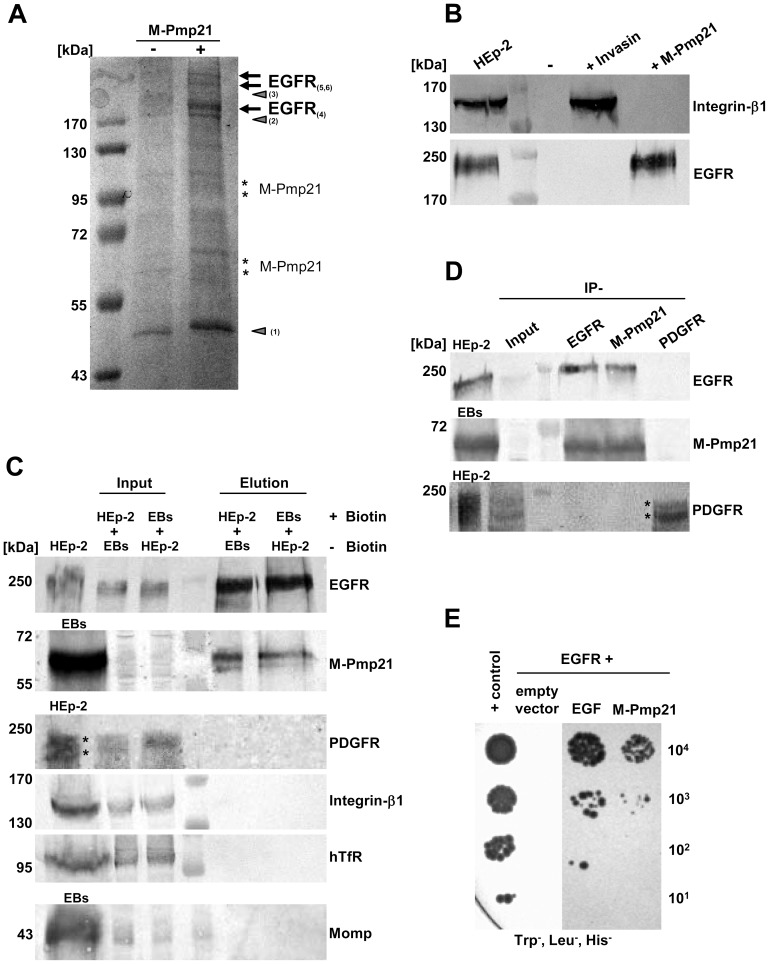
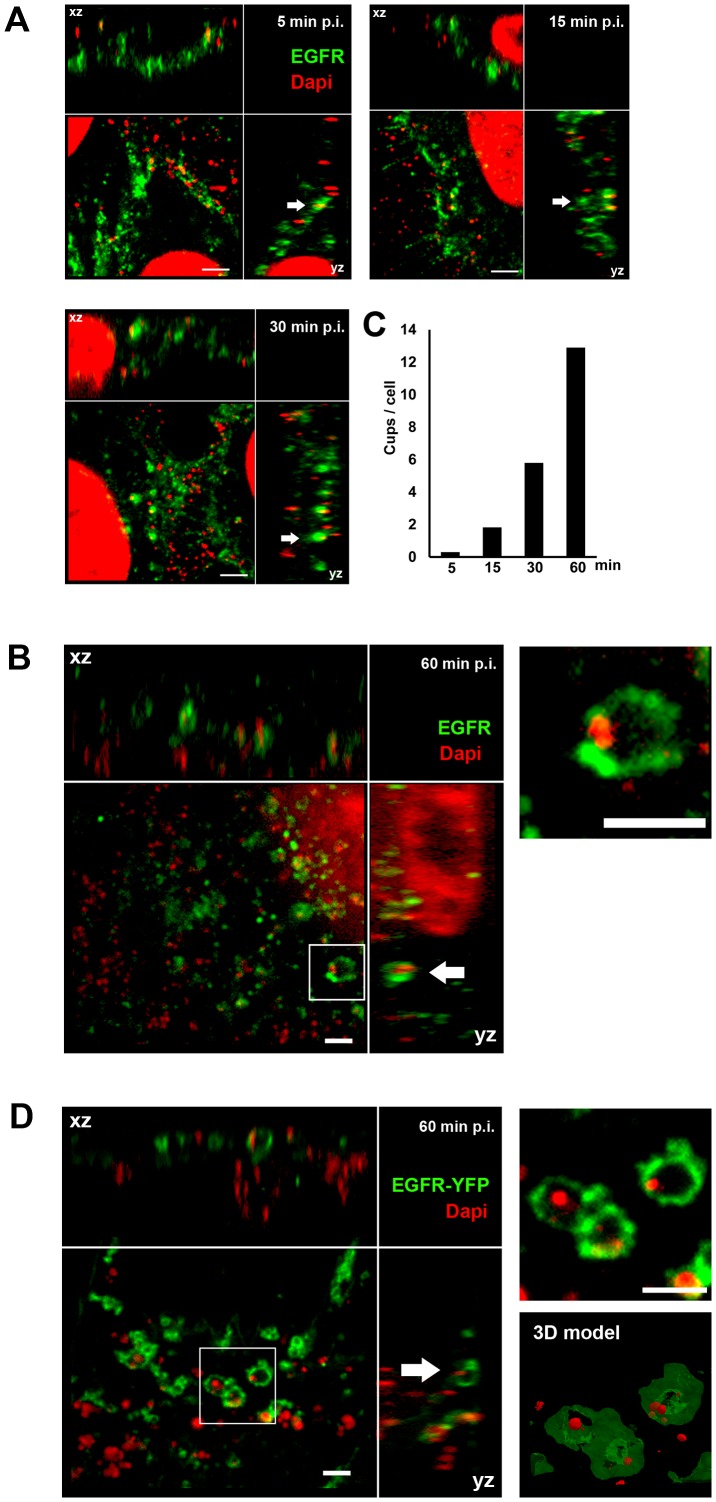
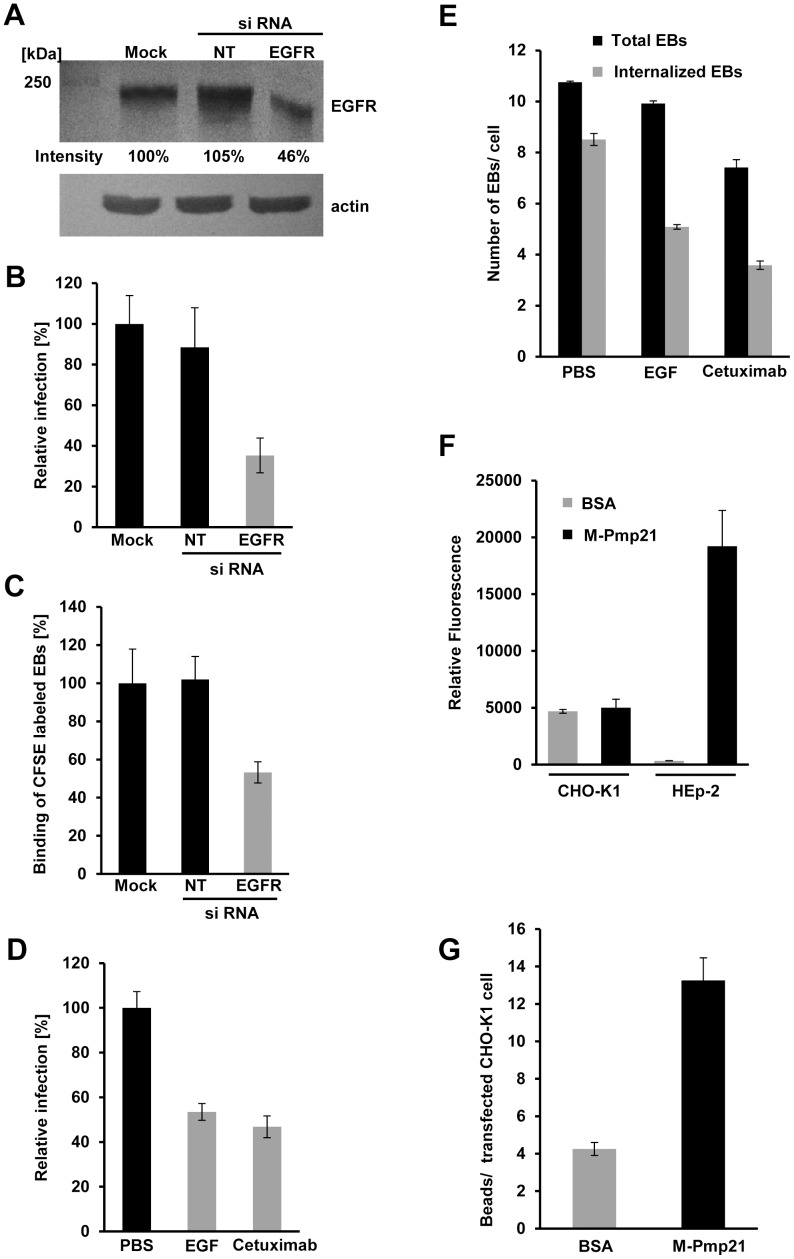
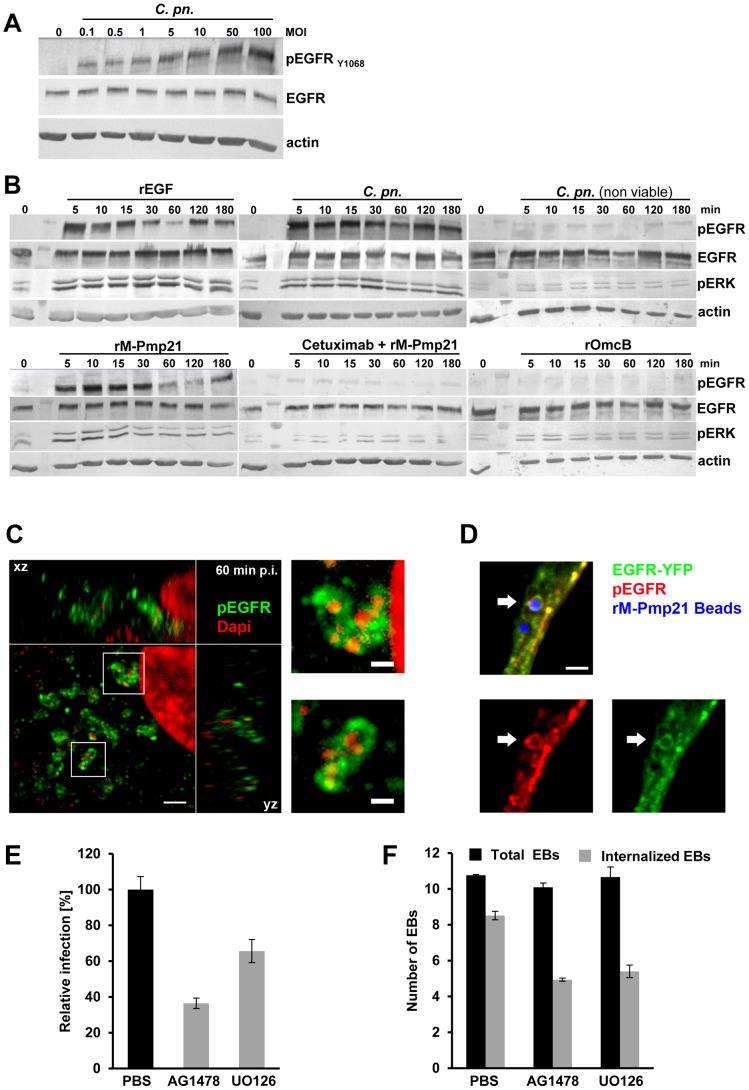
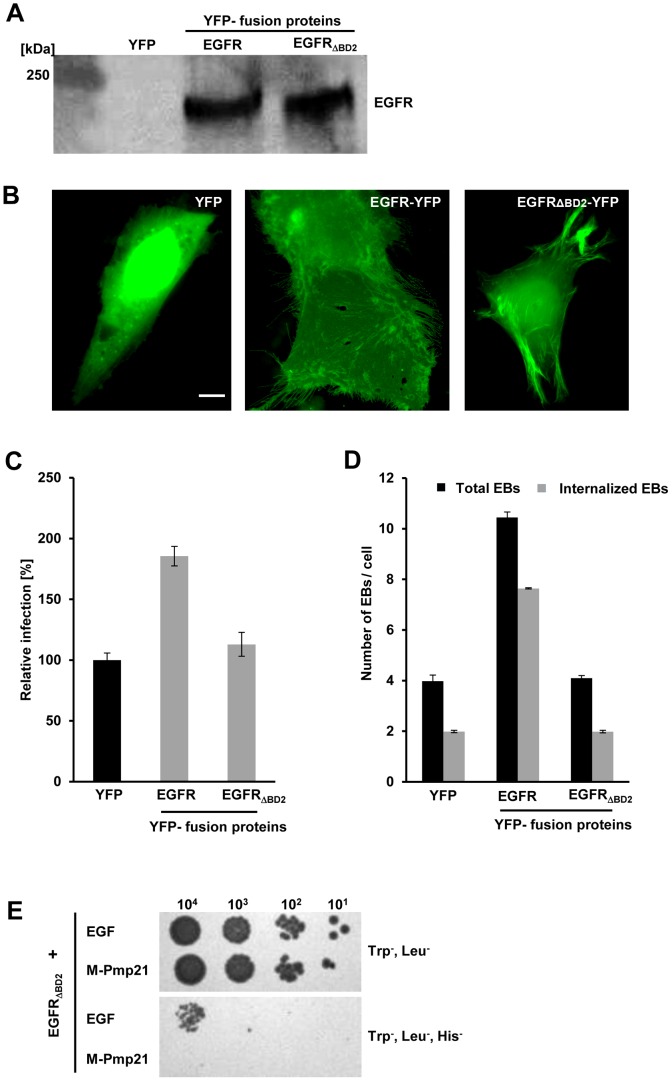
Infection of mammalian cells by the strictly intracellular pathogens Chlamydiae requires adhesion and internalization of the infectious Elementary Bodies (EBs). The components of the latter step were unknown. Here, we identify Chlamydia pneumoniae Pmp21 as an invasin and EGFR as its receptor. Modulation of EGFR surface expression evokes correlated changes in EB adhesion, internalization and infectivity. Ectopic expression of EGFR in EGFR-negative hamster cells leads to binding of Pmp21 beads and EBs, thus boosting the infection. EB/Pmp21 binding and invasion of epithelial cells results in activation of EGFR, recruitment of adaptors Grb2 and c-Cbl and activation of ERK1/2, while inhibition of EGFR or MEK kinase activity abrogates EB entry, but not attachment. Binding of Grb2 and c-Cbl by EGFR is essential for infection. This is the first report of an invasin-receptor interaction involved in host-cell invasion by any chlamydial species.
哺乳动物细胞被严格的细胞内病原体衣原体感染需要黏附和内化感染性原始小体(EBs)。后者的组成部分尚不清楚。在这里,我们鉴定出肺炎衣原体 Pmp21 是一种侵袭蛋白,EGFR 是其受体。EGFR 表面表达的调节会引起 EB 黏附、内化和感染性的相关变化。在 EGFR 阴性的仓鼠细胞中外源表达 EGFR 会导致 Pmp21 珠和 EBs 的结合,从而增强感染。EB/Pmp21 与上皮细胞的结合和入侵会导致 EGFR 的激活,衔接蛋白 Grb2 和 c-Cbl 的募集以及 ERK1/2 的激活,而 EGFR 或 MEK 激酶活性的抑制会阻断 EB 的进入,但不会阻断附着。EGFR 通过 Grb2 和 c-Cbl 的结合对于感染是必不可少的。这是第一个报告涉及任何衣原体物种的宿主细胞入侵的侵袭蛋白-受体相互作用的报告。