CCMAR,CIMAR-Laboratório Associado, Universidade do Algarve, Gambelas, Faro 8005-139, Portugal.
BMC Genomics. 2013 May 1;14:294. doi: 10.1186/1471-2164-14-294.
The fucoid brown algae (Heterokontophyta, Phaeophyceae) are increasingly the focus of ecological genetics, biodiversity, biogeography and speciation research. The molecular genetics underlying mating system variation, where repeated dioecious - hermaphrodite switches during evolution are recognized, and the molecular evolution of sex-related genes are key questions currently hampered by a lack of genomic information. We therefore undertook a comparative analysis of male and female reproductive tissue transcriptomes against a vegetative background during natural reproductive cycles in Fucus vesiculosus.
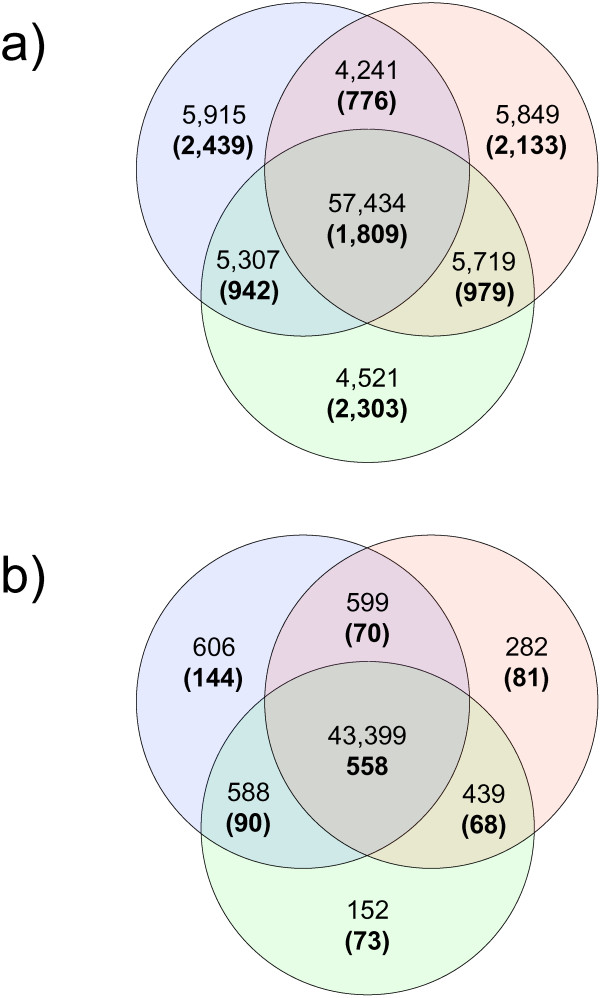
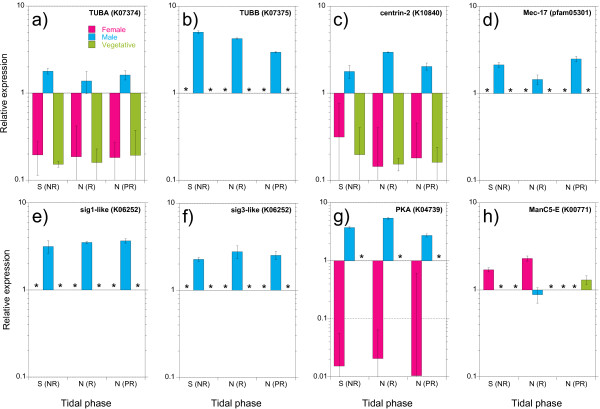
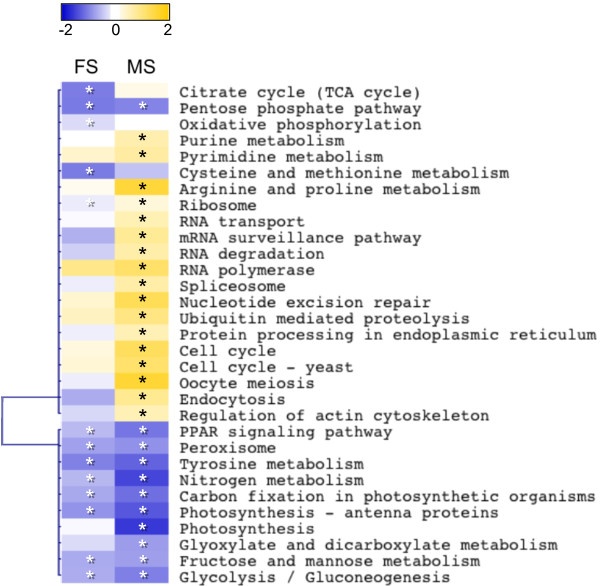
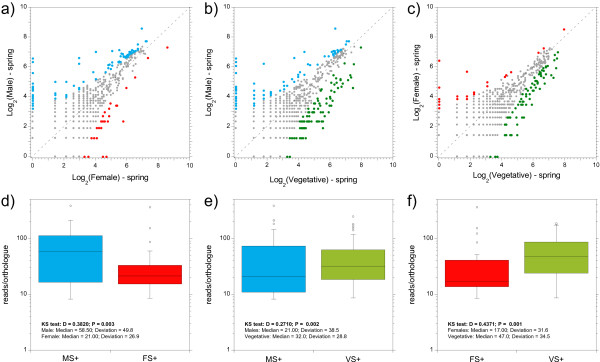
Over 300 k reads were assembled and annotated against public protein databases including a brown alga. Compared with the vegetative tissue, photosynthetic and carbohydrate metabolism pathways were under-expressed, particularly in male tissue, while several pathways involved in genetic information processing and replication were over-expressed. Estimates of sex-biased gene (SBG) expression were higher for male (14% of annotated orthologues) than female tissue (9%) relative to the vegetative background. Mean expression levels and variance were also greater in male- than female-biased genes. Major female-biased genes were carbohydrate-modifying enzymes with likely roles in zygote cell wall biogenesis and/or modification. Male-biased genes reflected distinct sperm development and function, and orthologues for signal perception (a phototropin), transduction (several kinases), and putatively flagella-localized proteins (including candidate gamete-recognition proteins) were uniquely expressed in males. Overall, the results suggest constraint on female-biased genes (possible pleiotropy), and less constrained male-biased genes, mostly associated with sperm-specific functions.
Our results support the growing contention that males possess a large array of genes regulating male fitness, broadly supporting findings in evolutionarily distant heterogametic animal models. This work identifies an annotated set of F. vesiculosus gene products that potentially regulate sexual reproduction and may contribute to prezygotic isolation, one essential step towards developing tools for a functional understanding of species isolation and differentiation.
褐藻门(不等鞭毛藻,褐藻纲)越来越成为生态遗传学、生物多样性、生物地理学和物种形成研究的焦点。在进化过程中,反复出现的雌雄同体-雌雄同体转换的交配系统变异的分子遗传学,以及与性别相关的基因的分子进化是目前由于缺乏基因组信息而受到阻碍的关键问题。因此,我们在自然繁殖周期中,对泡叶藻的雄性和雌性生殖组织转录组进行了比较分析,以对照营养组织。
超过 300 k 的读取序列被组装并注释,注释的公共蛋白质数据库包括一个褐藻数据库。与营养组织相比,光合作用和碳水化合物代谢途径表达下调,特别是在雄性组织中,而几个涉及遗传信息处理和复制的途径表达上调。相对于营养组织,雄性组织(14%的注释直系同源物)的性别偏向基因(SBG)表达估计高于雌性组织(9%)。雄性偏向基因的平均表达水平和方差也高于雌性偏向基因。主要的雌性偏向基因是碳水化合物修饰酶,可能在合子细胞壁的生物发生和/或修饰中发挥作用。雄性偏向基因反映了明显的精子发育和功能,以及信号感知(光受体)、转导(几种激酶)和推测的鞭毛定位蛋白(包括候选配子识别蛋白)的直系同源物在雄性中特异表达。总的来说,这些结果表明雌性偏向基因受到限制(可能是多效性),而雄性偏向基因限制较少,主要与精子特有的功能有关。
我们的研究结果支持越来越多的观点,即雄性拥有大量调节雄性适合度的基因,广泛支持在进化上相距甚远的异配性动物模型中的发现。这项工作确定了一组注释的泡叶藻基因产物,这些基因产物可能调节有性生殖,并可能有助于避免雌雄配子结合,这是理解物种隔离和分化的一个重要步骤。