Department of Civil and Environmental Engineering, University of California at Los Angeles, Box 951593, Los Angeles, California 90095-1593, United States.
Environ Sci Technol. 2013 Jun 4;47(11):5695-702. doi: 10.1021/es400079n. Epub 2013 May 21.
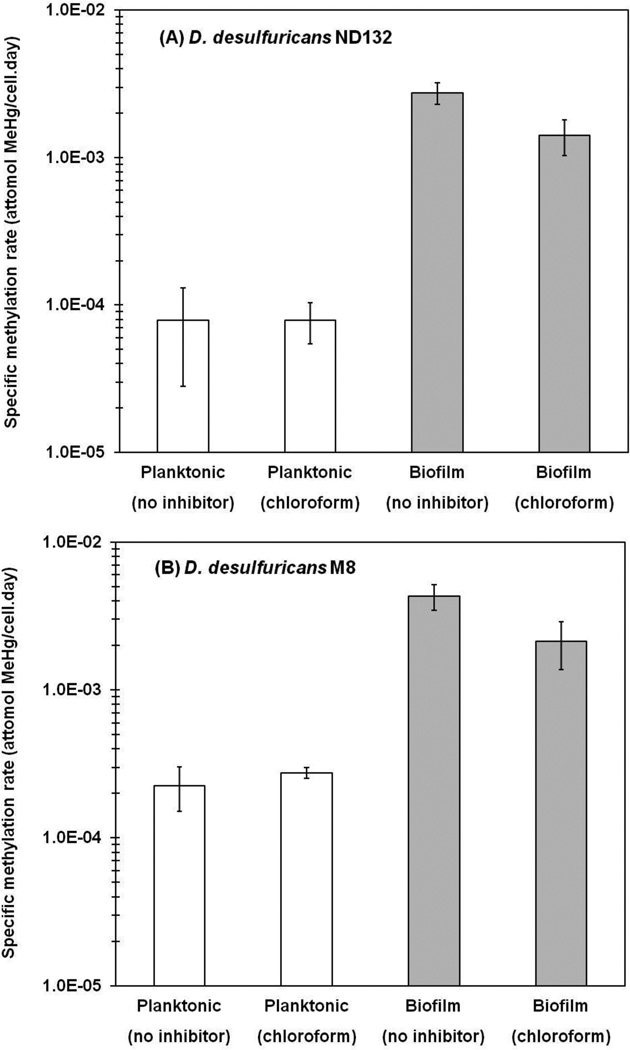
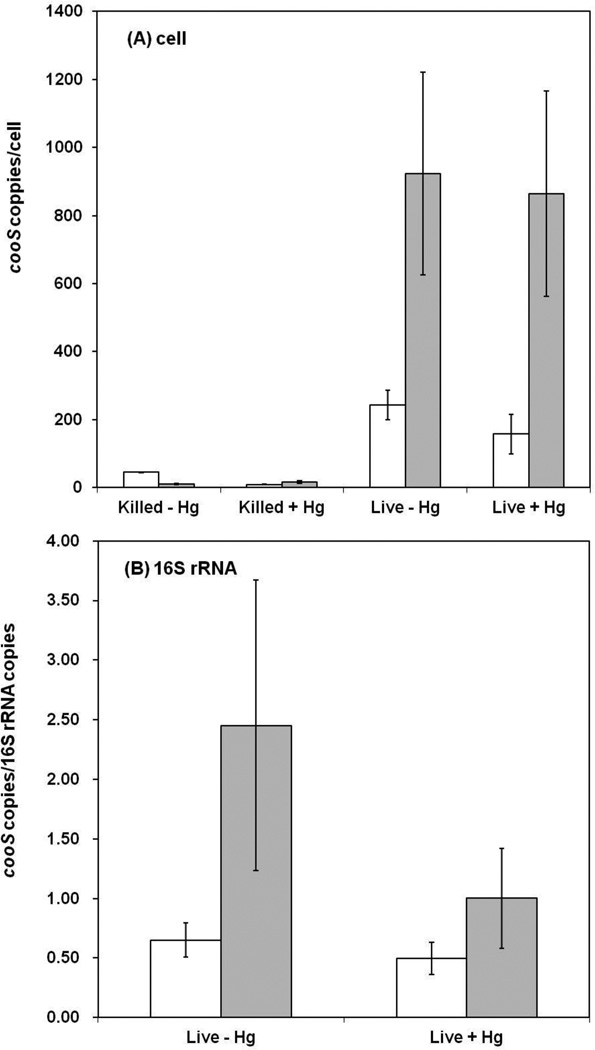
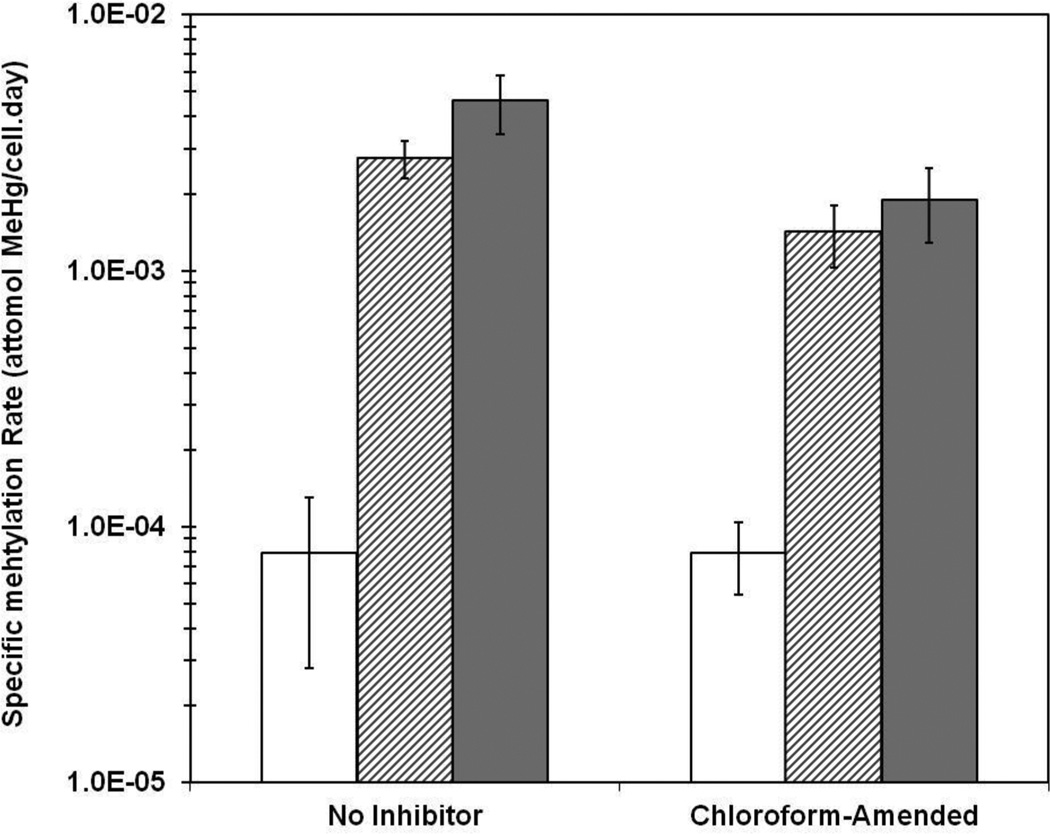
Biofilms can methylate mercury (Hg) at higher rates than unattached bacteria and are increasingly recognized as important Hg methylation sites in the environment. Our previous study showed that methylation rates in biofilm cultures were up to 1 order of magnitude greater than those in planktonic cultures of a sulfate-reducing bacterium. To probe whether the differential Hg methylation rates resulted from metabolic differences between these two cultures, Hg methylation assays following molybdate or chloroform inhibition (a specific inhibitor of the acetyl-CoA pathway) were conducted on biofilm and planktonic cultures of Desulfovibrio desulfuricans strains M8 and ND132. Molybdate was as effective in inhibiting Hg methylation as well as growth in both planktonic and biofilm cultures. The addition of chloroform only impacted Hg methylation in biofilm cultures, suggesting that different pathways are used for methylation in biofilm compared to planktonic cultures. To investigate this further, expression of the cooS gene, which encodes for carbon monoxide dehydrogenase, a key enzyme in the acetyl-CoA pathway, was compared in biofilm and planktonic cultures of ND132. Biofilm cultures showed up to 4 times higher expression of cooS than planktonic cultures. On the basis of these results, the acetyl-CoA pathway appears to play an important role in methylation in biofilm cultures of this organism, possibly by supplying the methyl group to Hg methylating enzymes; methylation in planktonic cultures appears to be independent of this pathway. This observation has important implications, particularly in developing reliable models to predict Hg methylation rates in different environments and perhaps eventually in being able to control this undesirable chemical transformation.
生物膜可以比游离细菌以更高的速率将汞(Hg)甲基化,并且越来越被认为是环境中重要的 Hg 甲基化位点。我们之前的研究表明,生物膜培养物中的甲基化速率比硫酸盐还原菌的浮游培养物高 1 个数量级。为了探究这种差异是否是由于这两种培养物之间的代谢差异所致,我们对脱硫弧菌 M8 和 ND132 菌株的生物膜和浮游培养物进行了钼酸盐或氯仿抑制(乙酰辅酶 A 途径的特异性抑制剂)后的 Hg 甲基化测定。钼酸盐对浮游和生物膜培养物中的 Hg 甲基化和生长均具有同等的抑制作用。氯仿的添加仅影响生物膜培养物中的 Hg 甲基化,这表明生物膜和浮游培养物中使用了不同的途径进行甲基化。为了进一步研究这一点,我们比较了 ND132 的生物膜和浮游培养物中 cooS 基因的表达,该基因编码一氧化碳脱氢酶,是乙酰辅酶 A 途径中的关键酶。生物膜培养物中的 cooS 基因表达比浮游培养物高 4 倍。基于这些结果,乙酰辅酶 A 途径似乎在该生物的生物膜培养物的甲基化中起着重要作用,可能是通过将甲基供体提供给 Hg 甲基化酶;浮游培养物中的甲基化似乎独立于该途径。这一观察结果具有重要意义,特别是在开发可靠的模型以预测不同环境中的 Hg 甲基化速率方面,并且最终可能能够控制这种不理想的化学转化。