Department of Molecular Biology and Biotechnology, Biotechnology Center of the Federal University of Rio Grande do Sul, Federal University of Rio Grande do Sul, Porto Alegre, RS-Brazil.
PLoS One. 2013 Apr 29;8(4):e61743. doi: 10.1371/journal.pone.0061743. Print 2013.
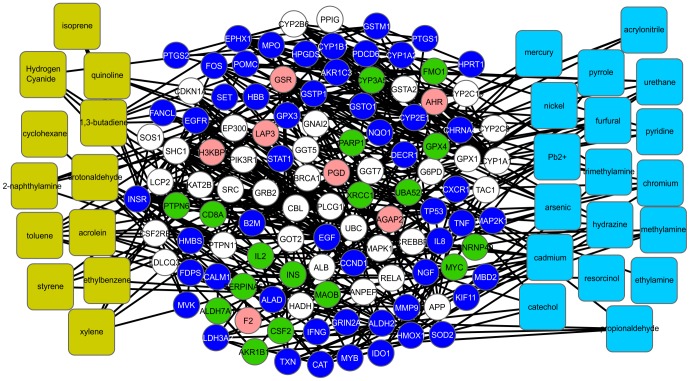
The physiological and molecular effects of tobacco smoke in adult humans and the development of cancer have been well described. In contrast, how tobacco smoke affects embryonic development remains poorly understood. Morphological studies of the fetuses of smoking pregnant women have shown various physical deformities induced by constant fetal exposure to tobacco components, especially nicotine. In addition, nicotine exposure decreases fetal body weight and bone/cartilage growth in addition to decreasing cranial diameter and tibia length. Unfortunately, the molecular pathways leading to these morphological anomalies are not completely understood. In this study, we applied interactome data mining tools and small compound interaction networks to elucidate possible molecular pathways associated with the effects of tobacco smoke components during embryonic development in pregnant female smokers. Our analysis showed a relationship between nicotine and 50 additional harmful substances involved in a variety of biological process that can cause abnormal proliferation, impaired cell differentiation, and increased oxidative stress. We also describe how nicotine can negatively affect retinoic acid signaling and cell differentiation through inhibition of retinoic acid receptors. In addition, nicotine causes a stress reaction and/or a pro-inflammatory response that inhibits the agonistic action of retinoic acid. Moreover, we show that the effect of cigarette smoke on the developing fetus could represent systemic and aggressive impacts in the short term, causing malformations during certain stages of development. Our work provides the first approach describing how different tobacco constituents affect a broad range of biological process in human embryonic development.
烟草烟雾对成年人体内的生理和分子影响以及癌症的发展已经得到了很好的描述。相比之下,烟草烟雾如何影响胚胎发育仍知之甚少。对吸烟孕妇胎儿的形态学研究表明,胎儿不断暴露于烟草成分(尤其是尼古丁)会导致各种身体畸形。此外,尼古丁暴露会降低胎儿体重和骨/软骨生长,同时还会降低颅径和胫骨长度。不幸的是,导致这些形态异常的分子途径尚未完全阐明。在这项研究中,我们应用了互作组数据挖掘工具和小分子互作网络来阐明与吸烟孕妇胚胎发育过程中烟草成分作用相关的可能分子途径。我们的分析表明,尼古丁与 50 种其他有害物质之间存在关系,这些有害物质涉及多种生物过程,可导致异常增殖、细胞分化受损和氧化应激增加。我们还描述了尼古丁如何通过抑制视黄酸受体来负性影响视黄酸信号和细胞分化。此外,尼古丁会引起应激反应和/或促炎反应,从而抑制视黄酸的激动作用。此外,我们还表明,香烟烟雾对发育中胎儿的影响可能代表短期内的全身性和侵袭性影响,在发育的某些阶段导致畸形。我们的工作提供了第一个描述不同烟草成分如何影响人类胚胎发育中广泛的生物学过程的方法。