Department of Radiology, University of Texas Southwestern Medical Center, Dallas, Texas, United States of America.
PLoS One. 2013 Apr 29;8(4):e62238. doi: 10.1371/journal.pone.0062238. Print 2013.
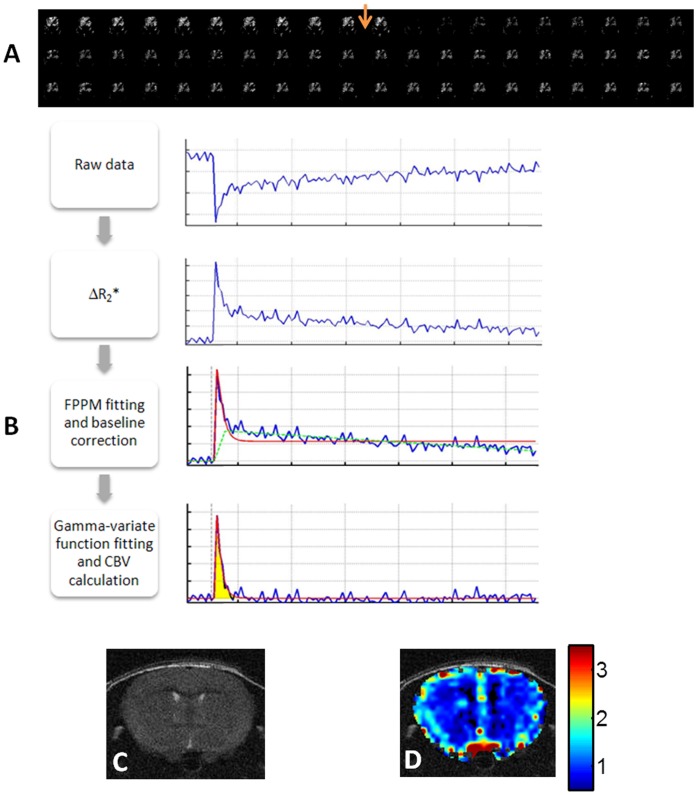
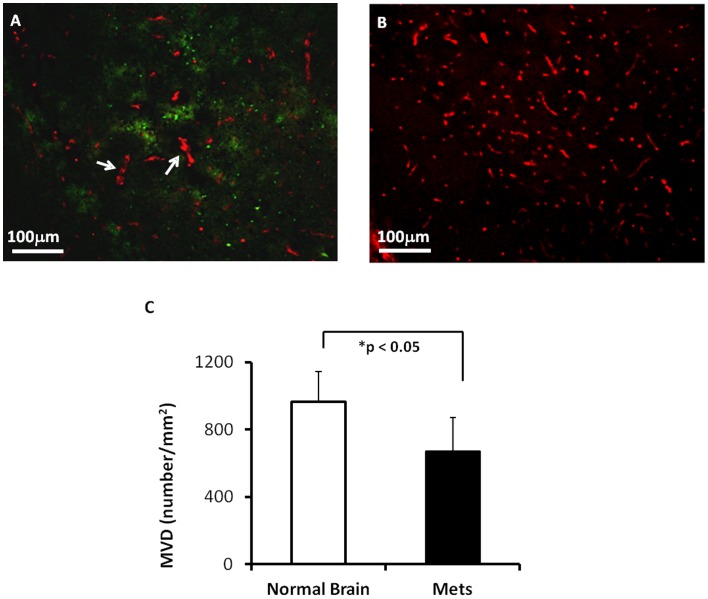
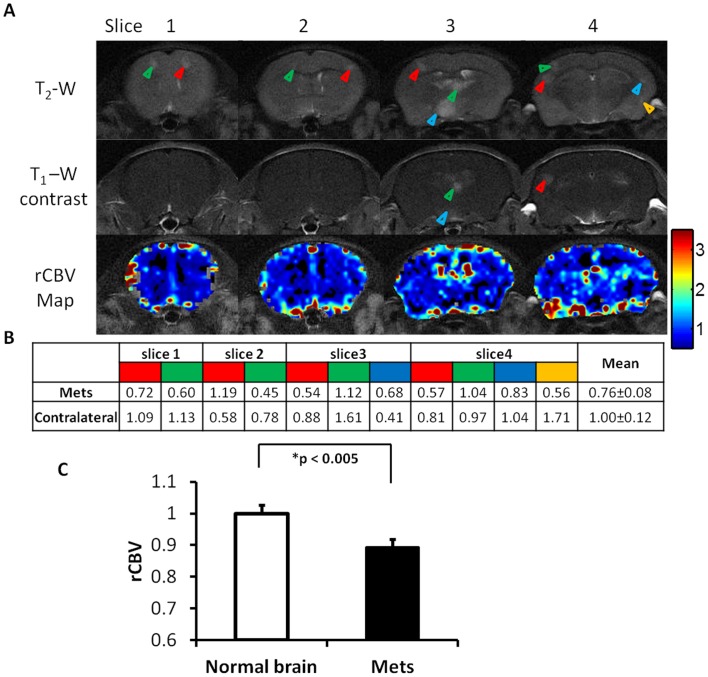
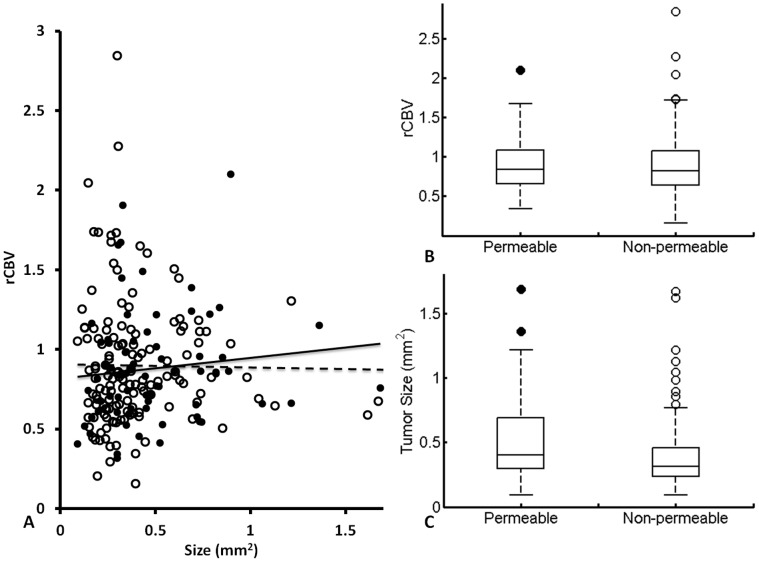
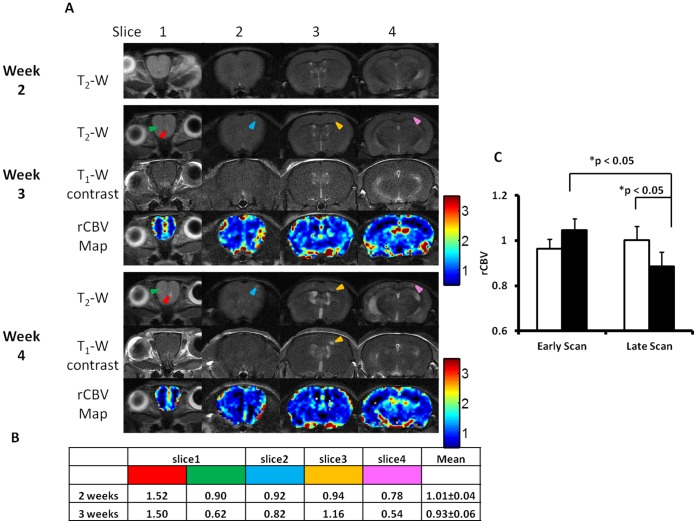
Longitudinal MRI was applied to monitor intracranial initiation and development of brain metastases and assess tumor vascular volume and permeability in a mouse model of breast cancer brain metastases. Using a 9.4T system, high resolution anatomic MRI and dynamic susceptibility contrast (DSC) perfusion MRI were acquired at different time points after an intracardiac injection of brain-tropic breast cancer MDA-MB231BR-EGFP cells. Three weeks post injection, multifocal brain metastases were first observed with hyperintensity on T2-weighted images, but isointensity on T1-weighted post contrast images, indicating that blood-tumor-barrier (BTB) at early stage of brain metastases was impermeable. Follow-up MRI revealed intracranial tumor growth and increased number of metastases that distributed throughout the whole brain. At the last scan on week 5, T1-weighted post contrast images detected BTB disruption in 160 (34%) of a total of 464 brain metastases. Enhancement in some of the metastases was only seen in partial regions of the tumor, suggesting intratumoral heterogeneity of BTB disruption. DSC MRI measurements of relative cerebral blood volume (rCBV) showed that rCBV of brain metastases was significantly lower (mean= 0.89±0.03) than that of contralateral normal brain (mean= 1.00±0.03; p<0.005). Intriguingly, longitudinal measurements revealed that rCBV of individual metastases at early stage was similar to, but became significantly lower than that of contralateral normal brain with tumor growth (p<0.05). The rCBV data were concordant with histological analysis of microvascular density (MVD). Moreover, comprehensive analysis suggested no significant correlation among tumor size, rCBV and BTB permeability. In conclusion, longitudinal MRI provides non-invasive in vivo assessments of spatial and temporal development of brain metastases and their vascular volume and permeability. The characteristic rCBV of brain metastases may have a diagnostic value.
采用纵向 MRI 监测颅内乳腺癌脑转移的起始和发展,并评估肿瘤血管容积和通透性。在心脏内注射嗜脑乳腺癌 MDA-MB231BR-EGFP 细胞后,在不同时间点使用 9.4T 系统获取高分辨率解剖 MRI 和动态对比敏感度(DSC)灌注 MRI。注射后 3 周,在 T2 加权图像上首次观察到多灶性脑转移,呈高信号,但 T1 加权对比后图像呈等信号,表明早期脑转移的血脑屏障(BTB)是不透的。后续 MRI 显示颅内肿瘤生长并增加了转移灶的数量,这些转移灶分布在整个大脑中。在第 5 周的最后一次扫描中,在总共 464 个脑转移灶中,有 160 个(34%)的 T1 加权对比后图像检测到 BTB 破坏。一些转移灶的增强仅在肿瘤的部分区域可见,这表明 BTB 破坏的肿瘤内异质性。DSC MRI 测量相对脑血容量(rCBV)显示,脑转移灶的 rCBV 明显低于对侧正常脑(rCBV=0.89±0.03)(rCBV=1.00±0.03;p<0.005)。有趣的是,纵向测量显示,早期单个转移灶的 rCBV 与肿瘤生长时对侧正常脑相似,但显著低于对侧正常脑(p<0.05)。rCBV 数据与微血管密度(MVD)的组织学分析一致。此外,综合分析表明肿瘤大小、rCBV 和 BTB 通透性之间没有显著相关性。总之,纵向 MRI 提供了脑转移及其血管容积和通透性的空间和时间发展的非侵入性体内评估。脑转移灶的特征性 rCBV 可能具有诊断价值。