Knier Natasha N, Pellizzari Sierra, Zhou Jiangbing, Foster Paula J, Parsyan Armen
Department of Medical Biophysics, Western University, London, ON N6A 5C1, Canada.
Imaging Laboratories, Robarts Research Institute, London, ON N6A 5B7, Canada.
Biomedicines. 2022 Mar 13;10(3):667. doi: 10.3390/biomedicines10030667.
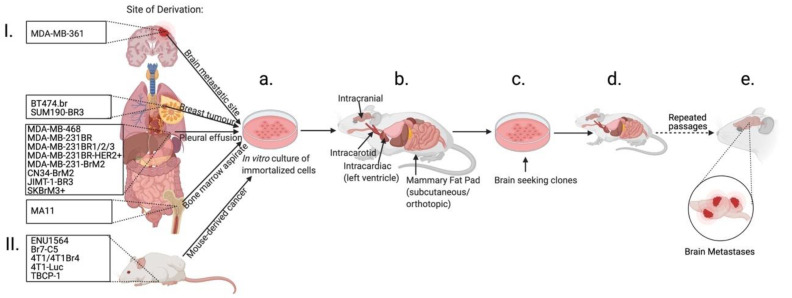
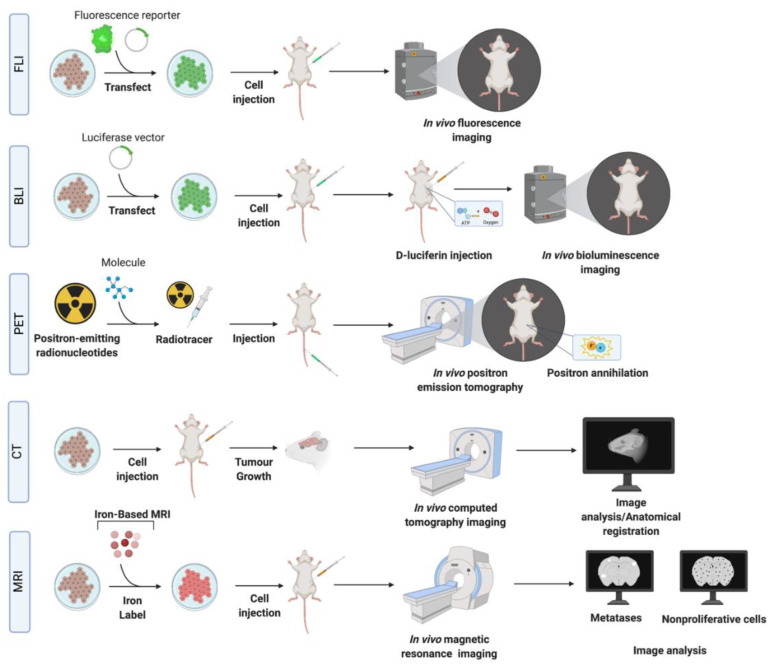
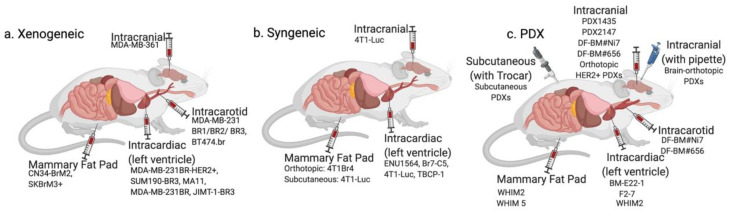
Breast cancer remains a leading cause of mortality among women worldwide. Brain metastases confer extremely poor prognosis due to a lack of understanding of their specific biology, unique physiologic and anatomic features of the brain, and limited treatment strategies. A major roadblock in advancing the treatment of breast cancer brain metastases (BCBM) is the scarcity of representative experimental preclinical models. Current models are predominantly based on the use of animal xenograft models with immortalized breast cancer cell lines that poorly capture the disease's heterogeneity. Recent years have witnessed the development of patient-derived in vitro and in vivo breast cancer culturing systems that more closely recapitulate the biology from individual patients. These advances led to the development of modern patient-tissue-based experimental models for BCBM. The success of preclinical models is also based on the imaging technologies used to detect metastases. Advances in animal brain imaging, including cellular MRI and multimodality imaging, allow sensitive and specific detection of brain metastases and monitoring treatment responses. These imaging technologies, together with novel translational breast cancer models based on patient-derived cancer tissues, represent a unique opportunity to advance our understanding of brain metastases biology and develop novel treatment approaches. This review discusses the state-of-the-art knowledge in preclinical models of this disease.
乳腺癌仍然是全球女性死亡的主要原因。由于对脑转移瘤的特定生物学特性、大脑独特的生理和解剖特征缺乏了解,以及治疗策略有限,脑转移瘤的预后极差。推进乳腺癌脑转移(BCBM)治疗的一个主要障碍是缺乏具有代表性的实验性临床前模型。目前的模型主要基于使用永生化乳腺癌细胞系的动物异种移植模型,这些模型很难捕捉到疾病的异质性。近年来,出现了源自患者的体外和体内乳腺癌培养系统,它们能更准确地重现个体患者的生物学特性。这些进展推动了现代基于患者组织的BCBM实验模型的发展。临床前模型的成功还基于用于检测转移瘤的成像技术。动物脑成像技术的进步,包括细胞磁共振成像和多模态成像,能够灵敏且特异地检测脑转移瘤并监测治疗反应。这些成像技术,连同基于患者来源的癌组织的新型转化性乳腺癌模型,为增进我们对脑转移瘤生物学的理解以及开发新的治疗方法提供了独特的契机。本综述讨论了该疾病临床前模型的最新知识。