Santos Nancy Dos, Habibi Golareh, Wang Michelle, Law Jennifer H, Andrews Heather N, Wei Daniel, Triche Timothy, Dedhar Shoukat, Dunn Sandra E
Department of Pediatrics, Child and Family Research Institute, University of British Columbia, Vancouver, BC Canada.
Transl Oncogenomics. 2007 Jul 23;2:85-97. Print 2007.
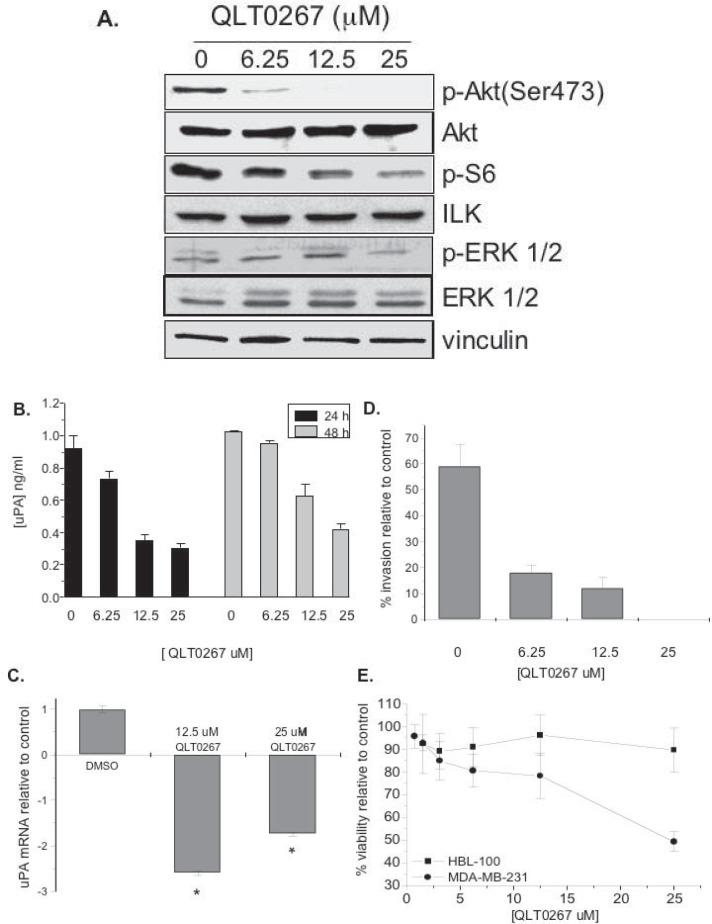
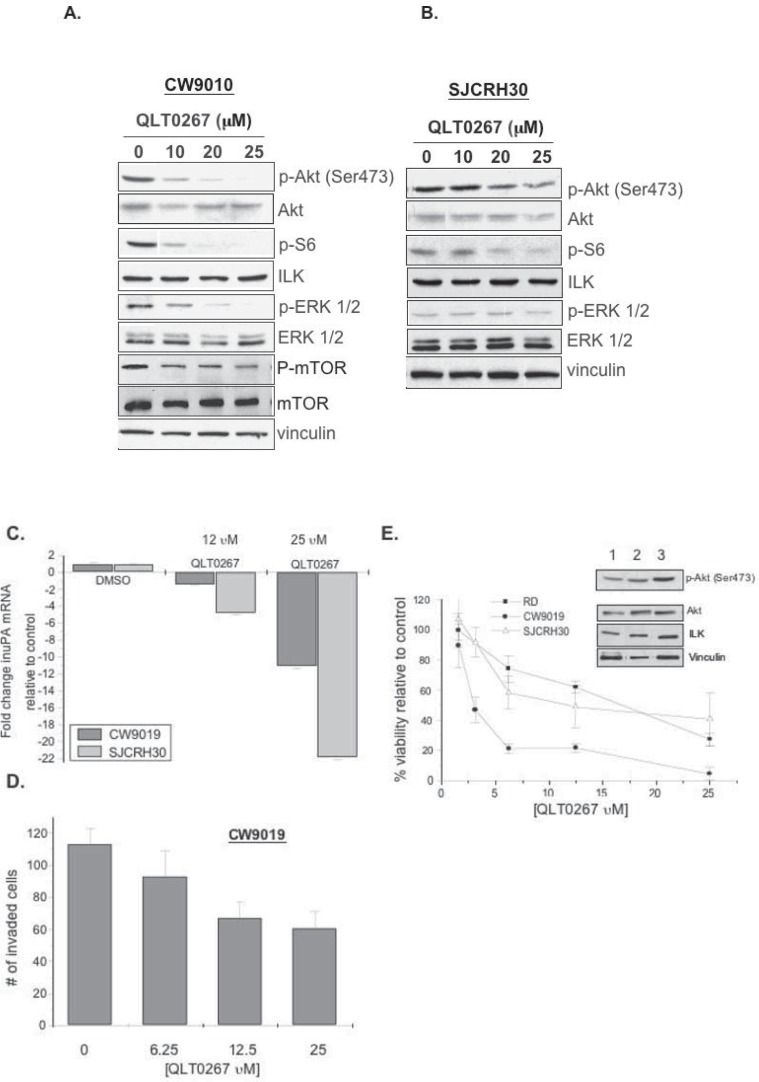
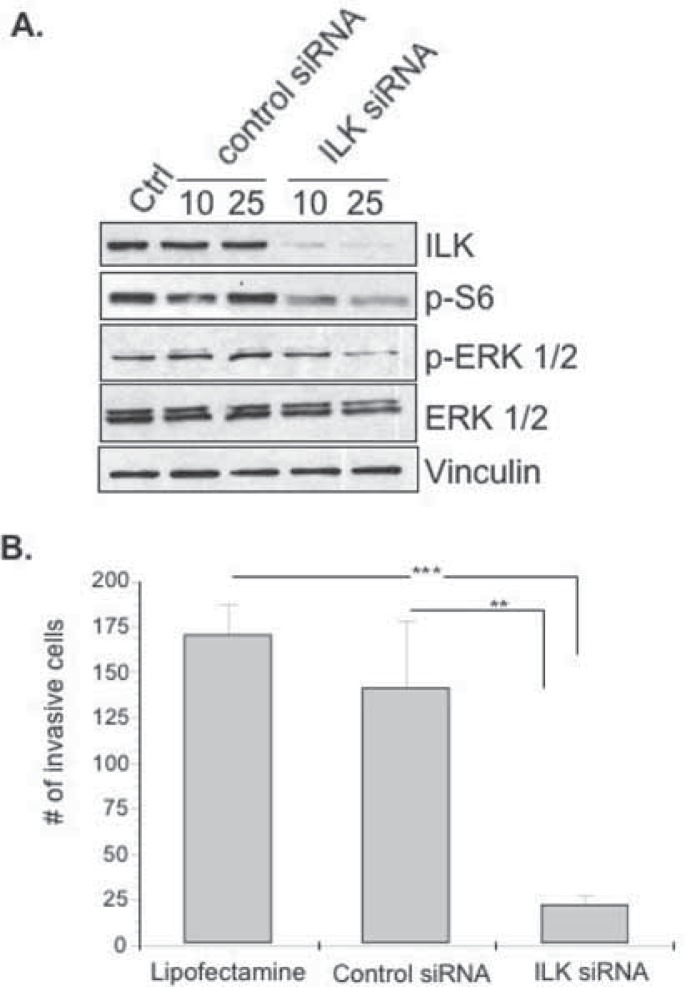
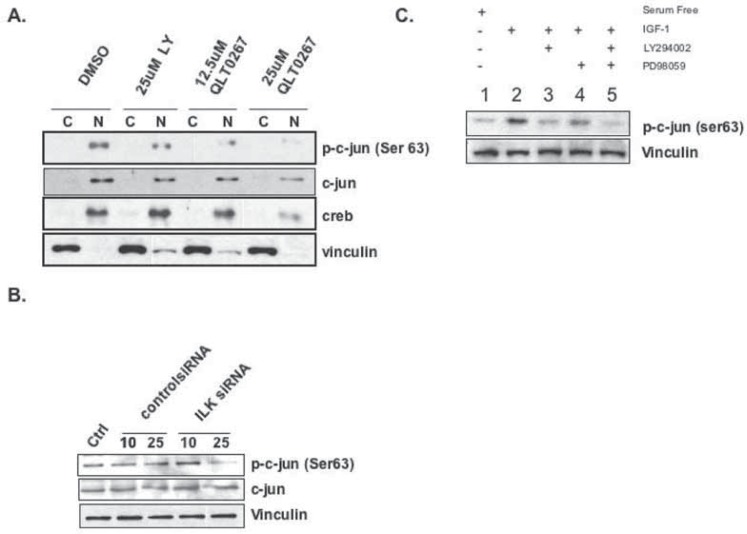
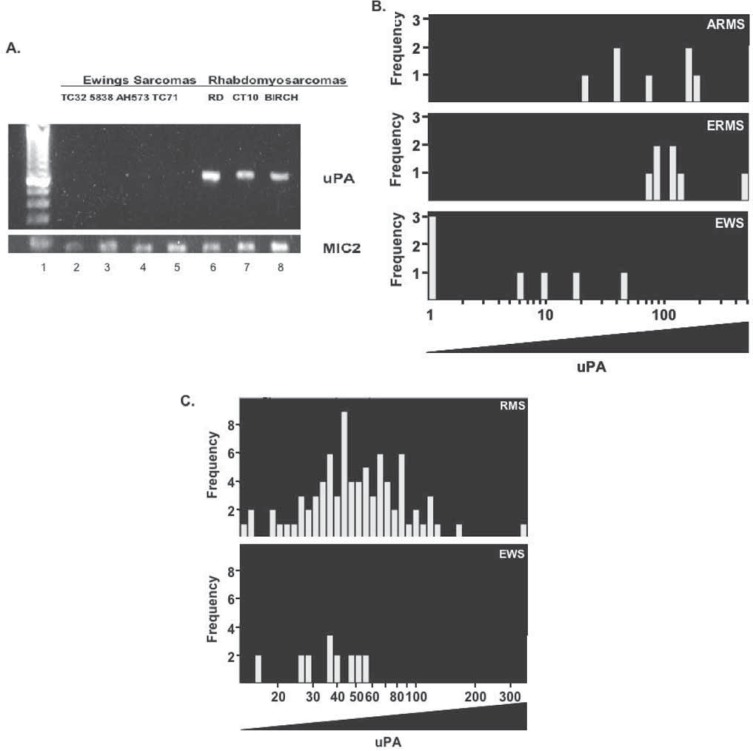
Urokinase-type plasminogen activator (uPA) is associated with cancer recurrence where the most evidence comes from studies in breast cancer. According to the European Organization for Research and Treatment of Cancer, uPA is considered one of the most prominent biomarkers for cancer recurrence and therefore new agents are needed to inhibit it. Whether uPA is also expressed in pediatric cancers is yet unknown. If it is then uPA inhibitors might also help children with recurrent cancers. In this study, we addressed whether the integrin-linked kinase inhibitor (ILK), QLT0267, could suppress uPA. We previously showed that uPA expression is maximally inhibited when both the Akt and MAP kinase pathways were blocked which we anticipated can be achieved via QLT0267. In MDA-MB-231 breast cancer cells, QLT0267 blocked signaling through Akt and MAP kinase with a correlative decrease in uPA protein and mRNA, which corresponded to an inhibition of c-Jun phosphorylation. Consistent with these findings, cellular invasion was inhibited with either QLT0267 or with small interfering RNA against ILK. We then questioned whether uPA was commonly expressed in childhood sarcomas and if QLT0267 might be effective in this setting. We determined for the first time that uPA was highly expressed in rhabdomyosarcomas (RMS), but not Ewings sarcomas by screening cell lines (n = 31) and patient samples (n = 200) using Affymetrix microarrays. In alveolar RMS (ARMS) cell lines, QLT0267 blocked cell signaling, uPA production, invasion and ultimately survival. We concluded that QLT0267 blocks the production of uPA providing a new target for the management of recurrent cancers.
尿激酶型纤溶酶原激活剂(uPA)与癌症复发相关,其中大部分证据来自乳腺癌研究。根据欧洲癌症研究与治疗组织的说法,uPA被认为是癌症复发最显著的生物标志物之一,因此需要新的药物来抑制它。uPA在儿童癌症中是否也有表达尚不清楚。如果是这样,那么uPA抑制剂可能也有助于治疗复发性癌症的儿童。在这项研究中,我们探讨了整合素连接激酶抑制剂(ILK)QLT0267是否能抑制uPA。我们之前表明,当Akt和丝裂原活化蛋白激酶(MAP)途径都被阻断时,uPA表达受到最大程度的抑制,我们预计这可以通过QLT0267实现。在MDA-MB-231乳腺癌细胞中,QLT0267阻断了通过Akt和MAP激酶的信号传导,同时uPA蛋白和mRNA相关减少,这与c-Jun磷酸化的抑制相对应。与这些发现一致,QLT0267或针对ILK的小干扰RNA均可抑制细胞侵袭。然后我们质疑uPA在儿童肉瘤中是否普遍表达,以及QLT0267在这种情况下是否有效。我们首次通过使用Affymetrix微阵列筛选细胞系(n = 31)和患者样本(n = 200)确定uPA在横纹肌肉瘤(RMS)中高表达,但在尤因肉瘤中不表达。在肺泡型RMS(ARMS)细胞系中,QLT0267阻断细胞信号传导、uPA产生、侵袭并最终影响生存。我们得出结论,QLT0267可阻断uPA的产生,为复发性癌症的治疗提供了一个新靶点。