Division of Physical Biology, and Bioimaging Center, Shanghai Synchrotron Radiation Facility, Shanghai Institute of Applied Physics, Chinese Academy of Sciences, Shanghai 201800, China.
Sci Rep. 2013;3:1789. doi: 10.1038/srep01789.
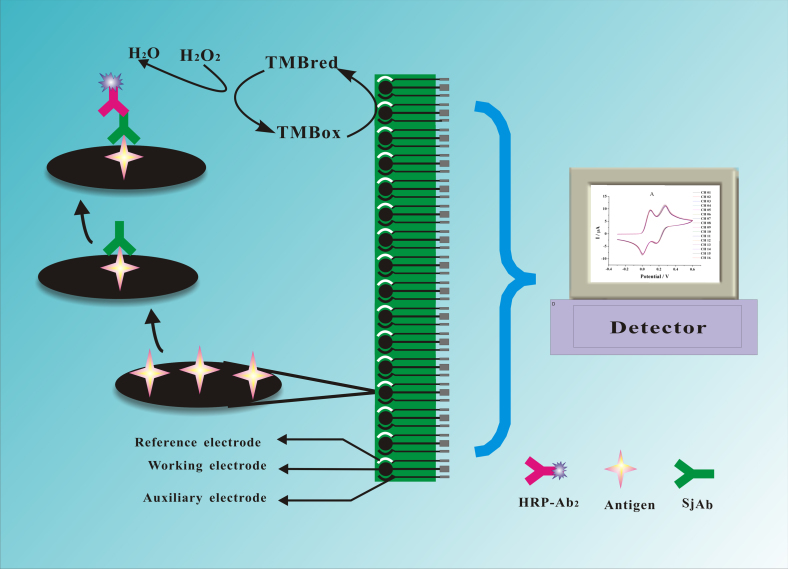
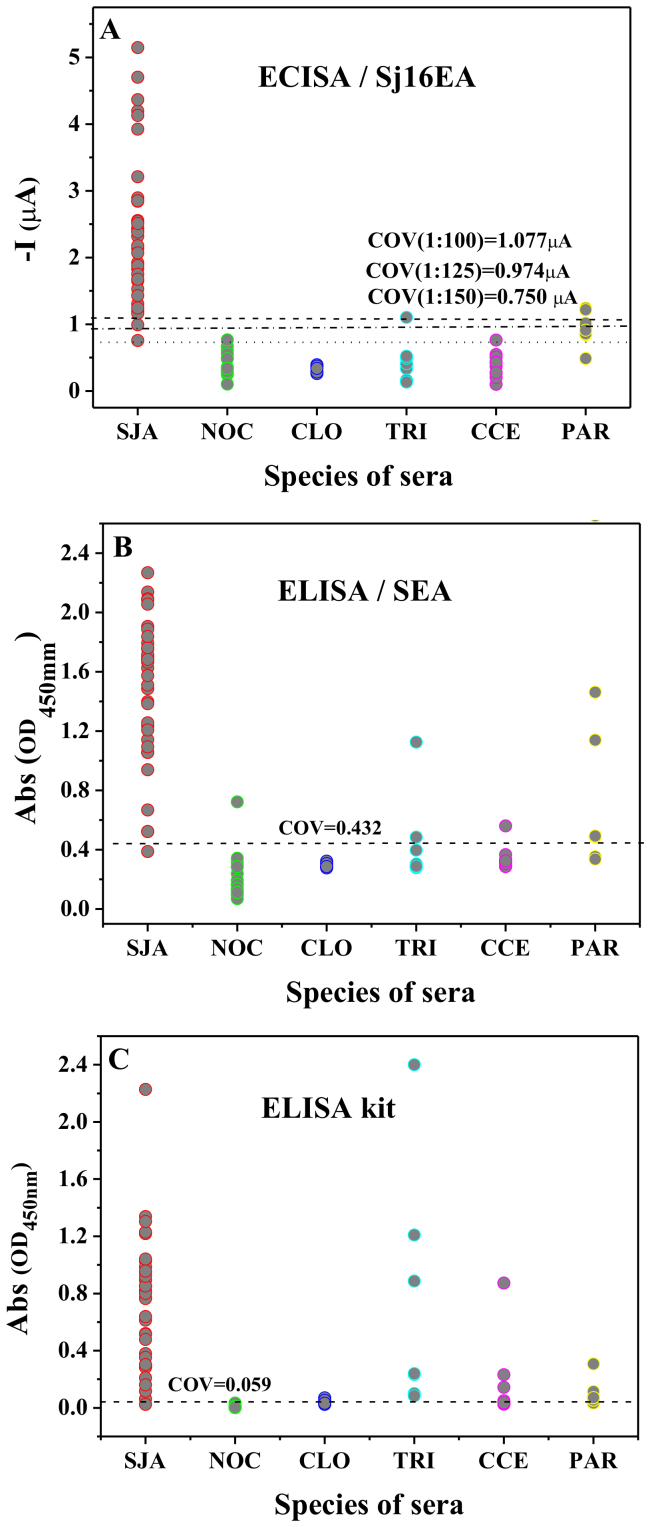
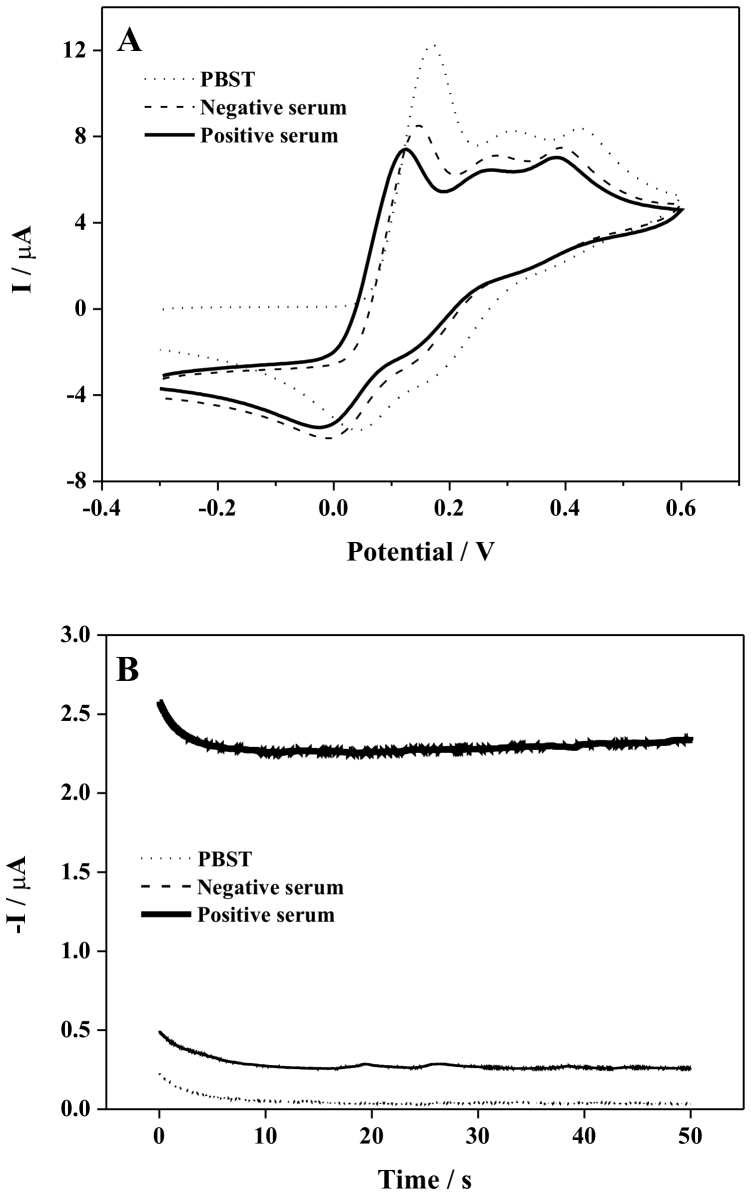
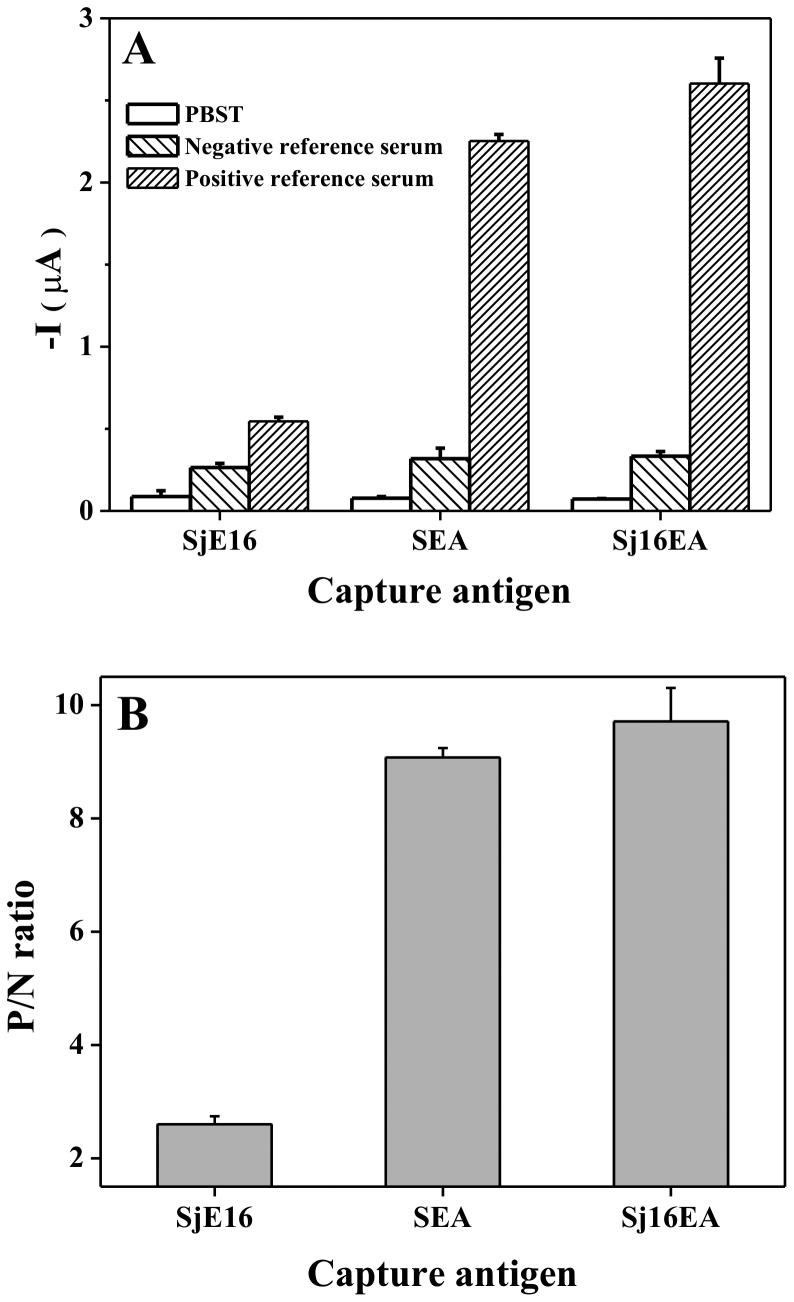
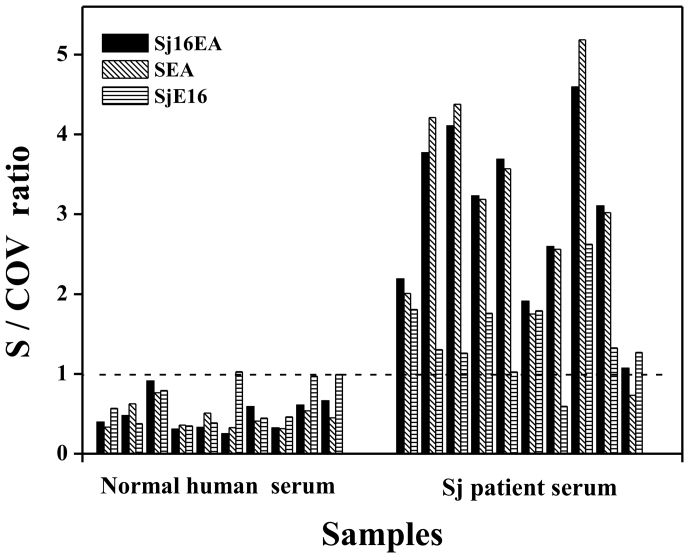
Schistosomiasis control remains to be an important and challenging task in the world. However, lack of quick, simple, sensitive and specific sero-diagnostic test is still a hurdle in the control practice. The commonly employed enzyme-linked immuno-sorbent assay (ELISA) relies on the native soluble egg antigen (SEA) that is limited in supply. Here we developed an electrochemical immunosensor array (ECISA) assay with an interfacial co-assembly strategy. A recombinant Schistosoma japonicum (Sj) calcium-binding protein (SjE16) was used as a principal antigen, while the SEA as a minor, co-assembling agent, with a ratio of 8:1 (SjE16: SEA, Sj16EA), which was co-immobilized on a disposable 16-channel screen-printed carbon electrode array. A portable electrochemical detector was employed to detect antibodies in serum samples. The sensitivity of ECISA reached 100% with minimal cross-reactions. Therefore, we have demonstrated that this rapid, sensitive and specific ECISA technique has the potential to perform large-scale on-site screening of Sj infection.
血吸虫病防治仍然是世界上的一项重要而具有挑战性的任务。然而,缺乏快速、简单、敏感和特异的血清学诊断检测仍然是控制实践中的一个障碍。常用的酶联免疫吸附试验(ELISA)依赖于天然可溶性卵抗原(SEA),而 SEA 的供应有限。在这里,我们开发了一种基于界面共组装策略的电化学免疫传感器阵列(ECISA)检测方法。使用重组日本血吸虫(Sj)钙结合蛋白(SjE16)作为主要抗原,SEA 作为次要的共组装剂,其比例为 8:1(SjE16:SEA,Sj16EA),共固定在一次性 16 通道丝网印刷碳电极阵列上。采用便携式电化学检测仪检测血清样品中的抗体。ECISA 的灵敏度达到 100%,交叉反应最小。因此,我们已经证明,这种快速、敏感和特异的 ECISA 技术具有进行大规模现场筛查 Sj 感染的潜力。