Blalock Emily L, Chien Hsin, Dix Richard D
Department of Biology, Viral Immunology Center, Georgia State University, Atlanta, Georgia.
Ophthalmol Eye Dis. 2012 Sep 25;4:79-90. doi: 10.4137/OED.S10294. Print 2012.
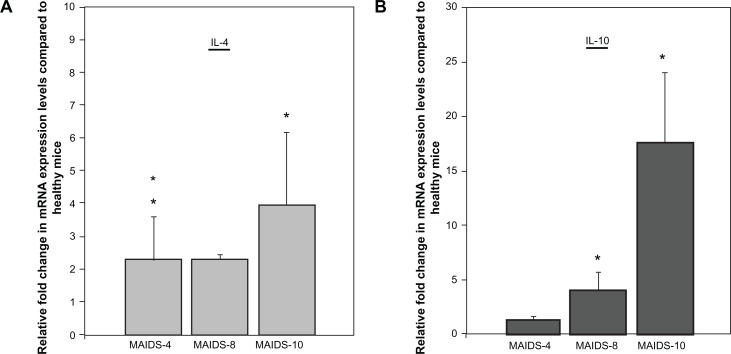
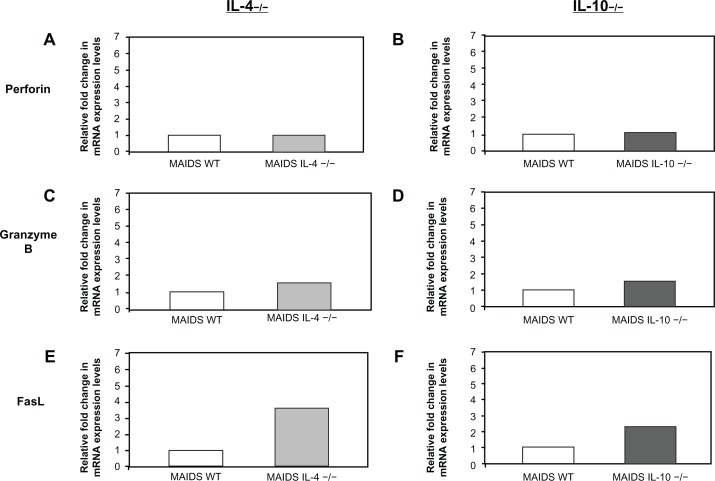
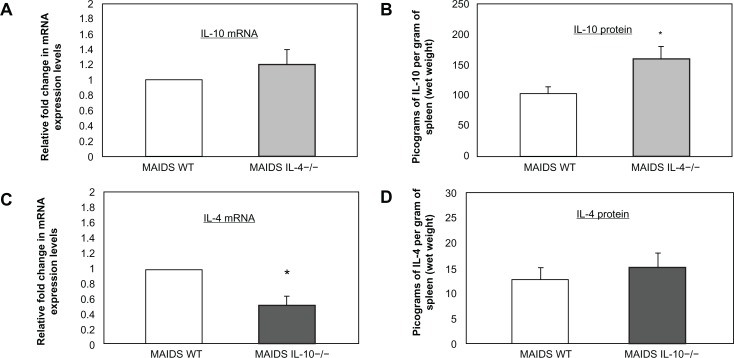
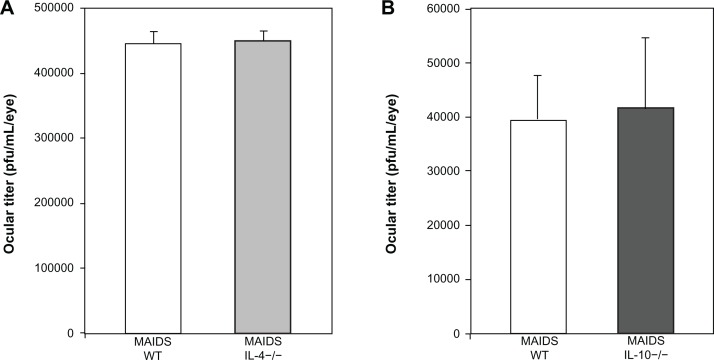
Interleukin-4 (IL-4) and interleukin-10 (IL-10) are key cytokines whose increased production during systemic HIV infection has been associated with decreased cellular immunity during AIDS. We examined whether HIV-induced stimulation of IL-4 or IL-10 production leads to increased susceptibility to AIDS-related human cytomegalovirus retinitis. It was confirmed that there were increased amounts of IL-4 and IL-10 mRNA levels in mice with MAIDS of 10 weeks duration when most susceptible to MCMV retinitis. Surprisingly, however, MCMV-infected eyes of IL-4 -/- and IL-10 -/- mice with MAIDS of 8 weeks duration exhibited retinitis and infectious virus equivalent to that observed in MCMV-infected eyes of wild-type mice with MAIDS. We conclude that neither IL-4 nor IL-10 alone play a role in increased susceptibility to MAIDS-related MCMV retinitis, but may work collectively with other retrovirus-induced immunosuppressive factors to allow for retinal disease.
白细胞介素-4(IL-4)和白细胞介素-10(IL-10)是关键的细胞因子,在全身性HIV感染期间其产生增加与艾滋病期间细胞免疫功能下降有关。我们研究了HIV诱导的IL-4或IL-10产生刺激是否会导致对艾滋病相关的人类巨细胞病毒视网膜炎易感性增加。已证实,病程为10周且最易患MCMV视网膜炎的MAIDS小鼠中,IL-4和IL-10 mRNA水平升高。然而,令人惊讶的是,病程为8周的IL-4 -/-和IL-10 -/- MAIDS小鼠的MCMV感染眼表现出视网膜炎,且感染性病毒与在病程为8周的野生型MAIDS小鼠的MCMV感染眼中观察到的相当。我们得出结论,单独的IL-4和IL-10均未在对MAIDS相关的MCMV视网膜炎易感性增加中起作用,但可能与其他逆转录病毒诱导的免疫抑制因子共同作用,从而引发视网膜疾病。