Department of Biochemistry, Kitasato University Graduate School of Medical Sciences, Sagamihara, Japan ; Department of Parasitology, Kitasato University School of Medicine, Sagamihara, Japan.
FEBS Open Bio. 2012 Jul 20;2:223-33. doi: 10.1016/j.fob.2012.07.006. Print 2012.
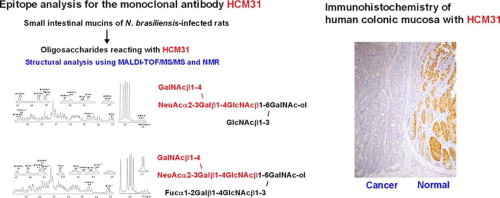
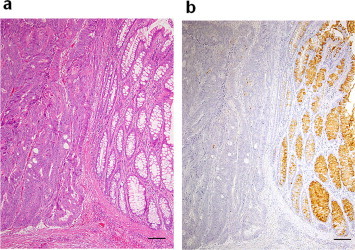
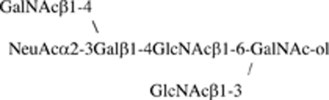
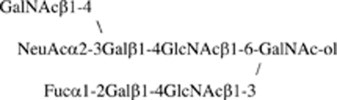
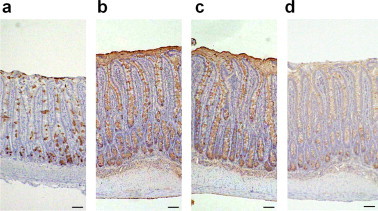
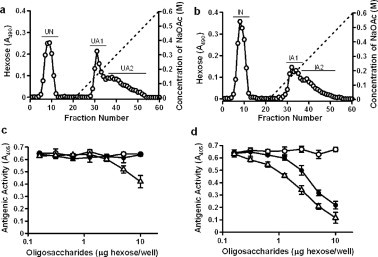
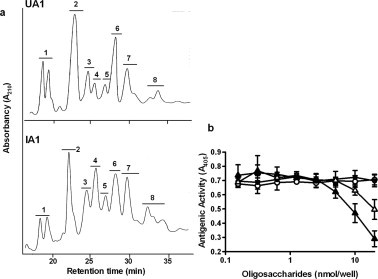
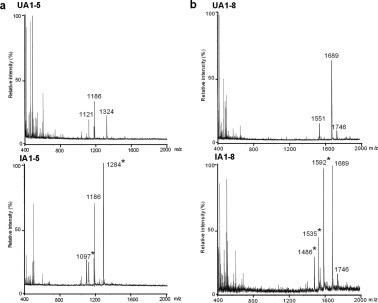
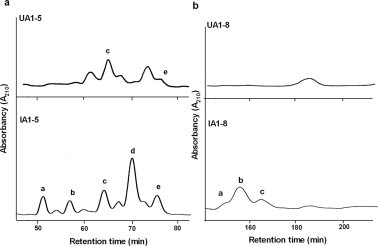
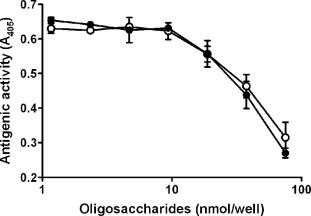
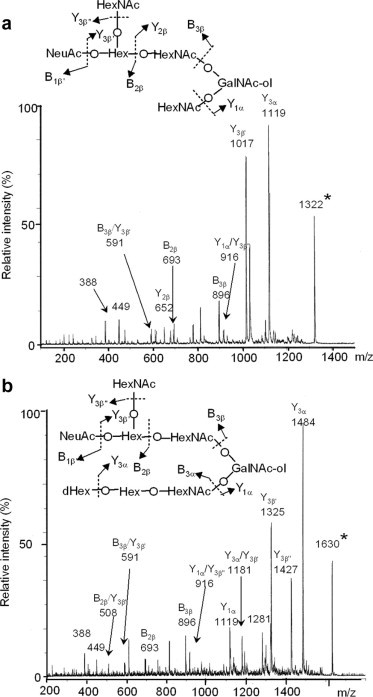
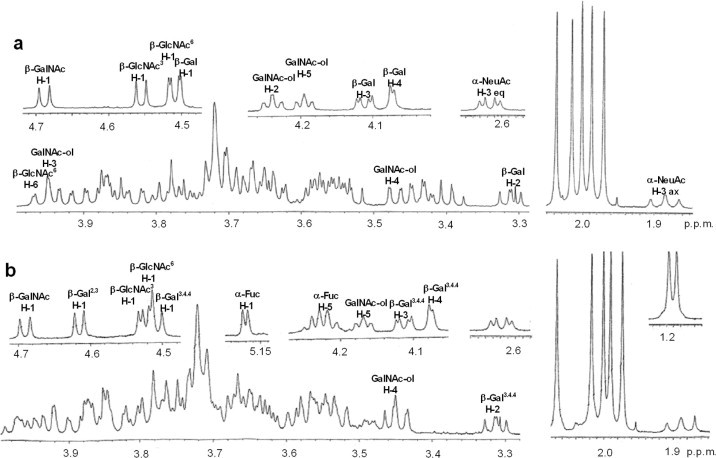
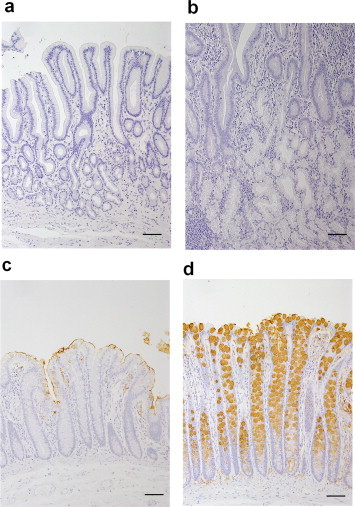
Rat small intestinal goblet cell mucins reacting with monoclonal antibody HCM31 increase significantly during regeneration from experimental mucosal damage and at the period of expulsion of parasitic nematode, Nippostrongylus brasiliensis (N.b). The reduction in reactivity of HCM31 with mucin upon neuraminidase treatment, suggested that HCM31 recognizes sialylated oligosaccharide on mucin. HCM31-reactive sialomucins are therefore considered to play an important role in the physiological and pathological changes in the gastrointestinal mucosa. To determine the epitope for HCM31, oligosaccharide-alditols reacted with HCM31 were obtained from the small intestinal mucins of N.b-infected rats and purified by ion-exchange chromatography followed by normal-phase HPLC. Two HCM31-reactive oligosaccharide-alditols were obtained. Analyses using tandem mass spectrometry and NMR spectroscopy showed that these oligosaccharides were core 4 mucin-type oligosaccharides having a common tetrasaccharide sequence, NeuAcα2-3(GalNAcβ1-4)Galβ1-4GlcNAcβ- (Sd(a) blood group antigen). These structures were not found in the small intestinal mucin oligosaccharides from uninfected rats. This epitope specificity of HCM31 was also confirmed using previously established anti-GM2 and anti-Sd(a) antibodies. Taken together, these results strongly suggest that HCM31 specifically recognizes mucin-type oligosaccharides with the Sd(a) tetrasaccharide sequence. Immunohistochemical examination of human gastrointestinal tracts showed that HCM31 site-specifically stained the goblet cells in normal sigmoid colon and normal rectum, but the goblet cells stained with HCM31 were reduced in the corresponding cancer tissues. HCM31 seems to be useful for diagnosis of colonic cancer and for examining the function of secretory-type mucin with Sd(a) antigen.
鼠小肠杯状细胞黏蛋白与单克隆抗体 HCM31 的反应性在实验性黏膜损伤后的再生过程中以及在寄生性线虫(Nippostrongylus brasiliensis,N.b.)排出期间显著增加。HCM31 与黏蛋白反应性在神经氨酸酶处理后降低,表明 HCM31 识别黏蛋白上的唾液酸化寡糖。因此,HCM31 反应性唾液酸化黏蛋白被认为在胃肠道黏膜的生理和病理变化中发挥重要作用。为了确定 HCM31 的表位,从 N.b.感染大鼠的小肠黏蛋白中获得与 HCM31 反应的寡糖-丙醛,并通过离子交换层析和正相 HPLC 进行纯化。获得了两种 HCM31 反应性寡糖-丙醛。使用串联质谱和 NMR 光谱分析表明,这些寡糖是具有共同四糖序列 NeuAcα2-3(GalNAcβ1-4)Galβ1-4GlcNAcβ-(Sd(a)血型抗原)的核心 4 型黏蛋白型寡糖。这些结构在未感染大鼠的小肠黏蛋白寡糖中未发现。使用先前建立的抗 GM2 和抗 Sd(a)抗体也证实了 HCM31 的这种表位特异性。总之,这些结果强烈表明 HCM31 特异性识别具有 Sd(a)四糖序列的黏蛋白型寡糖。对人胃肠道的免疫组织化学检查显示,HCM31 特异性染色正常乙状结肠和正常直肠中的杯状细胞,但 HCM31 染色的杯状细胞在相应的癌组织中减少。HCM31 似乎可用于结直肠癌的诊断,并用于检查具有 Sd(a)抗原的分泌型黏蛋白的功能。