Rubin Institute for Advanced Orthopedics Center for Joint Preservation and Replacement Sinai Hospital of Baltimore, 2401 West Belvedere Avenue, Baltimore, MD, 21215, USA.
BMC Musculoskelet Disord. 2013 May 8;14:161. doi: 10.1186/1471-2474-14-161.
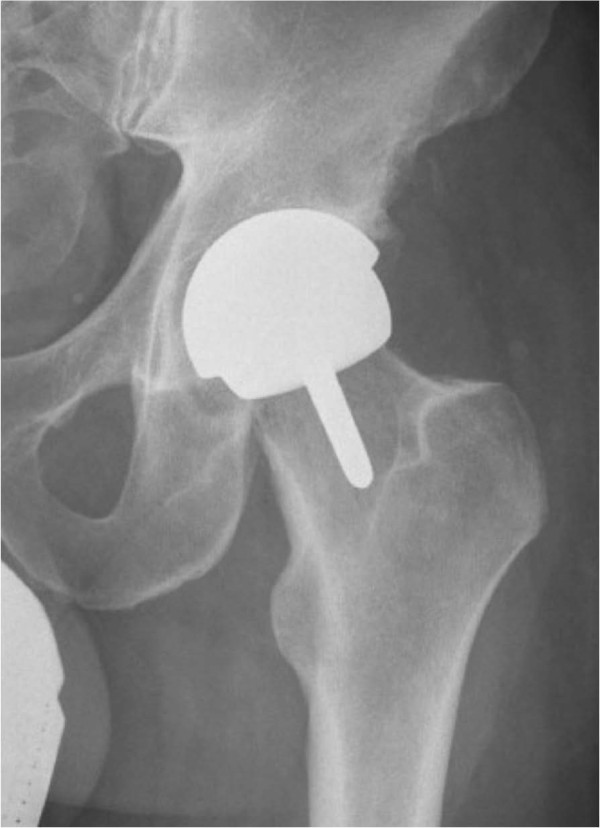
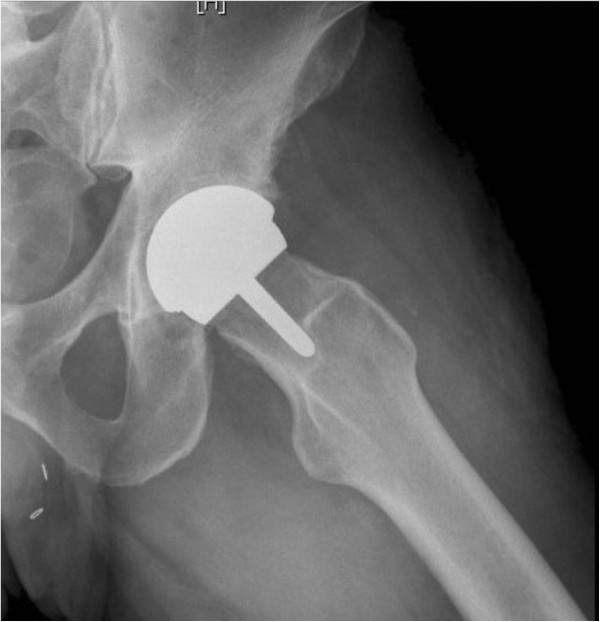
The purpose of this study was to evaluate the clinical and radiographic outcomes of hip resurfacing patients and compare them to standard primary total hip arthroplasty procedures performed during the same period of time.
One hundred and fourteen consecutive men who had a mean age of 50 years (range, 20 to 85 years) and who had undergone 120 hip resurfacing arthroplasties between 2007 and 2009 were compared to 117 consecutive men (120 hips) who had undergone a standard total hip arthroplasty during the same time period. The mean follow-up was 42 months (range, 24 to 55 months) for both groups. Outcomes evaluated included implant survivorship, hip scores, activity levels, and complication rates.
In the resurfacing hip arthroplasty cohort, implant survivorship was 98% with two patients requiring a revision surgery one for femoral neck fracture and another for femoral head loosening. In comparison, implant survivorship was 99% in the standard total hip arthroplasty cohort, with 1 revision due to peri-prosthetic fracture which was successfully treated with a femoral component revision. In the resurfacing and standard hip arthroplasty cohorts, the mean post-operative Harris hip scores had improved to 96 and 94 points, respectively and were statistically similar. The resurfacing cohort had achieved a significantly higher mean post-operative University of California Activity Score (6.7 versus 5 points). There were no differences in the complication rates between the two cohorts.
When patients meet the appropriate selection criteria in the hands of experienced and high-volume arthroplasty surgeons, hip resurfacing provides excellent results at short- to mid-term follow-up.
本研究的目的是评估髋关节表面置换患者的临床和影像学结果,并将其与同期进行的标准初次全髋关节置换术进行比较。
114 例男性患者平均年龄为 50 岁(范围 20 至 85 岁),于 2007 年至 2009 年间接受了 120 例髋关节表面置换术,将其与同期接受标准初次全髋关节置换术的 117 例男性患者(120 髋)进行比较。两组的平均随访时间为 42 个月(范围 24 至 55 个月)。评估的结果包括植入物存活率、髋关节评分、活动水平和并发症发生率。
在髋关节表面置换组中,有 2 例患者(2 髋)需要进行翻修手术,其中 1 例因股骨颈骨折,另 1 例因股骨头松动,植入物存活率为 98%。相比之下,标准初次全髋关节置换组的植入物存活率为 99%,其中 1 例因假体周围骨折进行了翻修,通过股骨组件翻修成功治疗。在髋关节表面置换和标准髋关节置换组中,术后平均 Harris 髋关节评分分别提高至 96 分和 94 分,且统计学上无差异。髋关节表面置换组的术后加利福尼亚大学活动评分(6.7 分比 5 分)显著更高。两组的并发症发生率无差异。
在经验丰富且高手术量的关节置换外科医生手中,当患者符合适当的选择标准时,髋关节表面置换术在短期至中期随访中可获得优异的结果。