Technion Faculty of Medicine, Lorry Lokey Center for Life Sciences and Engineering, Technion, Haifa, Israel.
PLoS One. 2013 May 2;8(5):e63191. doi: 10.1371/journal.pone.0063191. Print 2013.
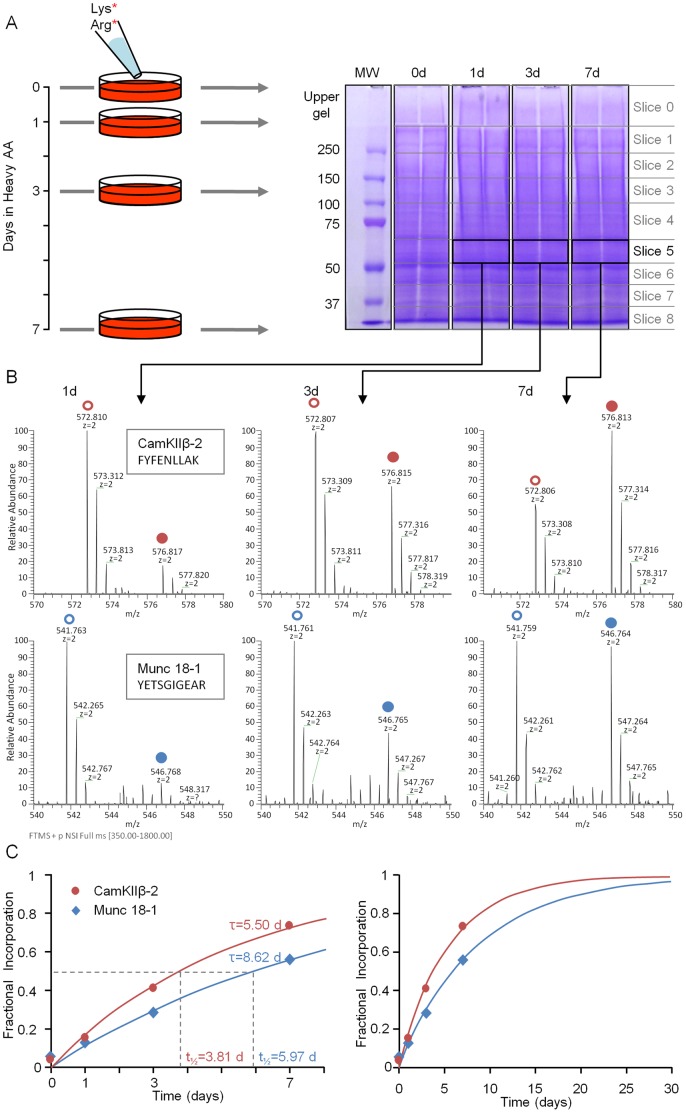
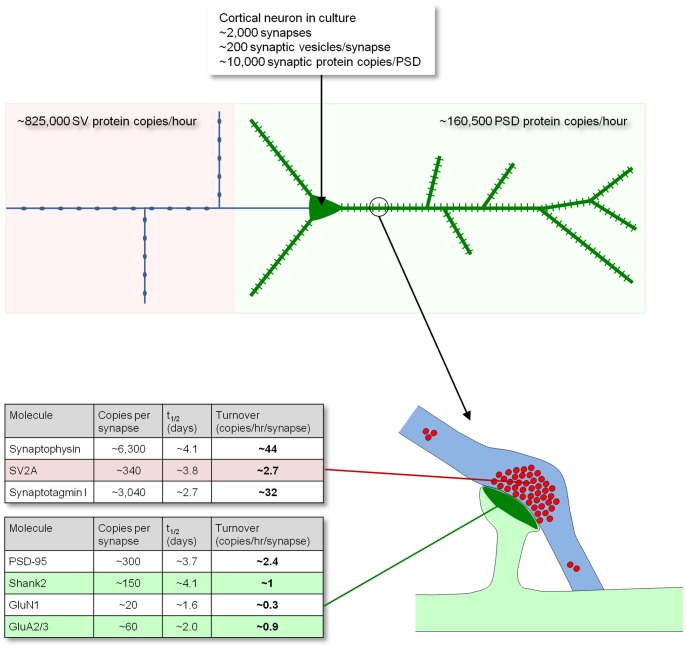
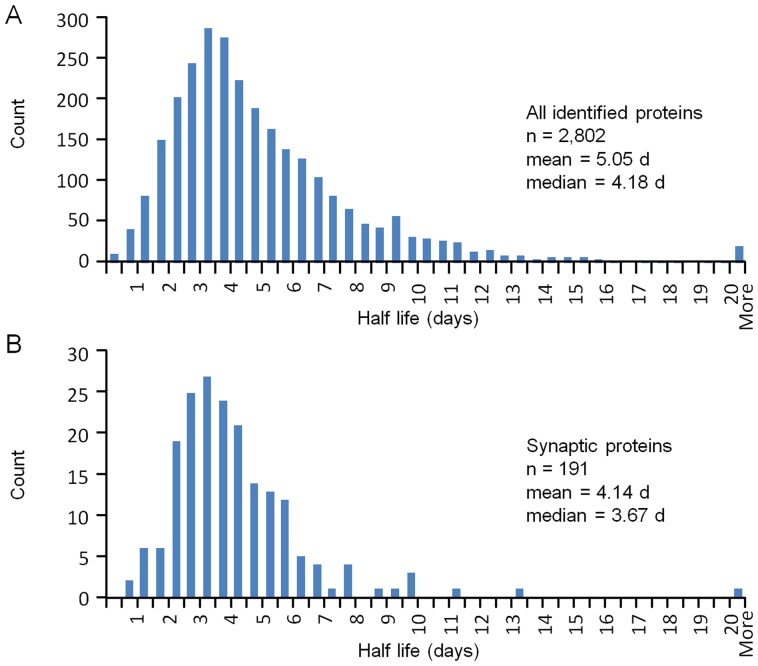
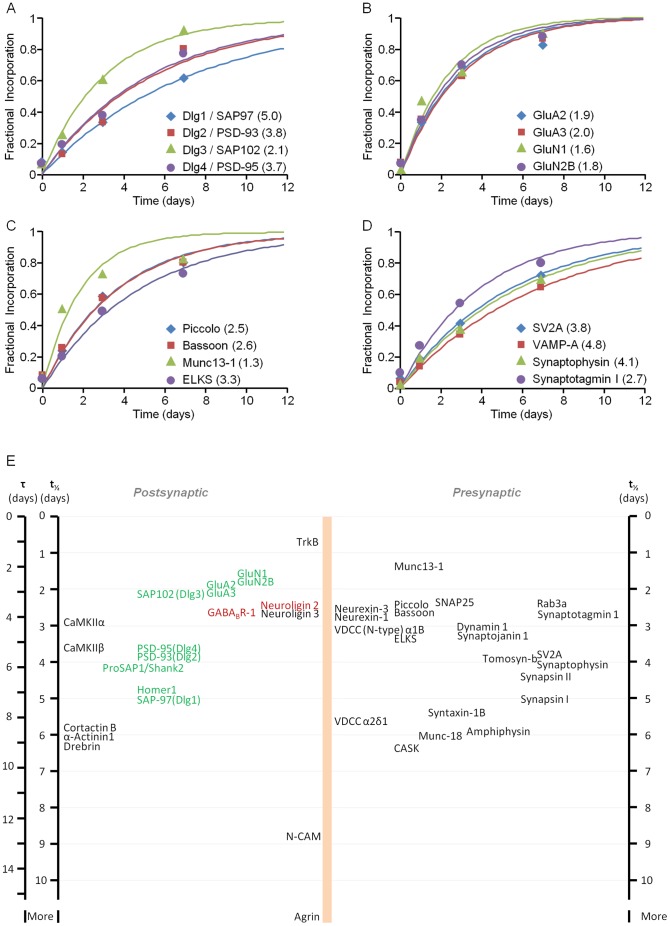
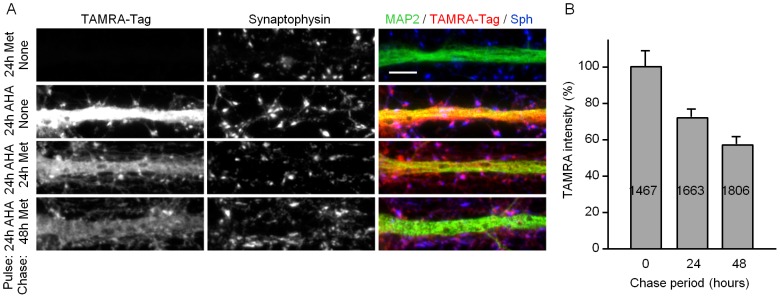
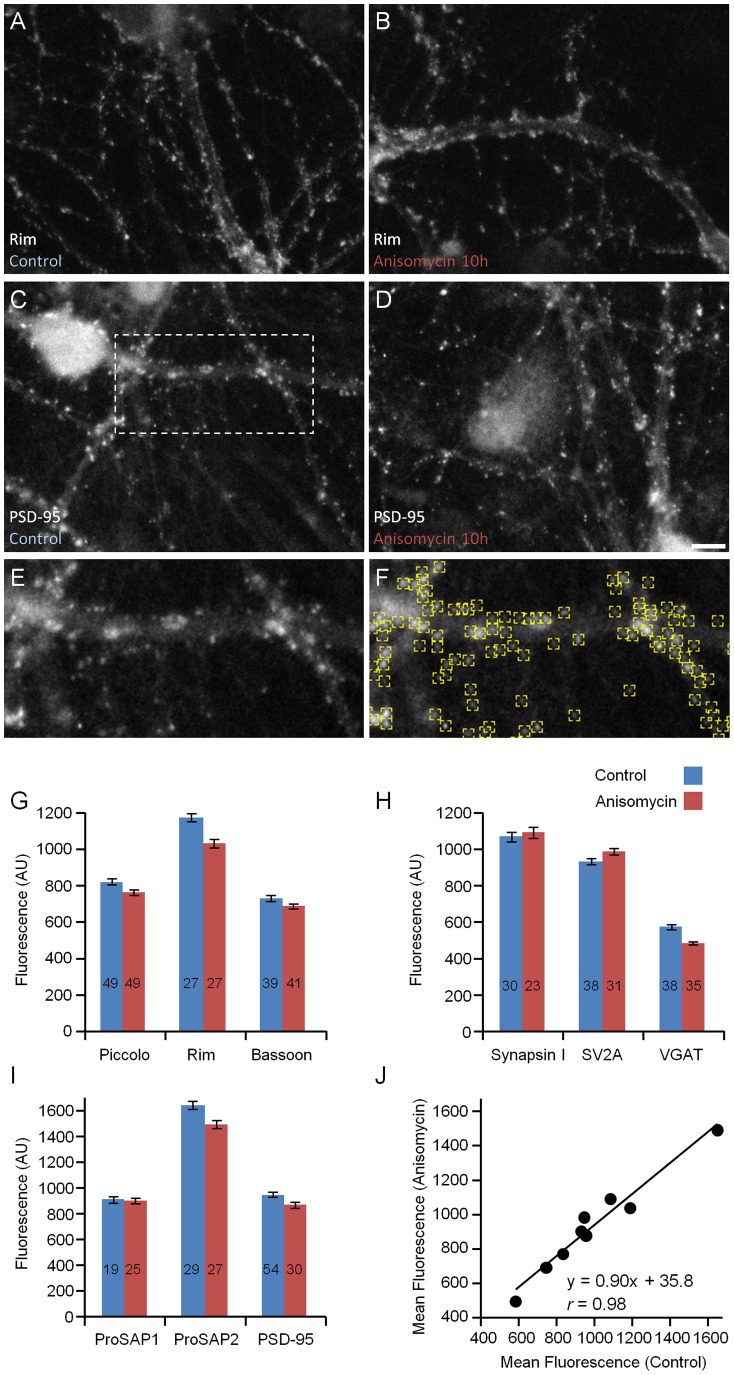
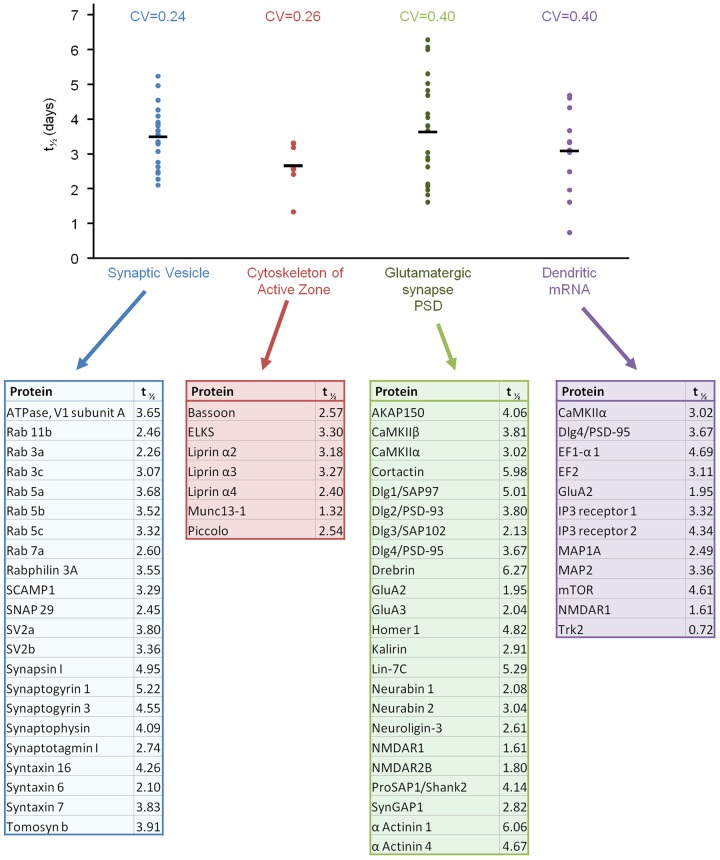
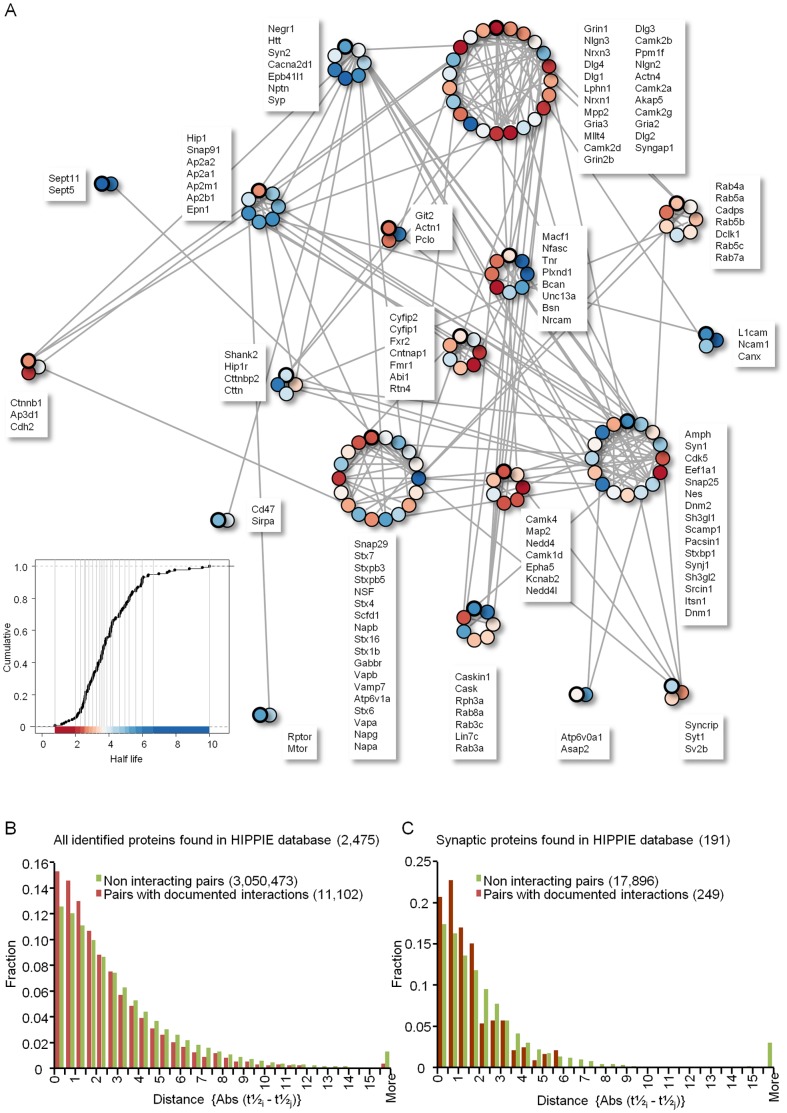
Chemical synapses contain multitudes of proteins, which in common with all proteins, have finite lifetimes and therefore need to be continuously replaced. Given the huge numbers of synaptic connections typical neurons form, the demand to maintain the protein contents of these connections might be expected to place considerable metabolic demands on each neuron. Moreover, synaptic proteostasis might differ according to distance from global protein synthesis sites, the availability of distributed protein synthesis facilities, trafficking rates and synaptic protein dynamics. To date, the turnover kinetics of synaptic proteins have not been studied or analyzed systematically, and thus metabolic demands or the aforementioned relationships remain largely unknown. In the current study we used dynamic Stable Isotope Labeling with Amino acids in Cell culture (SILAC), mass spectrometry (MS), Fluorescent Non-Canonical Amino acid Tagging (FUNCAT), quantitative immunohistochemistry and bioinformatics to systematically measure the metabolic half-lives of hundreds of synaptic proteins, examine how these depend on their pre/postsynaptic affiliation or their association with particular molecular complexes, and assess the metabolic load of synaptic proteostasis. We found that nearly all synaptic proteins identified here exhibited half-lifetimes in the range of 2-5 days. Unexpectedly, metabolic turnover rates were not significantly different for presynaptic and postsynaptic proteins, or for proteins for which mRNAs are consistently found in dendrites. Some functionally or structurally related proteins exhibited very similar turnover rates, indicating that their biogenesis and degradation might be coupled, a possibility further supported by bioinformatics-based analyses. The relatively low turnover rates measured here (∼0.7% of synaptic protein content per hour) are in good agreement with imaging-based studies of synaptic protein trafficking, yet indicate that the metabolic load synaptic protein turnover places on individual neurons is very substantial.
化学突触包含多种蛋白质,与所有蛋白质一样,它们的寿命有限,因此需要不断替换。鉴于典型神经元形成的突触连接数量巨大,维持这些连接的蛋白质含量可能会对每个神经元施加相当大的代谢需求。此外,突触蛋白的稳定性可能因距离全局蛋白质合成位点的远近、分布式蛋白质合成设施的可用性、运输速率和突触蛋白动力学的不同而有所不同。迄今为止,突触蛋白的周转率尚未被研究或系统地分析,因此代谢需求或上述关系在很大程度上仍然未知。在当前的研究中,我们使用动态稳定同位素标记与细胞培养中的氨基酸(SILAC)、质谱(MS)、荧光非典型氨基酸标记(FUNCAT)、定量免疫组织化学和生物信息学系统地测量了数百种突触蛋白的代谢半衰期,研究了这些半衰期如何依赖于它们的突触前/突触后联系或与特定分子复合物的联系,并评估了突触蛋白稳定性的代谢负荷。我们发现,这里鉴定的几乎所有突触蛋白的半衰期都在 2-5 天之间。出乎意料的是,突触前和突触后蛋白的代谢周转率没有显著差异,或者对于其 mRNA 始终在树突中发现的蛋白质也是如此。一些功能上或结构上相关的蛋白质表现出非常相似的周转率,这表明它们的生物发生和降解可能是耦合的,这一可能性进一步得到了基于生物信息学的分析的支持。这里测量的相对较低的周转率(每小时约 0.7%的突触蛋白含量)与基于成像的突触蛋白运输研究非常吻合,但表明突触蛋白周转率对单个神经元施加的代谢负荷非常大。