Behavioral Neuroscience Branch, Intramural Research Program, NIDA/NIH, Baltimore, MD, USA.
Neuropharmacology. 2014 Jan;76 Pt B(0 0):395-406. doi: 10.1016/j.neuropharm.2013.04.030. Epub 2013 May 6.
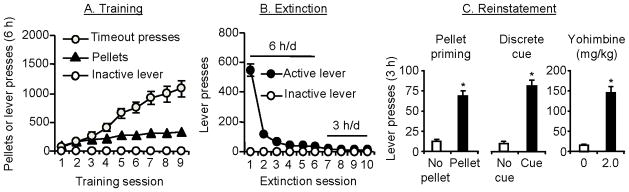
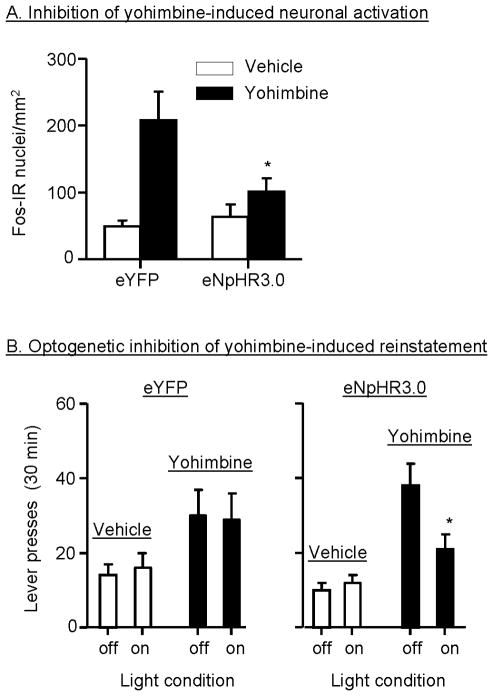
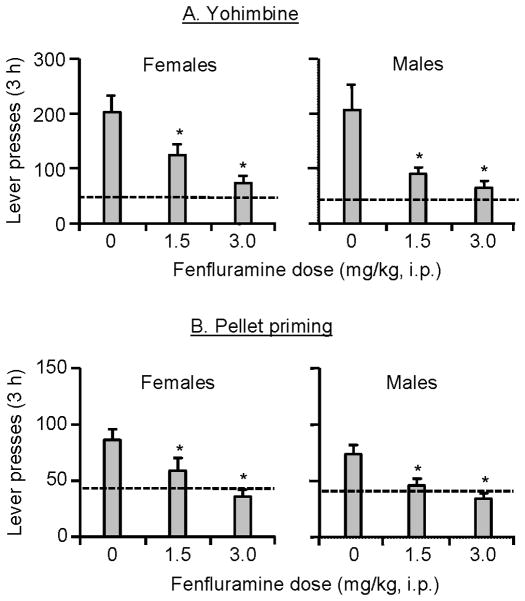
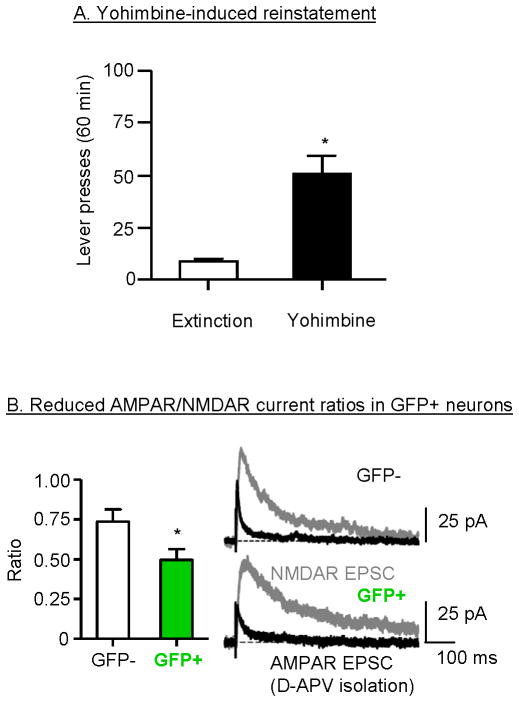
Excessive consumption of unhealthy foods is a major public health problem. While many people attempt to control their food intake through dieting, many relapse to unhealthy eating habits within a few months. We have begun to study this clinical condition in rats by adapting the reinstatement model, which has been used extensively to study relapse to drug seeking. In our adaptation of the relapse model, reinstatement of palatable food seeking by exposure to food-pellet priming, food-associated cues, or stress is assessed in food-restricted (to mimic dieting) rats after operant food-pellet self-administration training and subsequent extinction of the food-reinforced responding. In this review, we first outline the clinical problem and discuss a recent study in which we assessed the predictive validity of the reinstatement model for studying relapse to food seeking during dieting by using the anorexigenic drug fenfluramine. Next, we summarize results from our initial studies on the role of several stress- and feeding-related peptides (corticotropin-releasing factor, hypocretin, melanin-concentrating hormone, peptide YY3-36) in reinstatement of palatable food seeking. We then present results from our studies on the role of dopamine and medial prefrontal cortex in stress-induced reinstatement of food seeking. We conclude by discussing potential clinical implications. We offer two main conclusions: (1) the food reinstatement model is a simple, reliable, and valid model to study mechanisms of relapse to palatable food seeking during dieting, and to identify medications to prevent this relapse; (2) mechanisms of relapse to food seeking are often dissociable from mechanisms of ongoing food intake. This article is part of a Special Issue entitled 'NIDA 40th Anniversary Issue'.
过量食用不健康食品是一个主要的公共卫生问题。虽然许多人试图通过节食来控制食物摄入量,但许多人在几个月内就会恢复不健康的饮食习惯。我们已经开始通过适应再摄取模型来研究这种临床情况,该模型已被广泛用于研究药物寻求的复发。在我们对再摄取模型的改编中,通过暴露于食物丸启动、食物相关线索或应激来评估限制食物(模拟节食)的大鼠中美味食物寻求的再摄取,在进行操作性食物丸自我给药训练和随后的食物强化反应消退后。在这篇综述中,我们首先概述了临床问题,并讨论了最近的一项研究,该研究评估了再摄取模型通过使用厌食药芬氟拉明研究节食期间食物寻求复发的预测有效性。接下来,我们总结了我们关于几种应激和进食相关肽(促肾上腺皮质释放因子、食欲素、黑色素浓缩激素、肽 YY3-36)在美味食物再摄取中的作用的初步研究结果。然后,我们介绍了我们关于多巴胺和内侧前额叶皮层在应激诱导的食物寻求再摄取中的作用的研究结果。最后,我们讨论了潜在的临床意义。我们得出两个主要结论:(1)食物再摄取模型是研究节食期间美味食物寻求复发的机制和确定预防这种复发的药物的简单、可靠和有效的模型;(2)食物寻求复发的机制通常与持续进食的机制不同。本文是一个题为“NIDA 40 周年特刊”的特刊的一部分。