Institute of Public Health of the University of Porto, Porto, Portugal.
Br J Cancer. 2013 Jun 11;108(11):2354-66. doi: 10.1038/bjc.2013.217. Epub 2013 May 9.
Prostate cancer mortality has been decreasing in several high income countries and previous studies analysed the trends mostly according to geographical criteria. We aimed to identify patterns in the time trends of prostate cancer mortality across countries using a model-based approach.
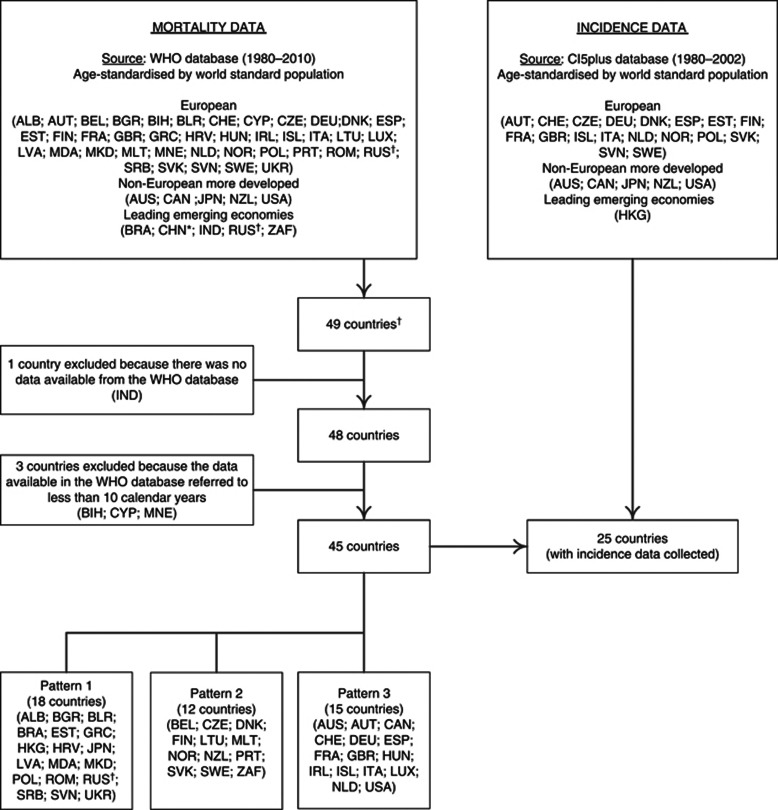
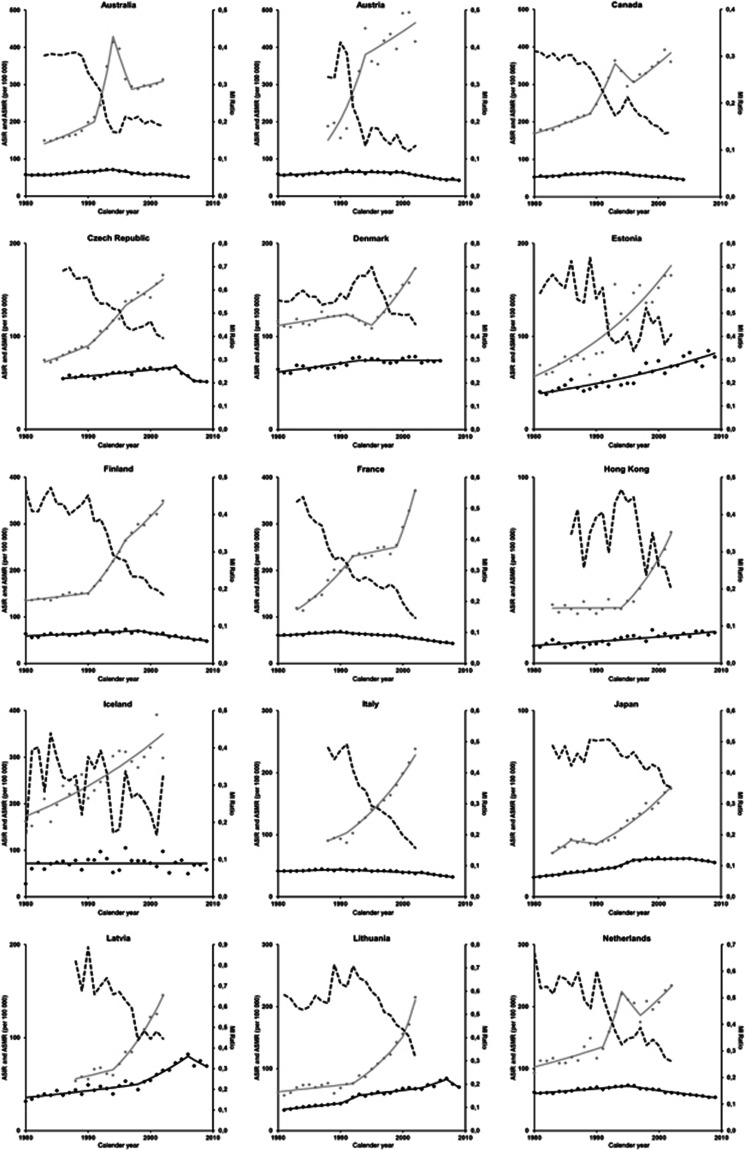
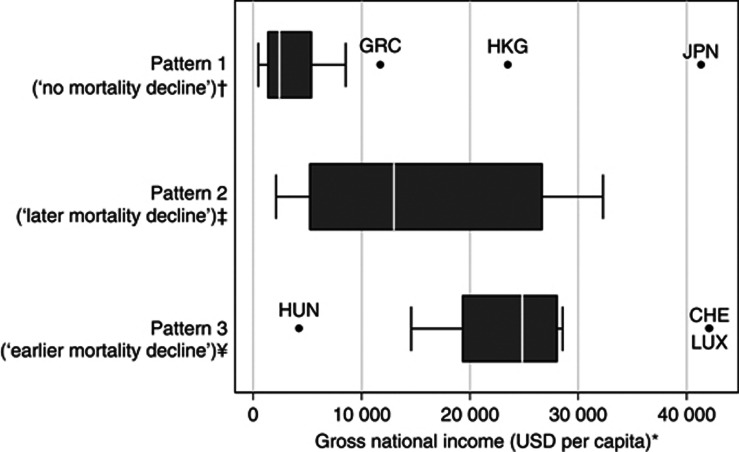
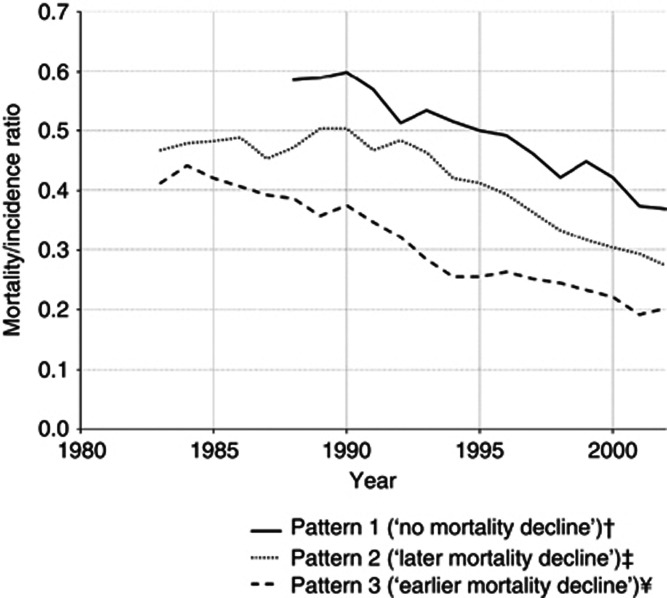
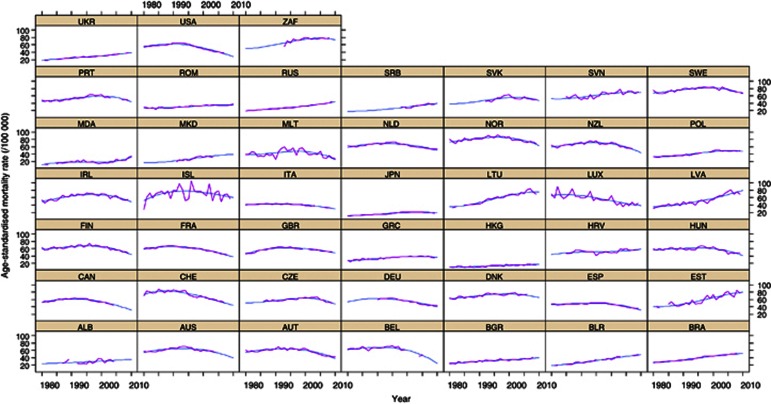
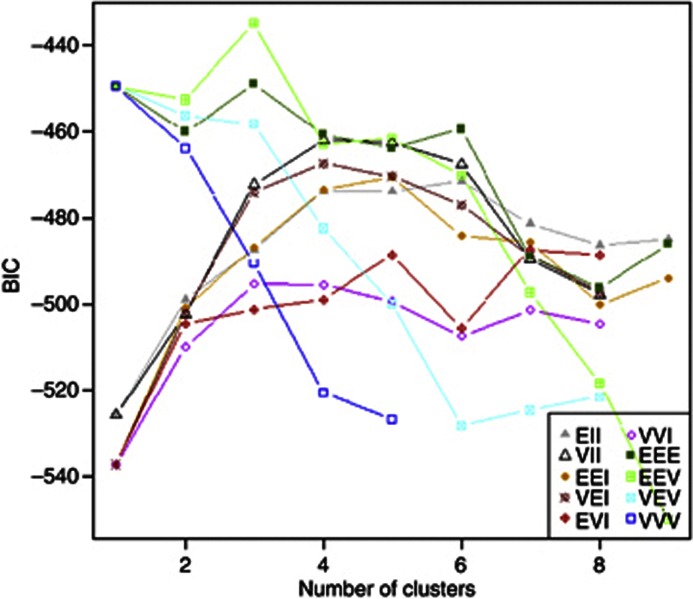
Model-based clustering was used to identify patterns of variation in prostate cancer mortality (1980-2010) across 37 European, five non-European high-income countries and four leading emerging economies. We characterised the patterns observed regarding the geographical distribution and gross national income of the countries, as well as the trends observed in mortality/incidence ratios.
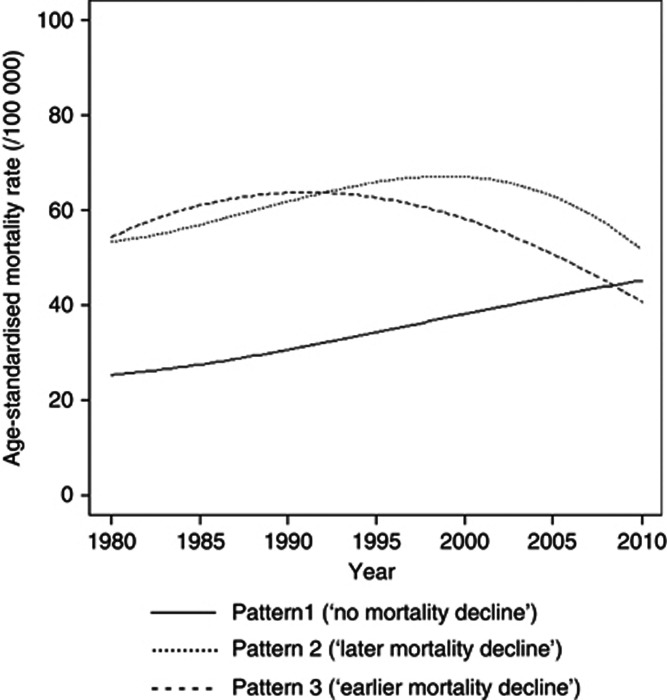
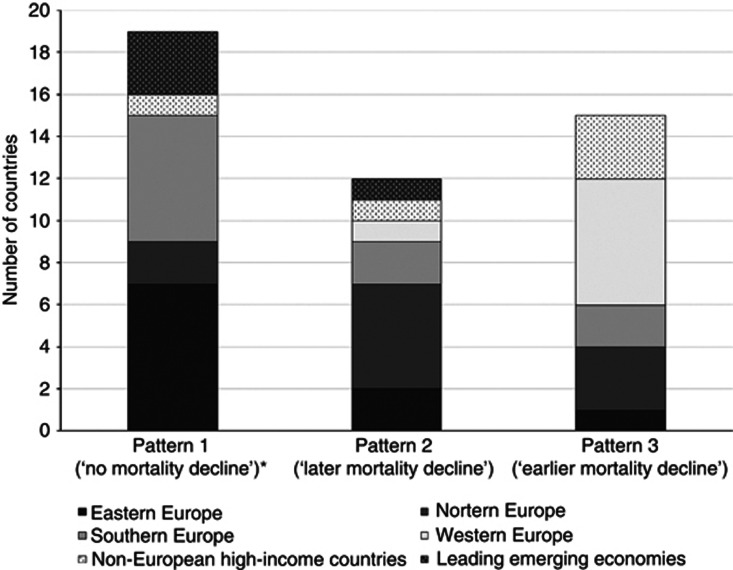
We identified three clusters of countries with similar variation in prostate cancer mortality: pattern 1 ('no mortality decline'), characterised by a continued increase throughout the whole period; patterns 2 ('later mortality decline') and 3 ('earlier mortality decline') depict mortality declines, starting in the late and early 1990s, respectively. These clusters are also homogeneous regarding the variation in the prostate cancer mortality/incidence ratios, while are heterogeneous with reference to the geographical region of the countries and distribution of the gross national income.
We provide a general model for the description and interpretation of the trends in prostate cancer mortality worldwide, based on three main patterns.
在一些高收入国家,前列腺癌死亡率一直在下降,先前的研究主要根据地理标准分析这些趋势。我们旨在使用基于模型的方法确定各国前列腺癌死亡率随时间变化的模式。
使用基于模型的聚类方法,分析了 37 个欧洲国家、5 个非欧洲高收入国家和 4 个主要新兴经济体的前列腺癌死亡率(1980-2010 年)的变化模式。我们对观察到的模式进行了描述,包括国家的地理分布和国民总收入,以及死亡率/发病率比值的变化趋势。
我们确定了三个具有相似前列腺癌死亡率变化模式的国家集群:模式 1(“死亡率无下降”),整个时期持续上升;模式 2(“死亡率后期下降”)和模式 3(“死亡率早期下降”)分别描绘了 90 年代末和 90 年代初开始的死亡率下降趋势。这些集群在前列腺癌死亡率/发病率比值的变化方面是同质的,而在国家的地理区域和国民总收入的分布方面则是异质的。
我们根据三个主要模式,为描述和解释全球前列腺癌死亡率的变化趋势提供了一个通用模型。