Unit on Molecular Hormone Action, Program in Reproductive and Adult Endocrinology, Eunice Kennedy Shriver National Institutes of Child Health and Human Development, National Institutes of Health, Bethesda, Maryland, United States of America.
PLoS One. 2013 May 8;8(5):e63587. doi: 10.1371/journal.pone.0063587. Print 2013.
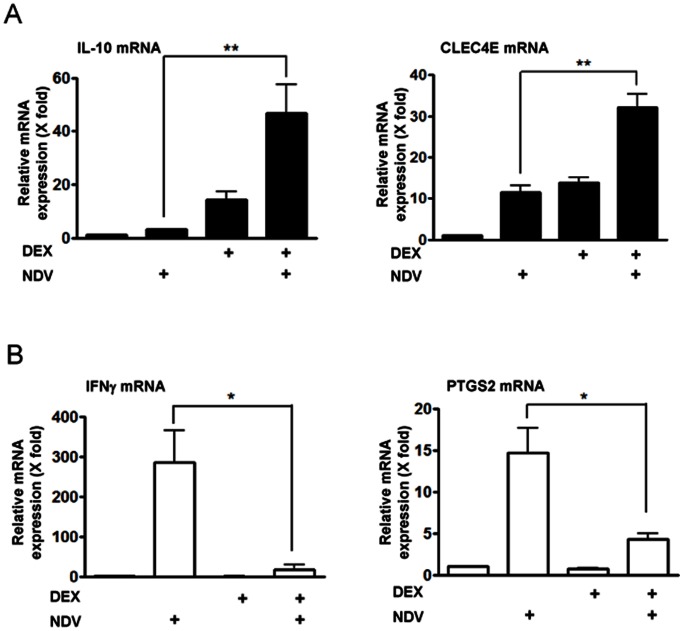
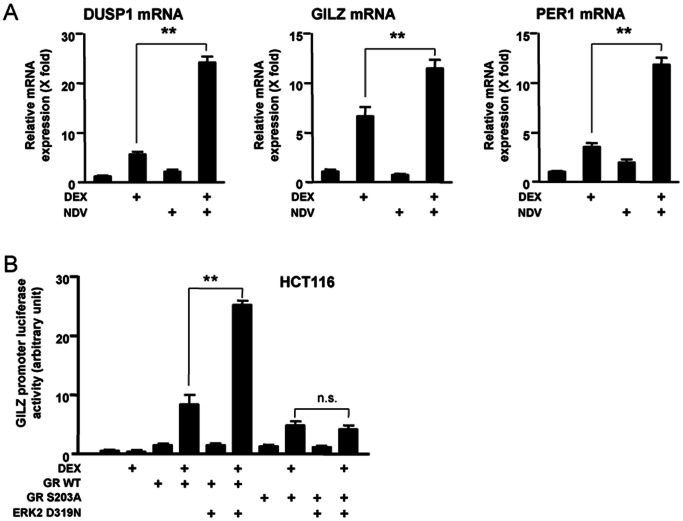
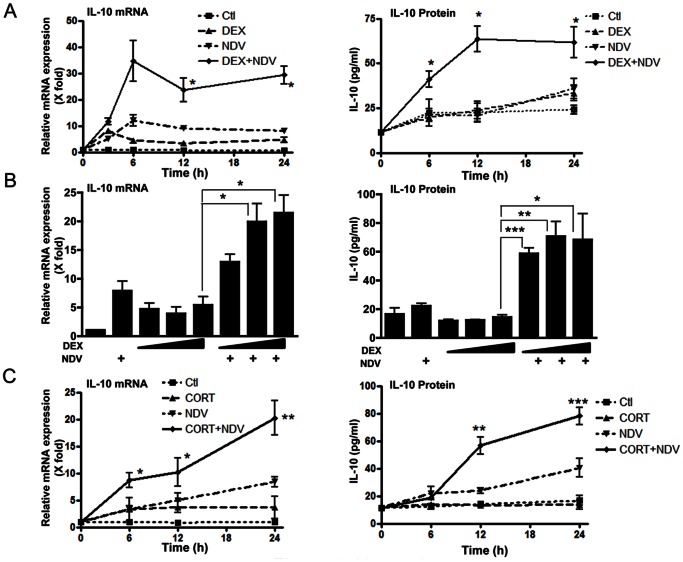
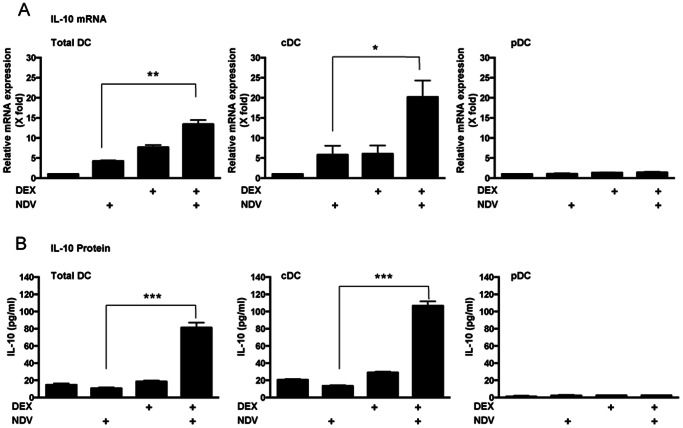
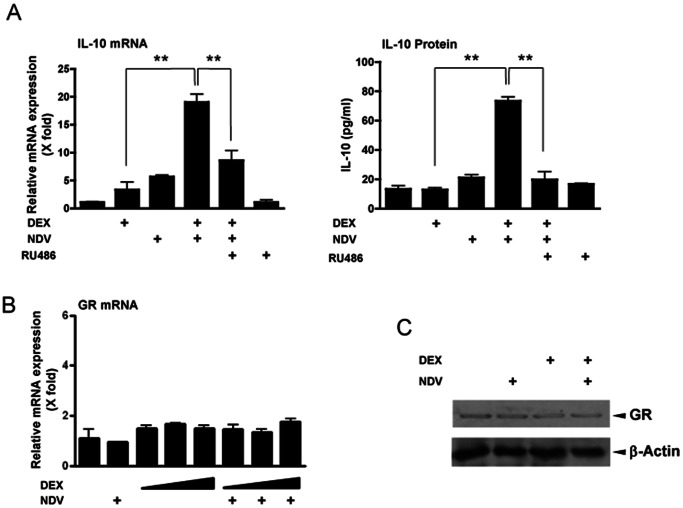
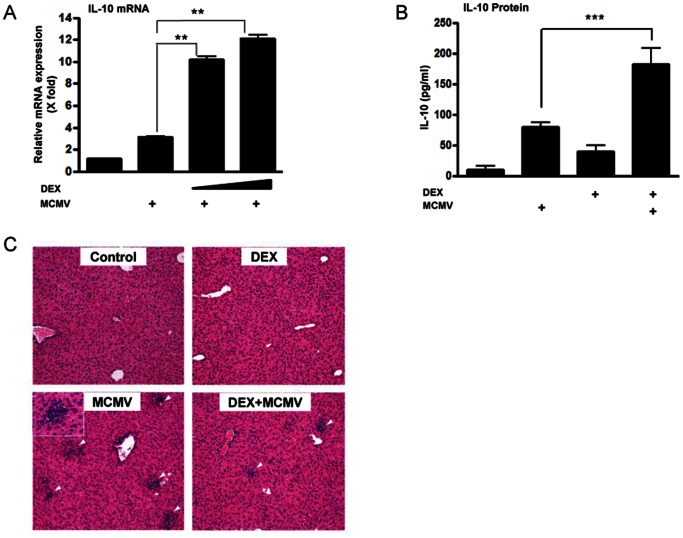
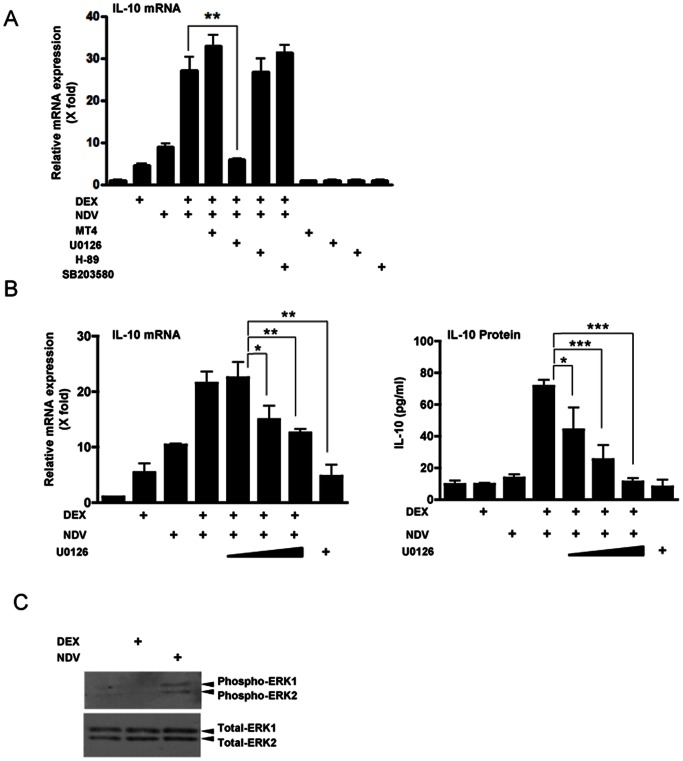
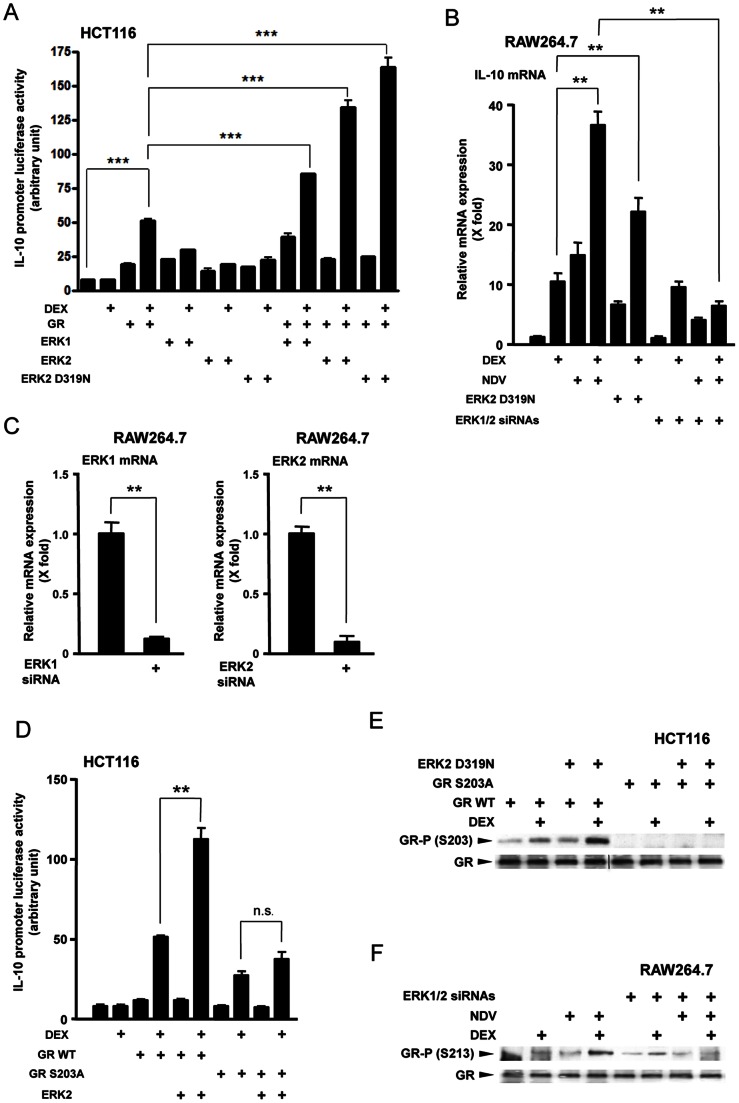
The hypothalamic-pituitary-adrenal axis plays a central role in the adaptive response to stress including infection of pathogens through glucocorticoids. Physical and/or mental stress alter susceptibility to viral infection possibly by affecting this regulatory system, thus we explored potential cellular targets and mechanisms that underlie this phenomenon in key immune components dendritic cells (DCs). Dexamethasone (DEX) treatment and subsequent Newcastle disease virus (NDV) infection most significantly and cooperatively stimulated mRNA expression of the interleukin (IL)-10 in murine bone marrow-derived DCs among 89 genes involved in the Toll-like receptor signaling pathways. NDV increased DEX-induced IL-10 mRNA and protein expression by 7- and 3-fold, respectively, which was observed from 3 hours after infection. Conventional DCs (cDCs), but not plasmacytoid DCs (pDCs) were major sources of IL-10 in bone marrow-derived DCs treated with DEX and/or infected with NDV. Murine cytomegalovirus and DEX increased serum IL-10 cooperatively in female mice. Pre-treatment of DCs with the extracellular signal-regulated kinase (ERK) inhibitor U0126 abolished cooperative induction of IL-10 by DEX and NDV. Further, ERK overexpression increased IL-10 promoter activity stimulated by wild-type human GR but not by its mutant defective in serine 203, whereas ERK knockdown abolished NDV/DEX cooperation on IL-10 mRNA and phosphorylation of the mouse GR at serine 213. NDV also increased DEX-induced mRNA expression of three known glucocorticoid-responsive genes unrelated to the Toll-like receptor signaling pathways in DCs. These results indicate that virus and glucocorticoids cooperatively increase production of anti-inflammatory cytokine IL-10 by potentiating the transcriptional activity of GR in DCs, through which virus appears to facilitate its own propagation in infected hosts. The results may further underlie in part known exacerbation of IL-10/T helper-2-related allergic disorders by stress and viral infection.
下丘脑-垂体-肾上腺轴在适应应激反应中发挥核心作用,包括通过糖皮质激素应对病原体感染。身体和/或精神压力改变了对病毒感染的易感性,可能是通过影响这个调节系统,因此我们探索了潜在的细胞靶点和机制,这些靶点和机制是在关键免疫成分树突状细胞 (DC) 中产生这种现象的基础。地塞米松 (DEX) 处理和随后的新城疫病毒 (NDV) 感染在涉及 Toll 样受体信号通路的 89 个基因中最显著且协同地刺激了鼠骨髓来源的 DC 中白细胞介素 (IL)-10 的 mRNA 表达。NDV 分别增加了 DEX 诱导的 IL-10 mRNA 和蛋白表达 7 倍和 3 倍,从感染后 3 小时即可观察到。在骨髓来源的 DC 中,常规 DC (cDCs),而不是浆细胞样 DC (pDCs),是 DEX 和/或 NDV 处理后产生 IL-10 的主要来源。鼠巨细胞病毒和 DEX 协同增加雌性小鼠血清中的 IL-10。DC 预先用细胞外信号调节激酶 (ERK) 抑制剂 U0126 处理,可消除 DEX 和 NDV 协同诱导 IL-10。此外,ERK 过表达增加了野生型人 GR 刺激的 IL-10 启动子活性,但不增加其丝氨酸 203 缺陷的突变体,而 ERK 敲低则消除了 NDV/DEX 对 IL-10 mRNA 的协同作用以及鼠 GR 在丝氨酸 213 上的磷酸化。NDV 还增加了 DC 中三个已知与 Toll 样受体信号通路无关的糖皮质激素反应基因的 DEX 诱导的 mRNA 表达。这些结果表明,病毒和糖皮质激素通过增强 GR 在 DC 中的转录活性协同增加抗炎细胞因子 IL-10 的产生,病毒通过这种方式似乎促进了其在感染宿主中的自身传播。这些结果可能进一步部分解释了应激和病毒感染如何加剧已知的与 IL-10/T 辅助 2 相关的过敏疾病。