Centre for Infection and Immunity, Queen's University Belfast, Belfast, Northern Ireland.
PLoS One. 2013 May 9;8(5):e61023. doi: 10.1371/journal.pone.0061023. Print 2013.
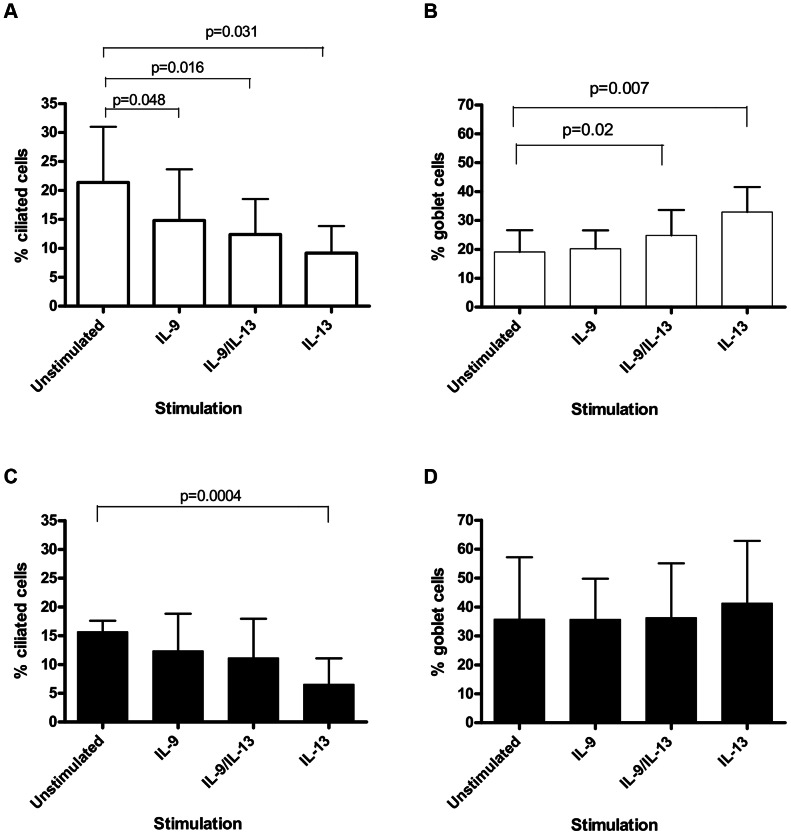
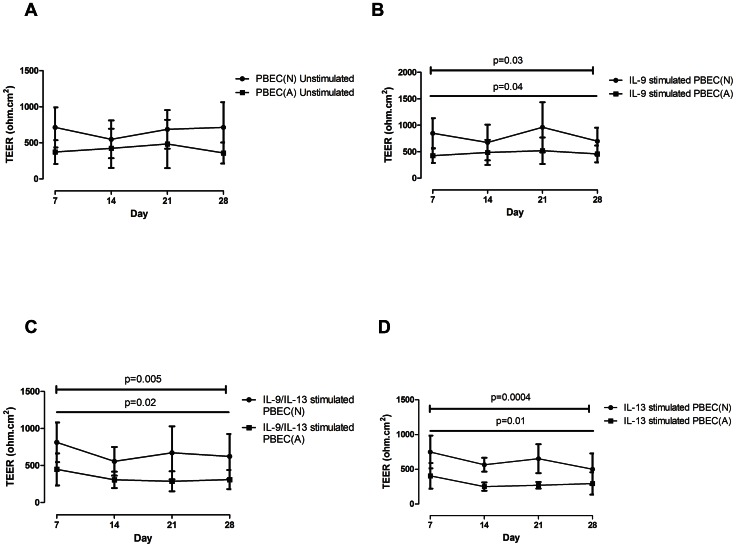
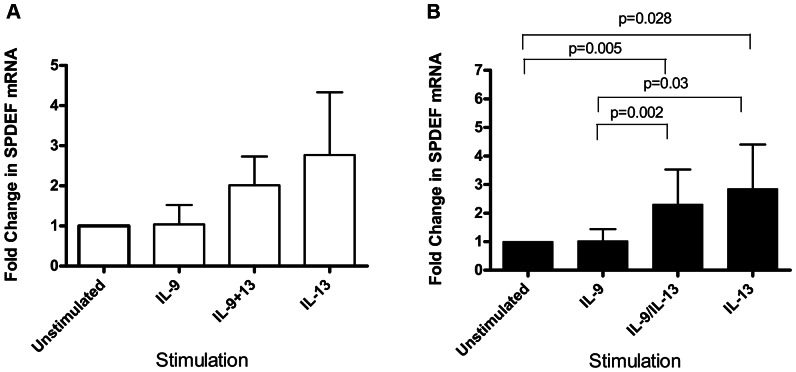
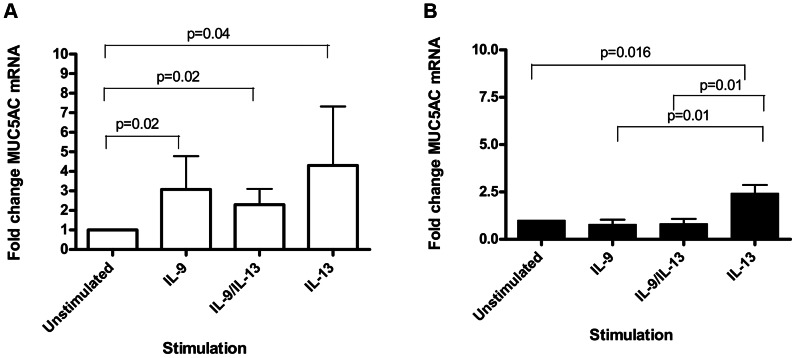
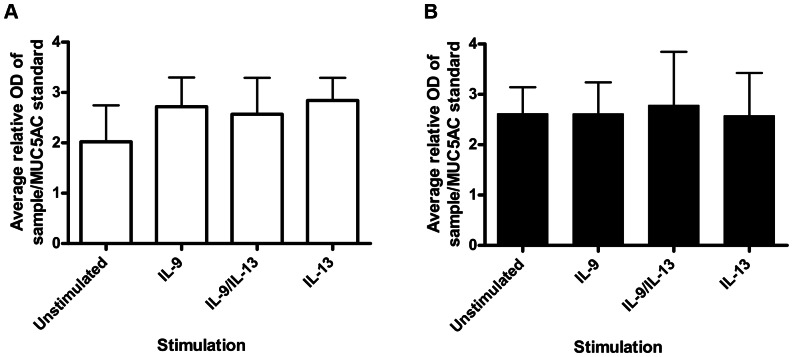
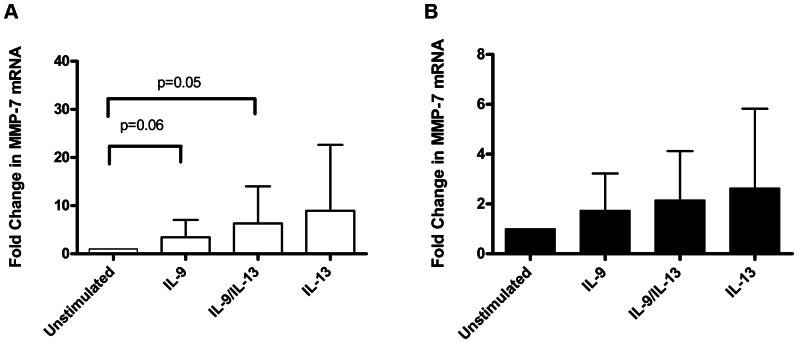
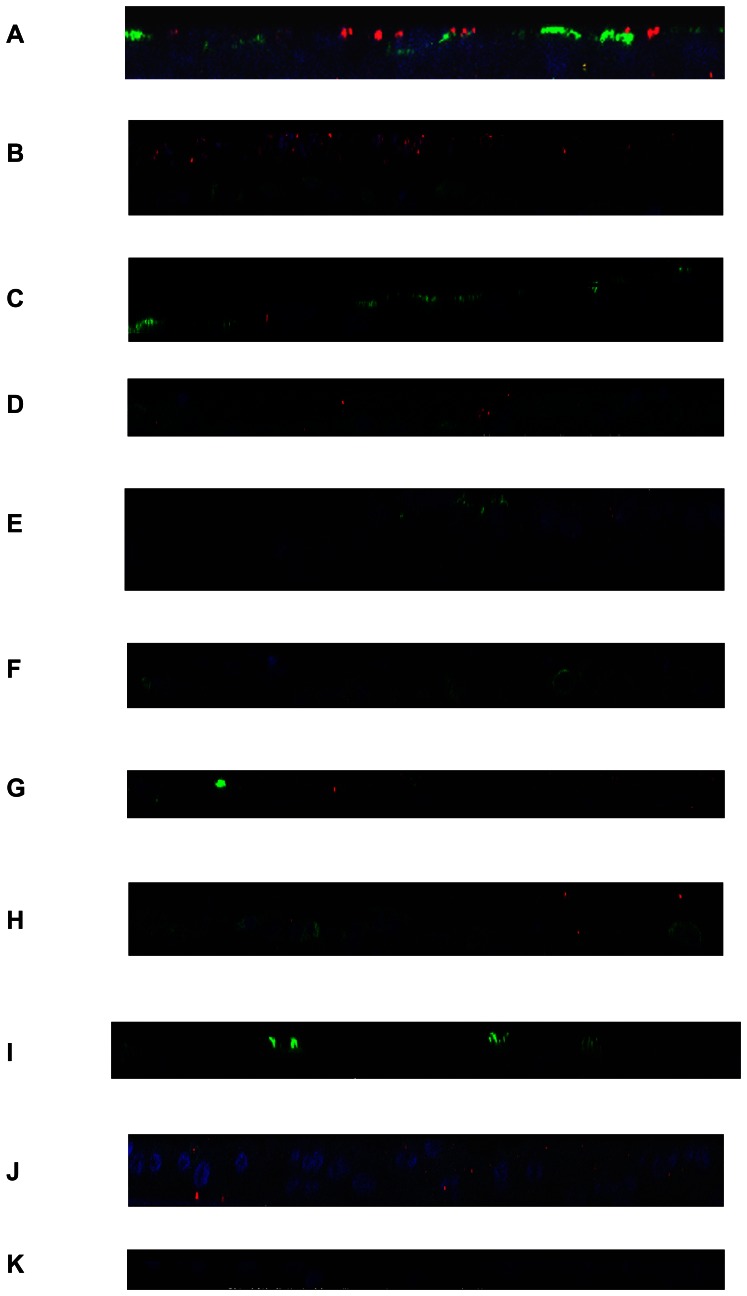
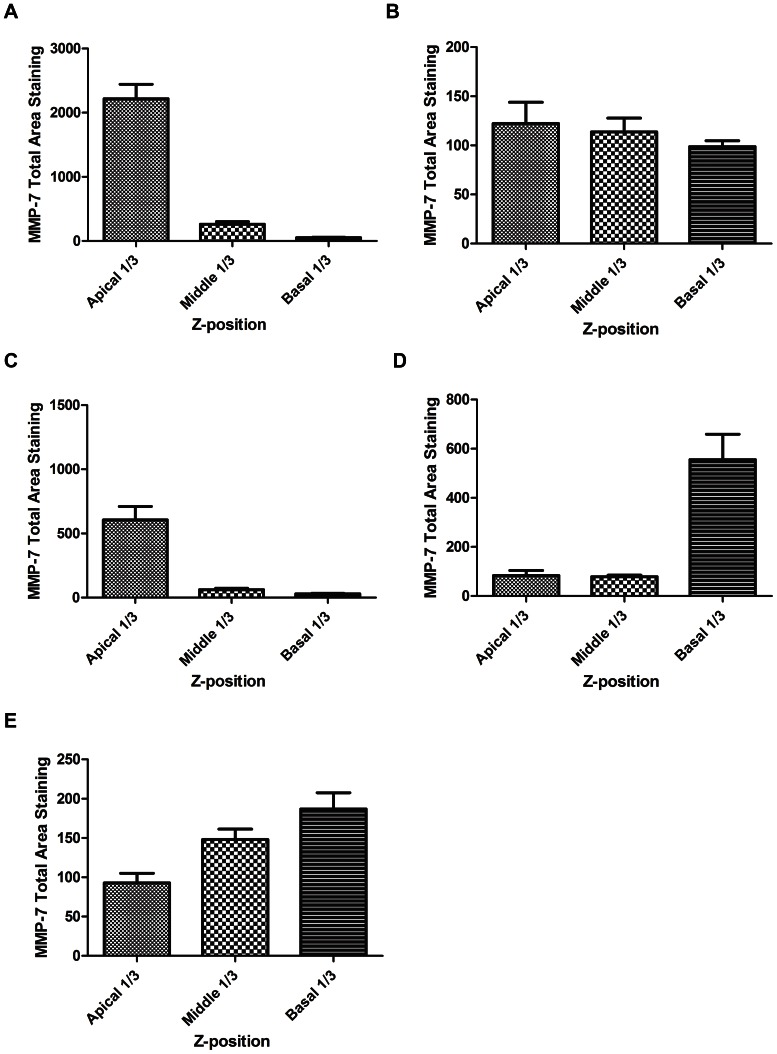
Asthma is a chronic inflammatory disease characterised by airways remodelling. In mouse models IL-9 and IL-13 have been implicated in airways remodelling including mucus hypersecretion and goblet cell hyperplasia. Their role, especially that of IL-9, has been much less studied in authentic human ex vivo models of the bronchial epithelium from normal and asthmatic children. We assessed the effects of IL-9, IL-13 and an IL-9/IL-13 combination, during differentiation of bronchial epithelial cells from normal (n = 6) and asthmatic (n = 8) children. Cultures were analysed for morphological markers and factors associated with altered differentiation (MUC5AC, SPDEF and MMP-7). IL-9, IL-9/IL-13 combination and IL-13 stimulated bronchial epithelial cells from normal children had fewer ciliated cells [14.8% (SD 8.9), p = 0.048, 12.4 (SD 6.1), p = 0.016 and 7.3% (SD 6.6), p = 0.031] respectively compared with unstimulated [(21.4% (SD 9.6)]. IL-9 stimulation had no effect on goblet cell number in either group whereas IL-9/IL-13 combination and IL-13 significantly increased goblet cell number [24.8% (SD 8.8), p = 0.02), 32.9% (SD 8.6), p = 0.007] compared with unstimulated normal bronchial cells [(18.6% (SD 6.2)]. All stimulations increased MUC5AC mRNA in bronchial epithelial cells from normal children and increased MUC5AC mucin secretion. MMP-7 localisation was dysregulated in normal bronchial epithelium stimulated with Th2 cytokines which resembled the unstimulated bronchial epithelium of asthmatic children. All stimulations resulted in a significant reduction in transepithelial electrical resistance values over time suggesting a role in altered tight junction formation. We conclude that IL-9 does not increase goblet cell numbers in bronchial epithelial cell cultures from normal or asthmatic children. IL-9 and IL-13 alone and in combination, reduce ciliated cell numbers and transepithelial electrical resistance during differentiation of normal epithelium, which clinically could inhibit mucociliary clearance and drive an altered repair mechanism. This suggests an alternative role for IL-9 in airways remodelling and reaffirms IL-9 as a potential therapeutic target.
哮喘是一种以气道重塑为特征的慢性炎症性疾病。在小鼠模型中,IL-9 和 IL-13 被认为参与了气道重塑,包括黏液高分泌和杯状细胞增生。它们的作用,特别是 IL-9 的作用,在正常和哮喘儿童的支气管上皮的真实人体离体模型中研究得较少。我们评估了 IL-9、IL-13 和 IL-9/IL-13 组合在支气管上皮细胞从正常(n=6)和哮喘(n=8)儿童分化过程中的作用。对培养物进行了形态学标记物和与分化改变相关的因子(MUC5AC、SPDEF 和 MMP-7)分析。与未刺激的细胞相比,IL-9、IL-9/IL-13 组合和 IL-13 刺激的正常儿童的支气管上皮细胞的纤毛细胞数量分别减少[14.8%(SD 8.9),p=0.048,12.4%(SD 6.1),p=0.016 和 7.3%(SD 6.6),p=0.031]。IL-9 刺激对两组的杯状细胞数量均无影响,而 IL-9/IL-13 组合和 IL-13 显著增加了杯状细胞数量[24.8%(SD 8.8),p=0.02],32.9%(SD 8.6),p=0.007],与未刺激的正常支气管细胞相比[18.6%(SD 6.2)]。所有刺激物均增加了正常儿童支气管上皮细胞中 MUC5AC 的 mRNA 水平,并增加了 MUC5AC 粘蛋白的分泌。在 Th2 细胞因子刺激下,正常支气管上皮细胞中 MMP-7 的定位失调,类似于哮喘儿童未刺激的支气管上皮细胞。所有刺激物均导致跨上皮电阻值随时间显著降低,表明在紧密连接形成改变中起作用。我们的结论是,IL-9 不会增加正常或哮喘儿童支气管上皮细胞培养物中的杯状细胞数量。IL-9 和 IL-13 单独和联合作用可减少正常上皮细胞分化过程中的纤毛细胞数量和跨上皮电阻值,这在临床上可能会抑制黏液纤毛清除并导致改变的修复机制。这表明 IL-9 在气道重塑中具有替代作用,并再次证实 IL-9 是一个潜在的治疗靶点。