Amoureux Sébastien, Sicard Pierre, Korandji Claudia, Borey Angélique, Benkhadra Salima, Sequeira-Le Grand Anabelle, Vergely Catherine, Girard Claude, Rochette Luc
LPPCE, IFR Santé STIC 100, Facultés de Médecine et de Pharmacie, Dijon, France; ; Département d'Anesthésie Réanimation, CHRU Le Bocage, Dijon, France;
Int J Biomed Sci. 2008 Sep;4(3):204-11.
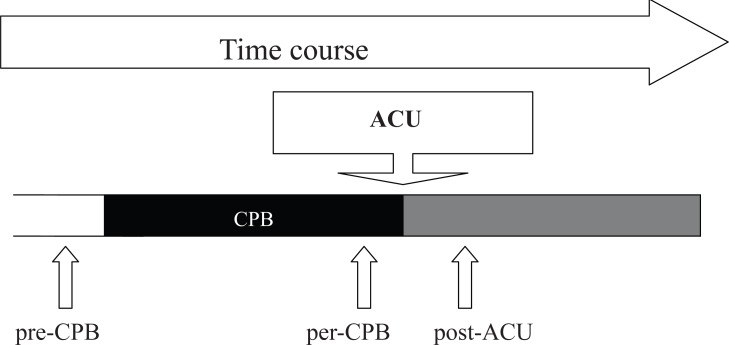
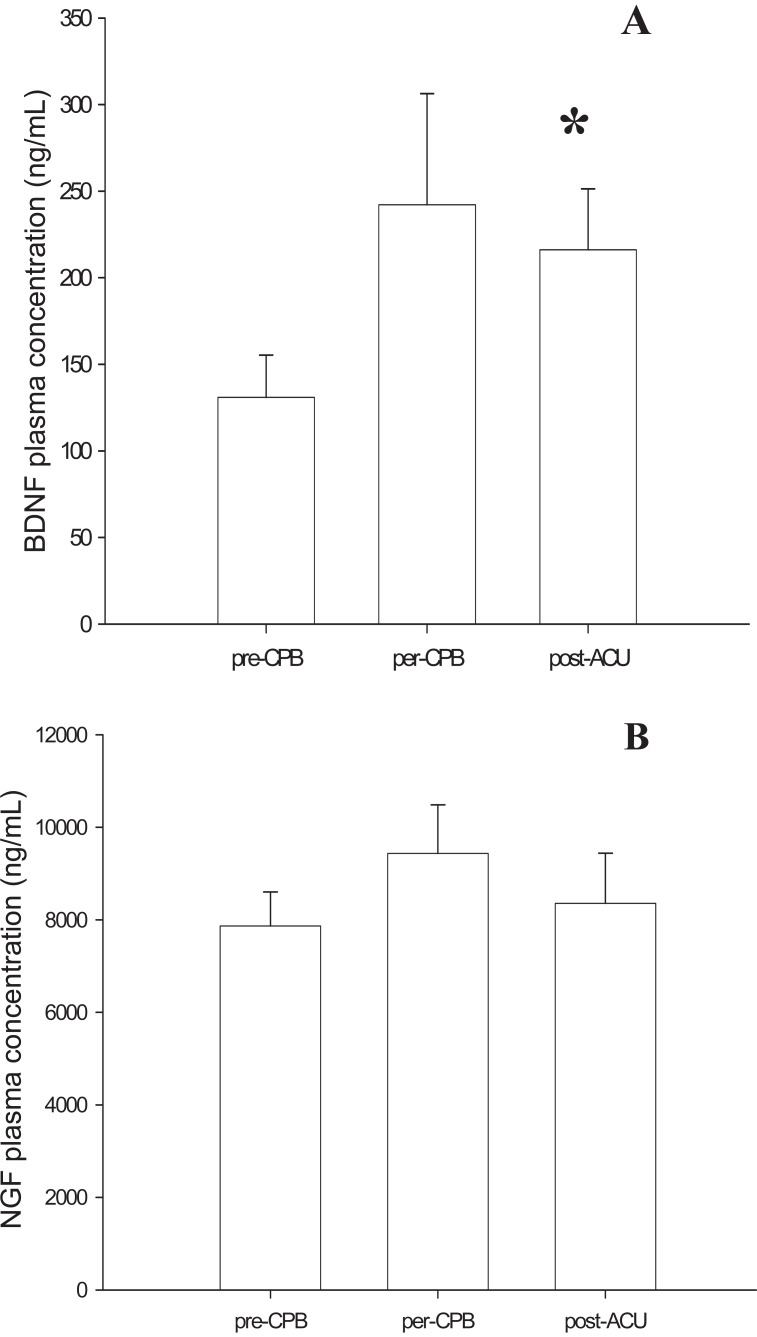
Cardiopulmonary Bypass (CPB) is thought to generate reactive oxygen species associated with a systemic inflammation and neurotrophins seem to be involved in cardiovascular inflammatory reactions. The aim of this study was to determine the impact of CPB on plasma neurotrophins levels and to appreciate the links existing between inflammation, oxidative stress and neurotrophins. Blood samples were taken from 27 patients undergoing cardiac surgery: before CPB, during ischemia and at reperfusion under CPB. Oxidative stress was evaluated using an Electron Spin Resonance technique by superoxide detection, and antioxidant defences by measurement of Endogenous Peroxidase Activity (EPA). The evolution of two neurotrophins: Brain Derived Neurotrophic Factor (BDNF) and Nerve Growth Factor (NGF) was assessed with an ELISA method. An inflammatory index was determined by a multiplex flow cytometry method. The inflammatory index showed that MCP-1, P-selectin, t-PA and interleukins 6, 8 and 10 levels increased during CPB (p<0.05). Superoxide production and EPA were higher during ischemia and reperfusion than before CPB (p<0.05). BDNF plasma levels were higher at reperfusion (p<0.05). NGF levels did not change. Our study shows an increase of BDNF levels, associated with an inflammatory phenomenon and a redox modification, in the plasma of patients undergoing cardiac surgery under CPB. The role played by this neurotrophin in this complex situation still needs to be elucidated, in particular its cellular origin. It is also necessary to understand whether BDNF has a beneficial or deleterious effect during CPB.
体外循环(CPB)被认为会产生活性氧,这与全身炎症有关,而神经营养蛋白似乎参与了心血管炎症反应。本研究的目的是确定CPB对血浆神经营养蛋白水平的影响,并认识炎症、氧化应激和神经营养蛋白之间存在的联系。从27例接受心脏手术的患者身上采集血样:在CPB前、缺血期间和CPB下再灌注时。使用电子自旋共振技术通过超氧化物检测评估氧化应激,并通过测量内源性过氧化物酶活性(EPA)评估抗氧化防御能力。用酶联免疫吸附测定法评估两种神经营养蛋白:脑源性神经营养因子(BDNF)和神经生长因子(NGF)的变化。通过多重流式细胞术方法确定炎症指数。炎症指数显示,CPB期间MCP-1、P-选择素、组织型纤溶酶原激活剂(t-PA)以及白细胞介素6、8和10的水平升高(p<0.05)。缺血和再灌注期间的超氧化物产生量和EPA高于CPB前(p<0.05)。再灌注时血浆BDNF水平较高(p<0.05)。NGF水平没有变化。我们的研究表明,在接受CPB心脏手术的患者血浆中,BDNF水平升高,与炎症现象和氧化还原改变有关。这种神经营养蛋白在这种复杂情况下所起的作用仍有待阐明,特别是其细胞来源。还需要了解BDNF在CPB期间是具有有益还是有害作用。