Department of Medical Biophysics, University of Toronto, Toronto, Ontario, Canada.
PLoS One. 2013 May 10;8(5):e63047. doi: 10.1371/journal.pone.0063047. Print 2013.
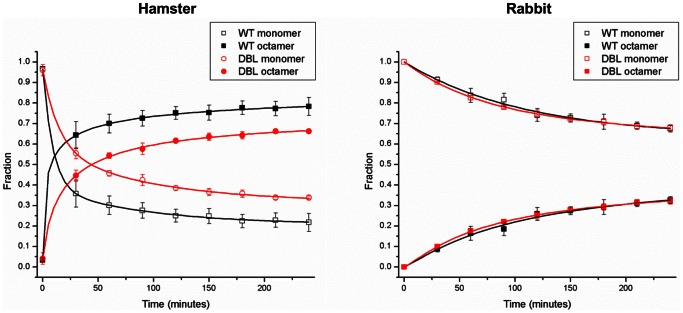
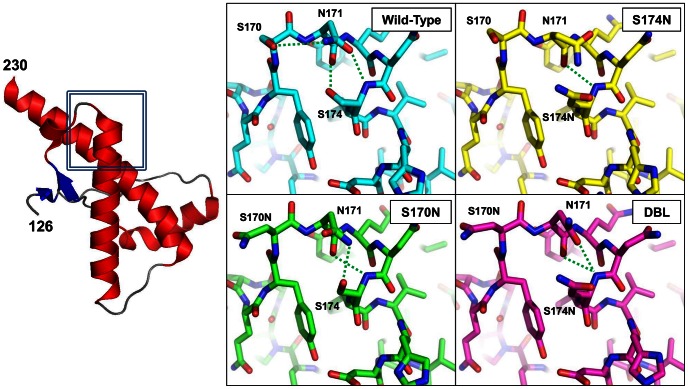
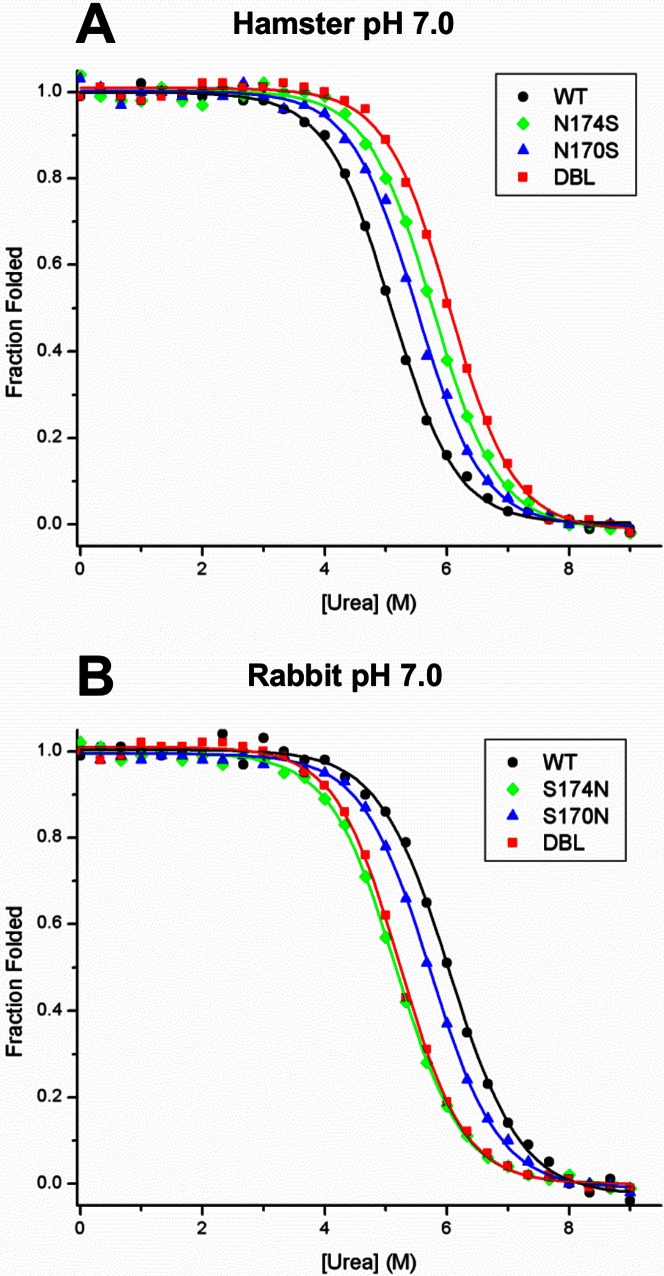
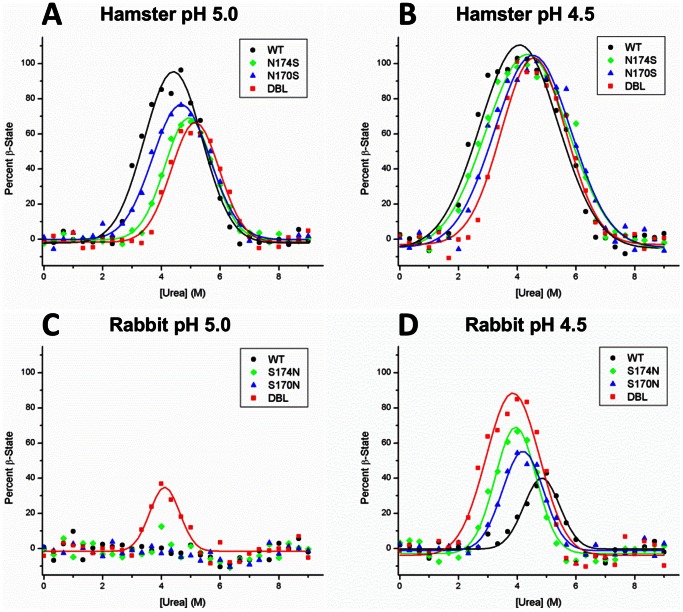
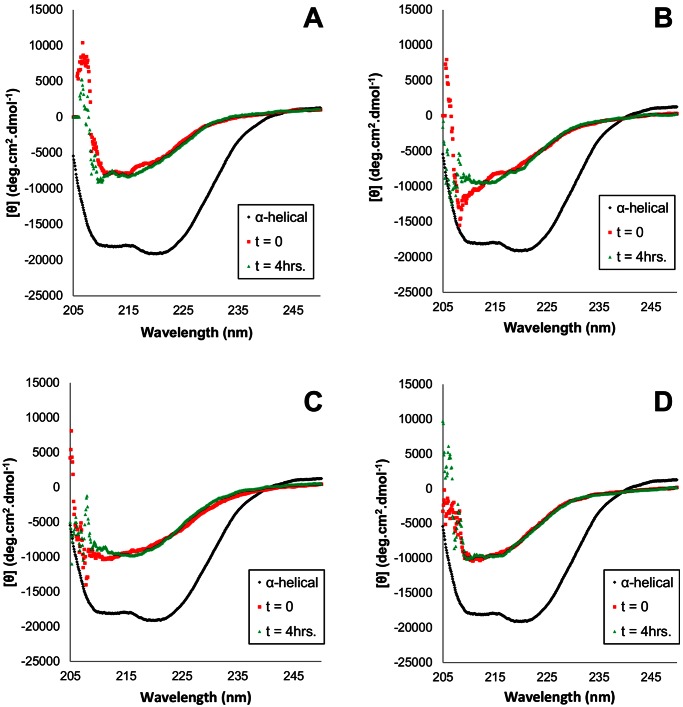
Susceptibility of a particular species to prion disease is affected by small differences in the sequence of PrP and correlates with the propensity of its PrP to assume the β-state. A helix-cap motif in the β2-α2-loop of native α-helical rabbit PrP, a resistant species, contains sequence differences that influence intra- and interspecies transmission. To determine the effect the helix-cap motif on β-state refolding propensity, we mutated S170N, S174N, and S170N/S174N of the rabbit PrP helix-cap to resemble that of hamster PrP and conversely, N170S, N174S, and N170S/N174S of hamster PrP to resemble the helix-cap of rabbit PrP. High-resolution crystal structures (1.45-1.6 Å) revealed that these mutations ablate hydrogen-bonding interactions within the helix-cap motif in rabbit PrP(C). They also alter the β-state-misfolding propensity of PrP; the serine mutations in hamster PrP decrease the propensity up to 35%, whereas the asparagine mutations in rabbit PrP increase it up to 42%. Rapid dilution of rabbit and hamster into β-state buffer conditions causes quick conversion to β-state monomers. Kinetic monitoring using size-exclusion chromatography showed that the monomer population decreases exponentially mirrored by an increase in an octameric species. The monomer-octamer transition rates are faster for hamster than for rabbit PrP. The N170S/N174S mutant of hamster PrP has a smaller octamer component at the endpoint compared to the wild-type, whereas the kinetics of octamer formation in mutant and wild-type rabbit PrP are comparable. These findings demonstrate that the sequence of the β2-α2 helix-cap affects refolding to the β-state and subsequently, may influence susceptibility to prion disease.
特定物种对朊病毒病的易感性受 PrP 序列中微小差异的影响,并与 PrP 形成β态的倾向相关。在抵抗物种的天然α螺旋兔 PrP 的β2-α2 环中的螺旋帽基序包含影响种内和种间传播的序列差异。为了确定螺旋帽基序对β态重新折叠倾向的影响,我们将兔 PrP 螺旋帽中的 S170N、S174N 和 S170N/S174N 突变为类似于仓鼠 PrP 的序列,反之,将仓鼠 PrP 的 N170S、N174S 和 N170S/N174S 突变为类似于兔 PrP 的螺旋帽。高分辨率晶体结构(1.45-1.6Å)表明,这些突变消除了兔 PrP(C) 中螺旋帽基序内的氢键相互作用。它们还改变了 PrP 的β态错误折叠倾向;仓鼠 PrP 中的丝氨酸突变使倾向降低了多达 35%,而兔 PrP 中的天冬酰胺突变使倾向增加了多达 42%。快速将兔和仓鼠稀释到β态缓冲条件下会导致快速转化为β态单体。使用凝胶过滤色谱进行的动力学监测表明,单体种群呈指数下降,与八聚体物种的增加相对应。仓鼠 PrP 的单体-八聚体转变速率比兔 PrP 快。与野生型相比,仓鼠 PrP 的 N170S/N174S 突变体在终点处的八聚体组分较小,而突变型和野生型兔 PrP 的八聚体形成动力学是可比的。这些发现表明,β2-α2 螺旋帽的序列影响到β态的重新折叠,随后可能影响朊病毒病的易感性。