Department of Biochemistry and Molecular Biophysics, Washington University School of Medicine, St. Louis, MO 63110, USA.
Biochemistry. 2013 Jun 11;52(23):4026-36. doi: 10.1021/bi400284j. Epub 2013 May 31.
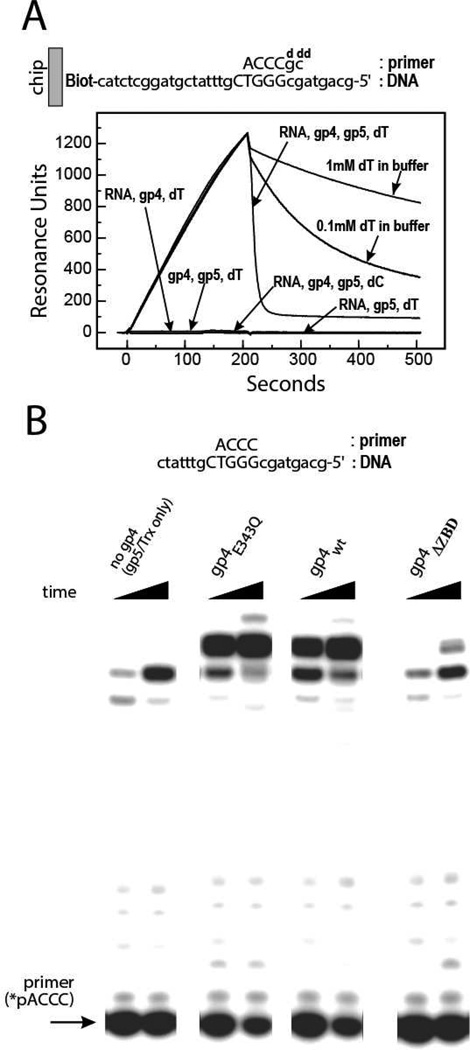
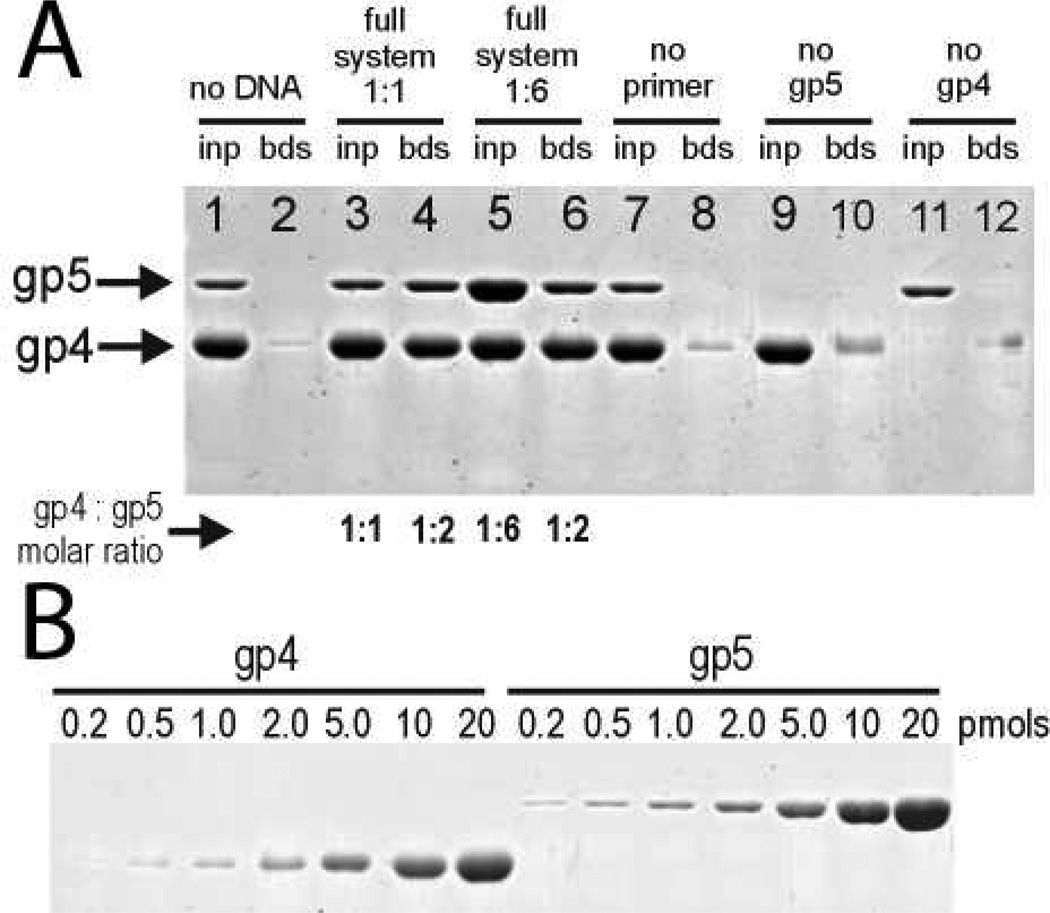
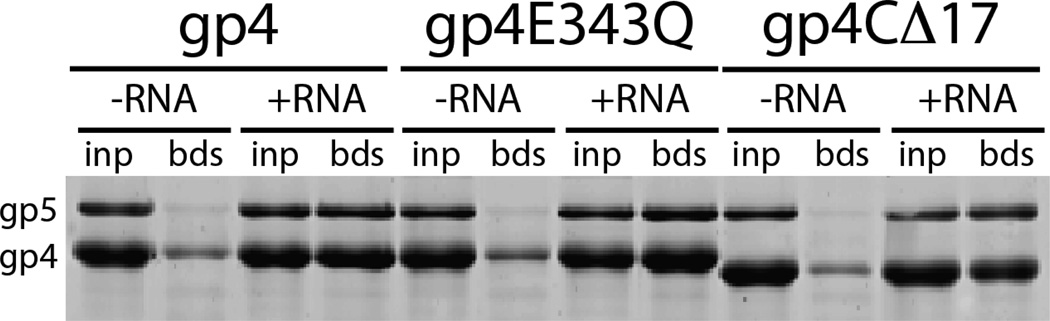
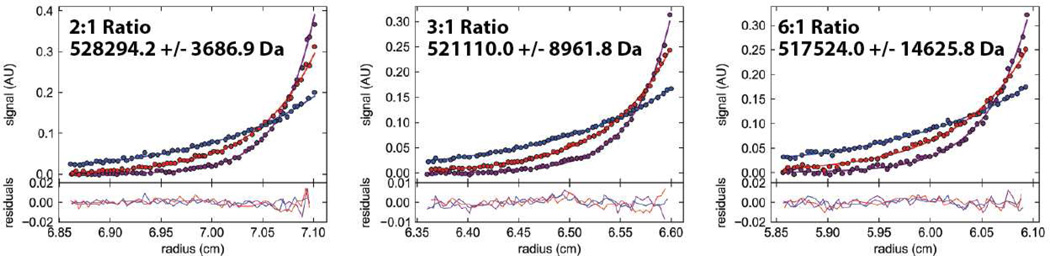
Replisomes are multiprotein complexes that coordinate the synthesis of leading and lagging DNA strands to increase the replication efficiency and reduce DNA strand breaks caused by stalling of replication forks. The bacteriophage T7 replisome is an economical machine that requires only four proteins for processive, coupled synthesis of two DNA strands. Here we characterize a complex between T7 primase-helicase and DNA polymerase on DNA that was trapped during the initiation of Okazaki fragment synthesis from an RNA primer. This priming complex consists of two DNA polymerases and a primase-helicase hexamer that assemble on the DNA template in an RNA-dependent manner. The zinc binding domain of the primase-helicase is essential for trapping the RNA primer in complex with the polymerase, and a unique loop located on the thumb of the polymerase also stabilizes this primer extension complex. Whereas one of the polymerases engages the primase-helicase and RNA primer on the lagging strand of a model replication fork, the second polymerase in the complex is also functional and can bind a primed template DNA. These results indicate that the T7 primase-helicase specifically engages two copies of DNA polymerase, which would allow the coordination of leading and lagging strand synthesis at a replication fork. Assembly of the T7 replisome is driven by intimate interactions between the DNA polymerase and multiple subunits of the primase-helicase hexamer.
复制体是协调前导链和滞后链合成的多蛋白复合物,以提高复制效率并减少因复制叉停滞而导致的 DNA 链断裂。噬菌体 T7 复制体是一种经济高效的机器,仅需四种蛋白质即可进行前导链和滞后链的连续偶联合成。在这里,我们描述了 T7 引发酶-解旋酶与 DNA 聚合酶在 DNA 上的复合物,该复合物是在 RNA 引物起始冈崎片段合成过程中被捕获的。该引发复合物由两个 DNA 聚合酶和一个引发酶-解旋酶六聚体组成,它们以 RNA 依赖性方式在 DNA 模板上组装。引发酶-解旋酶的锌结合结构域对于将 RNA 引物与聚合酶结合在复合物中是必需的,聚合酶拇指上的独特环也稳定了这种引物延伸复合物。尽管聚合酶之一与滞后链上的引发酶-解旋酶和 RNA 引物结合,但复合物中的第二个聚合酶也具有功能,并且可以结合已引发的模板 DNA。这些结果表明,T7 引发酶-解旋酶特异性地与两个 DNA 聚合酶结合,这将允许在复制叉处协调前导链和滞后链的合成。T7 复制体的组装由 DNA 聚合酶与引发酶-解旋酶六聚体的多个亚基之间的紧密相互作用驱动。