Paul O'Gorman Leukaemia Research Centre, College of Medical, Veterinary and Life Sciences, University of Glasgow, Gartnavel General Hospital, 1053 Great Western Road, Glasgow G12 0ZD, UK.
Cell Commun Signal. 2013 May 15;11(1):33. doi: 10.1186/1478-811X-11-33.
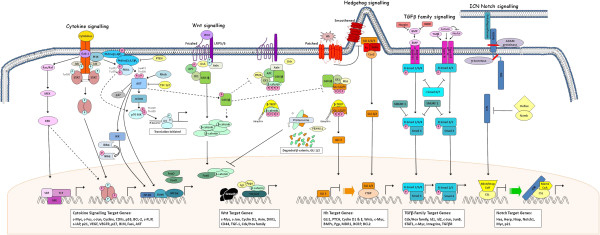
A fundamental property of hematopoietic stem cells (HSCs) is the ability to self-renew. This is a complex process involving multiple signal transduction cascades which control the fine balance between self-renewal and differentiation through transcriptional networks. Key activators/regulators of self-renewal include chemokines, cytokines and morphogens which are expressed in the bone marrow niche, either in a paracrine or autocrine fashion, and modulate stem cell behaviour. Increasing evidence suggests that the downstream signaling pathways induced by these ligands converge at multiple levels providing a degree of redundancy in steady state hematopoiesis. Here we will focus on how these pathways cross-talk to regulate HSC self-renewal highlighting potential therapeutic windows which could be targeted to prevent leukemic stem cell self-renewal in myeloid malignancies.
造血干细胞(HSCs)的一个基本特性是自我更新的能力。这是一个复杂的过程,涉及多个信号转导级联,通过转录网络来控制自我更新和分化之间的微妙平衡。自我更新的关键激活剂/调节剂包括趋化因子、细胞因子和形态发生素,它们以旁分泌或自分泌的方式在骨髓龛中表达,并调节干细胞的行为。越来越多的证据表明,这些配体诱导的下游信号通路在多个水平上相互作用,为稳态造血提供了一定程度的冗余。在这里,我们将重点讨论这些途径如何相互作用来调节 HSC 的自我更新,突出潜在的治疗靶点,以防止髓系恶性肿瘤中的白血病干细胞自我更新。