University of Miami, Leonard M, Miller School of Medicine, Miami, FL, USA.
BMC Med. 2013 May 16;11:132. doi: 10.1186/1741-7015-11-132.
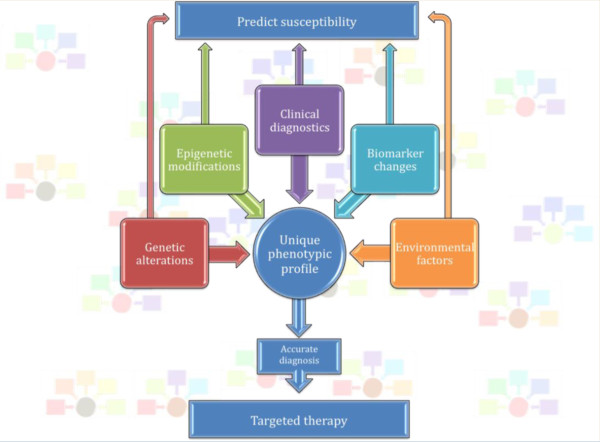
The central theme of personalized medicine is the premise that an individual's unique physiologic characteristics play a significant role in both disease vulnerability and in response to specific therapies. The major goals of personalized medicine are therefore to predict an individual's susceptibility to developing an illness, achieve accurate diagnosis, and optimize the most efficient and favorable response to treatment. The goal of achieving personalized medicine in psychiatry is a laudable one, because its attainment should be associated with a marked reduction in morbidity and mortality. In this review, we summarize an illustrative selection of studies that are laying the foundation towards personalizing medicine in major depressive disorder, bipolar disorder, and schizophrenia. In addition, we present emerging applications that are likely to advance personalized medicine in psychiatry, with an emphasis on novel biomarkers and neuroimaging.
个性化医学的核心主题是这样一个前提,即个体独特的生理特征在疾病易感性和对特定治疗的反应中都起着重要作用。因此,个性化医学的主要目标是预测个体患病的易感性,实现准确的诊断,并优化对治疗的最有效和最有利的反应。在精神病学中实现个性化医学的目标是值得称赞的,因为它的实现应该与发病率和死亡率的显著降低相关。在这篇综述中,我们总结了一系列有代表性的研究,这些研究为在重度抑郁症、双相情感障碍和精神分裂症中实现个性化医学奠定了基础。此外,我们还介绍了一些可能在精神病学中推进个性化医学的新兴应用,重点是新的生物标志物和神经影像学。