Synta Pharmaceuticals Corp., 125 Hartwell Avenue, Lexington, MA, 02421, USA.
Invest New Drugs. 2014 Feb;32(1):14-24. doi: 10.1007/s10637-013-9971-6. Epub 2013 May 18.
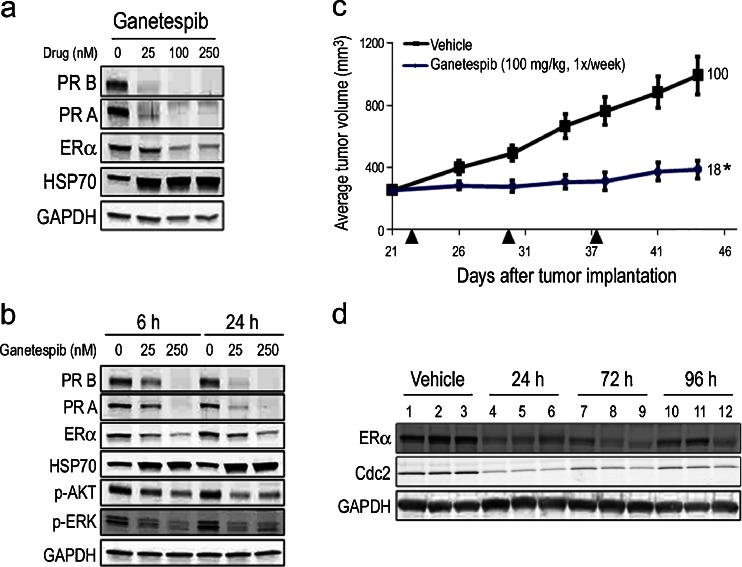
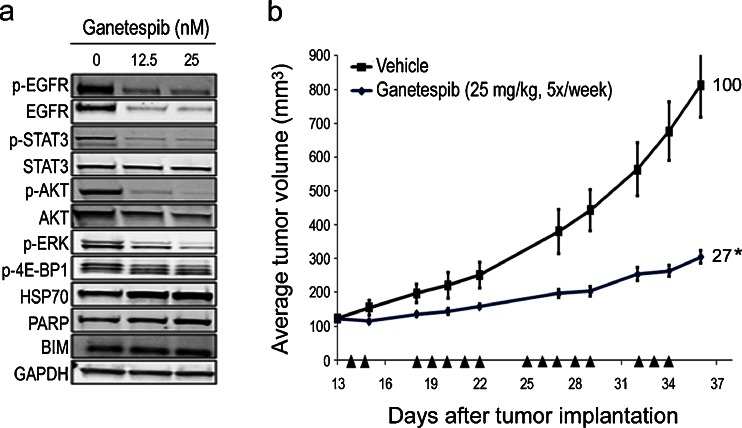
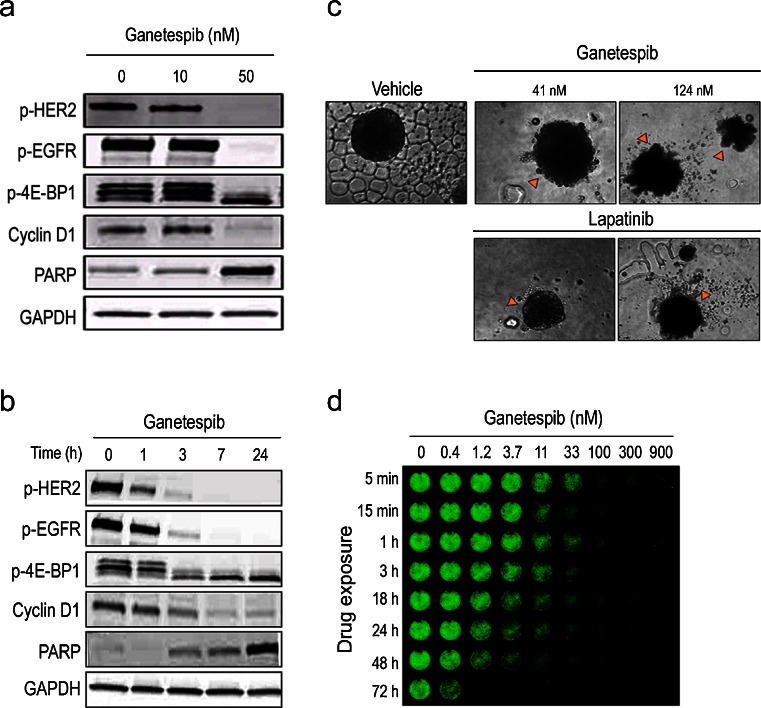
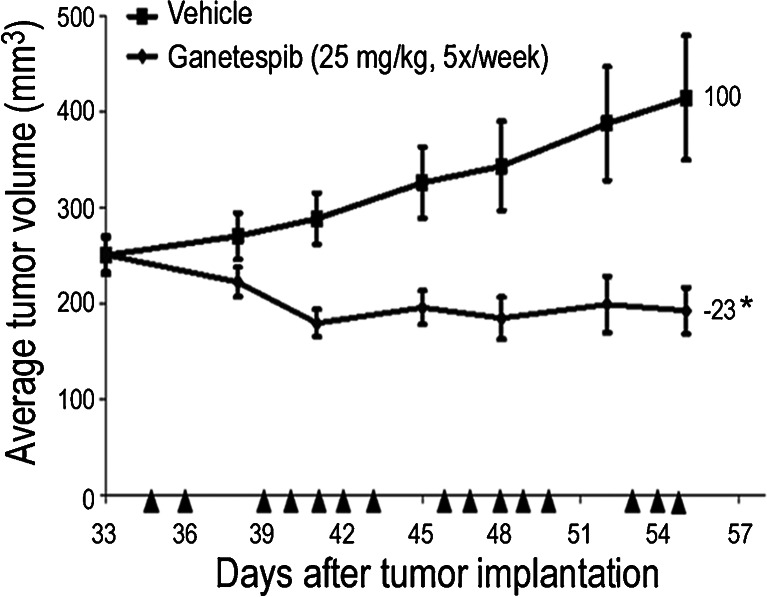
Heat shock protein 90 (Hsp90) is a molecular chaperone essential for the stability and function of multiple cellular client proteins, a number of which have been implicated in the pathogenesis of breast cancer. Here we undertook a comprehensive evaluation of the activity of ganetespib, a selective Hsp90 inhibitor, in this malignancy. With low nanomolar potency, ganetespib reduced cell viability in a panel of hormone receptor-positive, HER2-overexpressing, triple-negative and inflammatory breast cancer cell lines in vitro. Ganetespib treatment induced a rapid and sustained destabilization of multiple client proteins and oncogenic signaling pathways and even brief exposure was sufficient to induce and maintain suppression of HER2 levels in cells driven by this receptor. Indeed, HER2-overexpressing BT-474 cells were comparatively more sensitive to ganetespib than the dual HER2/EGFR tyrosine kinase inhibitor lapatinib in three-dimensional culture. Ganetespib exposure caused pleiotropic effects in the inflammatory breast cancer line SUM149, including receptor tyrosine kinases, MAPK, AKT and mTOR signaling, transcription factors and proteins involved in cell cycle, stress and apoptotic regulation, as well as providing combinatorial benefit with lapatinib in these cells. This multimodal activity translated to potent antitumor efficacy in vivo, suppressing tumor growth in MCF-7 and MDA-MB-231 xenografts and inducing tumor regression in the BT-474 model. Thus, ganetespib potently inhibits Hsp90 leading to the degradation of multiple clinically-validated oncogenic client proteins in breast cancer cells, encompassing the broad spectrum of molecularly-defined subtypes. This preclinical activity profile suggests that ganetespib may offer considerable promise as a new therapeutic candidate for patients with advanced breast cancers.
热休克蛋白 90(Hsp90)是多种细胞客户蛋白稳定性和功能所必需的分子伴侣,其中一些已被牵连到乳腺癌的发病机制中。在这里,我们对一种选择性 Hsp90 抑制剂 ganetespib 在这种恶性肿瘤中的活性进行了全面评估。ganetespib 具有低纳摩尔效力,可降低体外激素受体阳性、HER2 过表达、三阴性和炎症性乳腺癌细胞系中细胞活力。ganetespib 处理诱导多种客户蛋白和致癌信号通路的快速和持续失稳,即使短暂暴露也足以诱导和维持受该受体驱动的细胞中 HER2 水平的抑制。事实上,与双重 HER2/EGFR 酪氨酸激酶抑制剂 lapatinib 相比,HER2 过表达的 BT-474 细胞在三维培养中对 ganetespib 更为敏感。ganetespib 暴露在炎症性乳腺癌细胞系 SUM149 中引起多效性效应,包括受体酪氨酸激酶、MAPK、AKT 和 mTOR 信号、转录因子和参与细胞周期、应激和凋亡调节的蛋白质,以及与 lapatinib 在这些细胞中具有组合益处。这种多模式活性转化为体内强大的抗肿瘤功效,抑制 MCF-7 和 MDA-MB-231 异种移植物中的肿瘤生长,并诱导 BT-474 模型中的肿瘤消退。因此,ganetespib 可强烈抑制 Hsp90,导致乳腺癌细胞中多个经临床验证的致癌客户蛋白降解,涵盖了广泛的分子定义亚型。这种临床前活性谱表明 ganetespib 可能为晚期乳腺癌患者提供新的治疗候选药物。