Hematology Branch, National Heart, Lung, and Blood Institute, National Institutes of Health, 10 Center Dr, CRC 3-5140, Bethesda, MD 20892, USA.
Int J Hematol. 2013 Jul;98(1):48-55. doi: 10.1007/s12185-013-1352-6. Epub 2013 May 21.
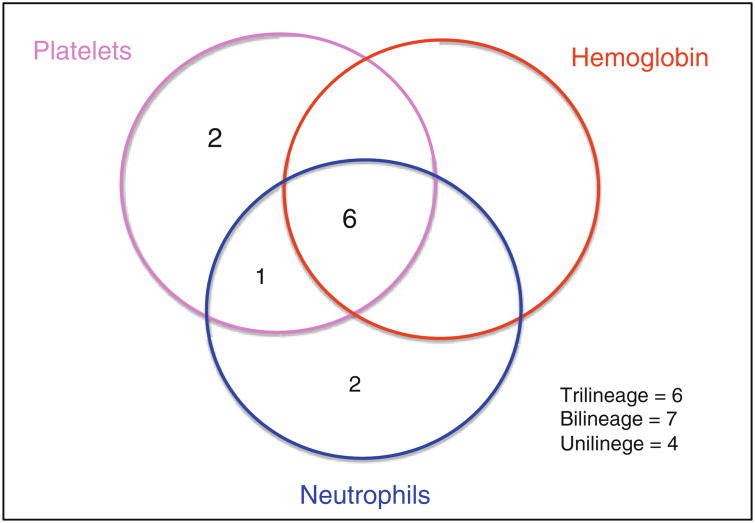
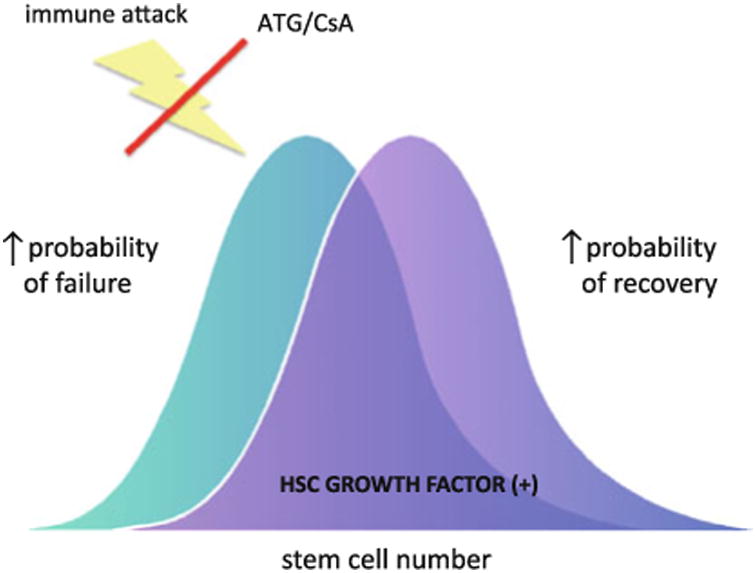
Aplastic anemia is a bone marrow failure syndrome that causes pancytopenia and can lead to life-threatening complications. Bone marrow transplantation remains the standard of care for younger patients and those with a good performance status but many patients may not have a suitable donor. Immunosuppressive therapy is able to resolve cytopenias in a majority of patients with aplastic anemia but relapses are not uncommon and some patients remain refractory to this approach. Patients may require frequent blood and platelet transfusion support which is expensive and inconvenient. Life-threatening bleeding complications still occur despite prophylactic platelet transfusion. Thrombopoietin (TPO) mimetics, such as romiplostim and eltrombopag, were developed to treat patients with refractory immune thrombocytopenia but are now being investigated for the treatment of bone marrow failure syndromes. TPO is the main regulator for platelet production and its receptor (c-Mpl) is present on megakaryocytes and hematopoietic stem cells. Trilineage hematopoietic responses were observed in a recent clinical trial using eltrombopag in patients with severe aplastic anemia refractory to immunosuppression suggesting that these agents can provide a new therapeutic option for enhancing blood production. In this review, we discuss these recent results and ongoing investigation of TPO mimetics for aplastic anemia and other bone marrow failure states like myelodysplastic syndromes. Clonal evolution or progression to acute myeloid leukemia remains a concern when using these drugs in bone marrow failure and patients should only be treated in the setting of a clinical trial.
再生障碍性贫血是一种骨髓衰竭综合征,可导致全血细胞减少,并可导致危及生命的并发症。骨髓移植仍然是年轻患者和身体状况良好患者的标准治疗方法,但许多患者可能没有合适的供体。免疫抑制疗法能够使大多数再生障碍性贫血患者的细胞减少症得到缓解,但复发并不少见,有些患者对此方法仍然没有反应。患者可能需要频繁的输血和血小板支持,这既昂贵又不方便。尽管进行预防性血小板输注,仍会发生危及生命的出血并发症。血小板生成素 (TPO) 模拟物,如罗米司亭和艾曲波帕,最初是为治疗难治性免疫性血小板减少症而开发的,但现在正在研究用于治疗骨髓衰竭综合征。TPO 是血小板生成的主要调节剂,其受体 (c-Mpl) 存在于巨核细胞和造血干细胞上。在最近的一项临床试验中,使用艾曲波帕治疗对免疫抑制治疗无反应的严重再生障碍性贫血患者,观察到三系造血反应,这表明这些药物可以为增强血液生成提供一种新的治疗选择。在这篇综述中,我们讨论了这些最近的结果和正在进行的关于 TPO 模拟物治疗再生障碍性贫血和其他骨髓衰竭状态(如骨髓增生异常综合征)的研究。在骨髓衰竭中使用这些药物时,克隆进化或进展为急性髓系白血病仍然是一个问题,患者只能在临床试验的环境中接受治疗。