Glass Hannah C, Wusthoff Courtney J, Shellhaas Renée A
1Departments of Neurology and Pediatrics, University of California, San Francisco, San Francisco, CA, USA.
J Child Neurol. 2013 Oct;28(10):1342-50. doi: 10.1177/0883073813488663. Epub 2013 May 20.
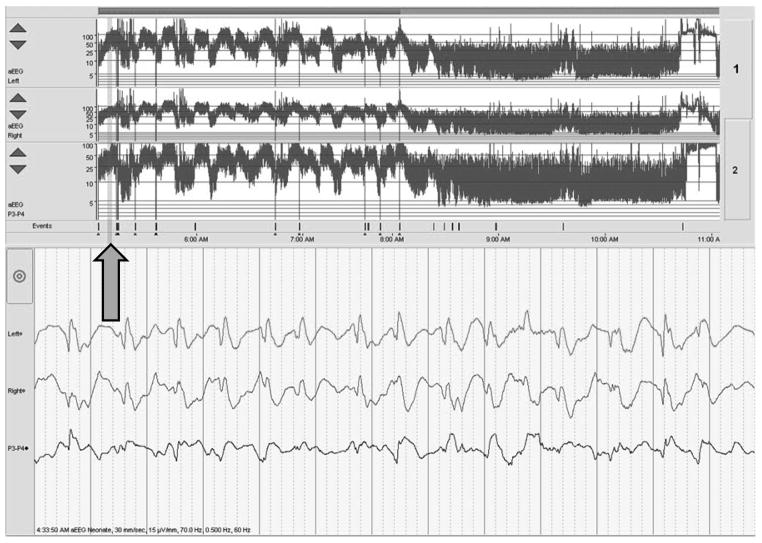
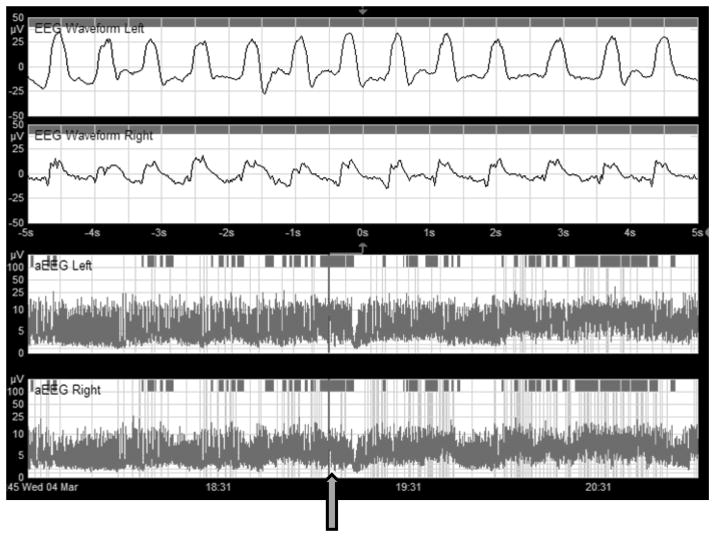
Neurologists increasingly recognize that critically ill patients are at high risk for seizures, particularly nonconvulsive seizures, and that neuromonitoring is a useful tool for diagnosing seizures and assessing brain function in these patients. Amplitude-integrated electroencephalography (EEG) is a simplified bedside neurophysiology tool that has become widely used in neonates over the past decade. Despite widespread interest by both neurologists and neonatologists in continuous brain monitoring, amplitude-integrated EEG has been largely ignored by neurologists, forcing neonatologists to "go it alone" when interpreting data from this bedside tool. Although amplitude-integrated EEG cannot replace conventional EEG for background monitoring and detection of seizures, it remains a useful instrument that complements conventional EEG, is being widely adopted by neonatologists, and should be supported by neonatal neurologists.
神经科医生越来越认识到,重症患者发生癫痫的风险很高,尤其是非惊厥性癫痫,并且神经监测是诊断这些患者癫痫发作和评估脑功能的有用工具。振幅整合脑电图(EEG)是一种简化的床边神经生理学工具,在过去十年中已在新生儿中广泛使用。尽管神经科医生和新生儿科医生都对持续脑监测有着广泛兴趣,但振幅整合脑电图在很大程度上被神经科医生忽视了,这迫使新生儿科医生在解读来自这种床边工具的数据时只能“单打独斗”。虽然振幅整合脑电图不能替代传统脑电图进行背景监测和癫痫发作检测,但它仍然是一种有用的仪器,可补充传统脑电图,正被新生儿科医生广泛采用,并且应该得到新生儿神经科医生的支持。