Robinson Ronald A, Herbertson Luke H, Sarkar Das Srilekha, Malinauskas Richard A, Pritchard William F, Grossman Laurence W
Office of Science and Engineering Laboratories, Center for Devices and Radiological Health, US Food and Drug Administration, Silver Spring, MD, USA.
Med Devices (Auckl). 2013 May 10;6:49-57. doi: 10.2147/MDER.S42555. Print 2013.
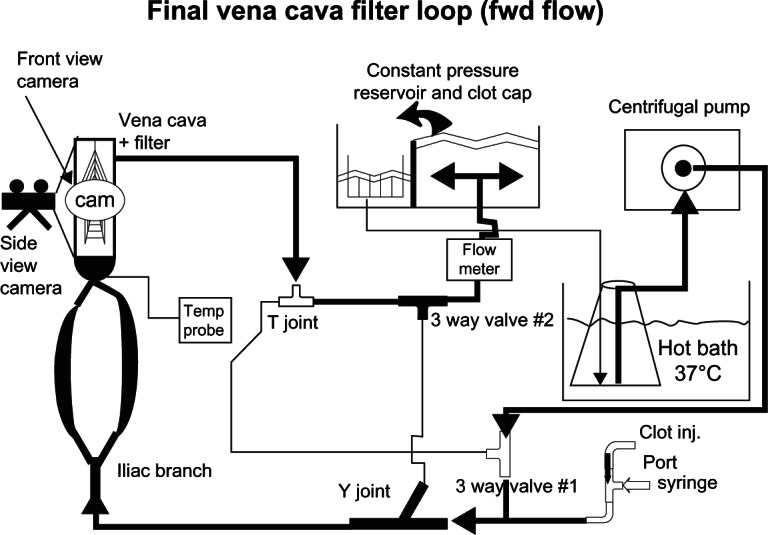
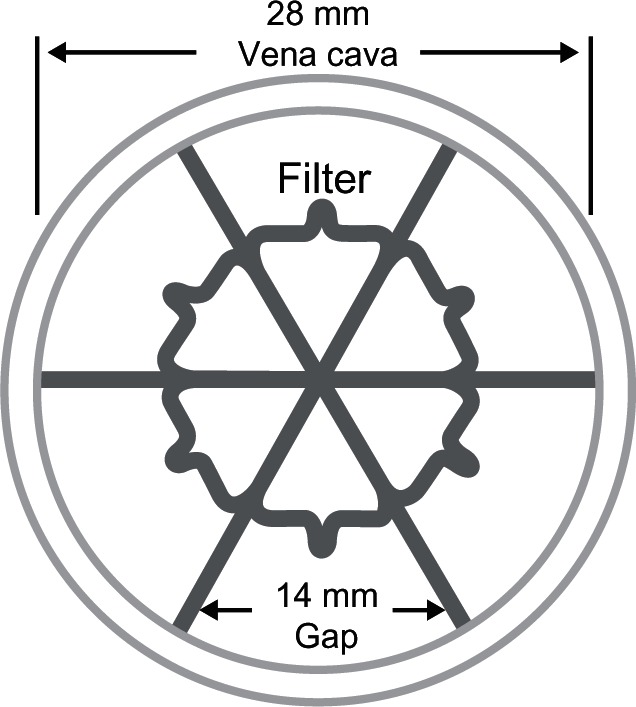
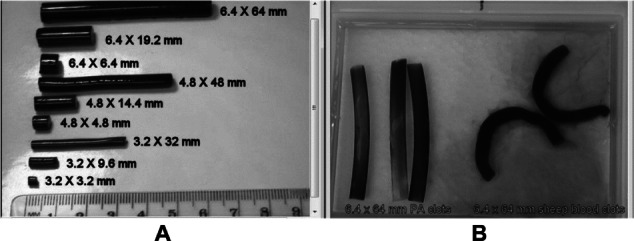
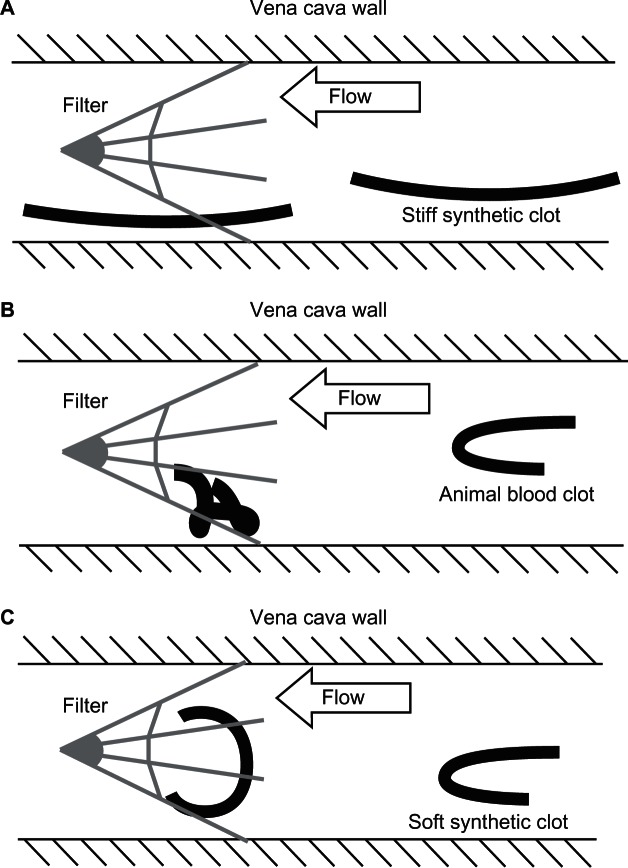
The purpose of this study was first to evaluate the clot capture efficiency and capture location of six currently-marketed vena cava filters in a physiological venous flow loop, using synthetic polyacrylamide hydrogel clots, which were intended to simulate actual blood clots. After observing a measured anomaly for one of the test filters, we redirected the focus of the study to identify the cause of poor clot capture performance for large synthetic hydrogel clots. We hypothesized that the uncharacteristic low clot capture efficiency observed when testing the outlying filter can be attributed to the inadvertent use of dense, stiff synthetic hydrogel clots, and not as a result of the filter design or filter orientation. To study this issue, sheep blood clots and polyacrylamide (PA) synthetic clots were injected into a mock venous flow loop containing a clinical inferior vena cava (IVC) filter, and their captures were observed. Testing was performed with clots of various diameters (3.2, 4.8, and 6.4 mm), length-to-diameter ratios (1:1, 3:1, 10:1), and stiffness. By adjusting the chemical formulation, PA clots were fabricated to be soft, moderately stiff, or stiff with elastic moduli of 805 ± 2, 1696 ± 10 and 3295 ± 37 Pa, respectively. In comparison, the elastic moduli for freshly prepared sheep blood clots were 1690 ± 360 Pa. The outlying filter had a design that was characterized by peripheral gaps (up to 14 mm) between its wire struts. While a low clot capture rate was observed using large, stiff synthetic clots, the filter effectively captured similarly sized sheep blood clots and soft PA clots. Because the stiffer synthetic clots remained straight when approaching the filter in the IVC model flow loop, they were more likely to pass between the peripheral filter struts, while the softer, physiological clots tended to fold and were captured by the filter. These experiments demonstrated that if synthetic clots are used as a surrogate for animal or human blood clots for in vitro evaluation of vena cava filters, the material properties (eg, elastic modulus) and dynamic behavior of the surrogate should first be assessed to ensure that they accurately mimic an actual blood clot within the body.
本研究的目的首先是在生理静脉血流回路中,使用合成聚丙烯酰胺水凝胶凝块(旨在模拟实际血凝块)来评估六种目前市场上销售的腔静脉滤器的凝块捕获效率和捕获位置。在观察到其中一个测试滤器出现测量异常后,我们将研究重点重新定向,以确定大型合成水凝胶凝块凝块捕获性能不佳的原因。我们假设,在测试异常滤器时观察到的异常低凝块捕获效率可归因于无意中使用了致密、坚硬的合成水凝胶凝块,而不是滤器设计或滤器方向的结果。为了研究这个问题,将羊血凝块和聚丙烯酰胺(PA)合成凝块注入包含临床下腔静脉(IVC)滤器的模拟静脉血流回路中,并观察它们的捕获情况。使用各种直径(3.2、4.8和6.4毫米)、长径比(1:1、3:1、10:1)和硬度的凝块进行测试。通过调整化学配方,制备出弹性模量分别为805±2、1696±10和3295±37帕的软、中等硬度或硬的PA凝块。相比之下,新鲜制备的羊血凝块的弹性模量为1690±360帕。异常滤器的设计特点是其金属丝支柱之间存在周边间隙(最大14毫米)。虽然使用大型、坚硬的合成凝块时观察到凝块捕获率较低,但该滤器有效地捕获了类似大小的羊血凝块和软PA凝块。因为在IVC模型血流回路中,较硬的合成凝块在接近滤器时保持笔直,它们更有可能从周边滤器支柱之间通过,而较软的生理性凝块倾向于折叠并被滤器捕获。这些实验表明,如果将合成凝块用作动物或人类血凝块的替代品用于腔静脉滤器的体外评估,则应首先评估替代品的材料特性(如弹性模量)和动态行为,以确保它们准确模拟体内的实际血凝块。