Department of Biology, McGill University, Montreal, Quebec, Canada.
PLoS Biol. 2013;11(5):e1001560. doi: 10.1371/journal.pbio.1001560. Epub 2013 May 14.
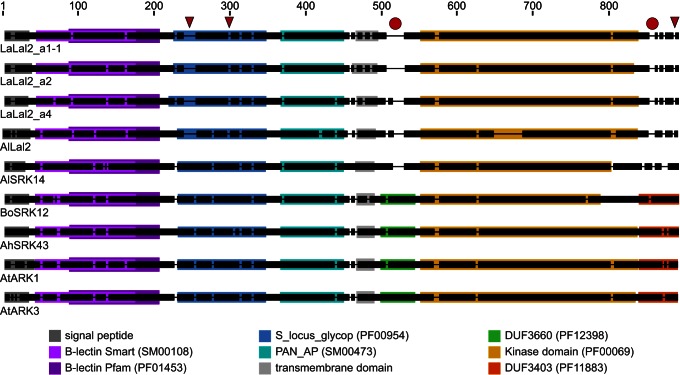
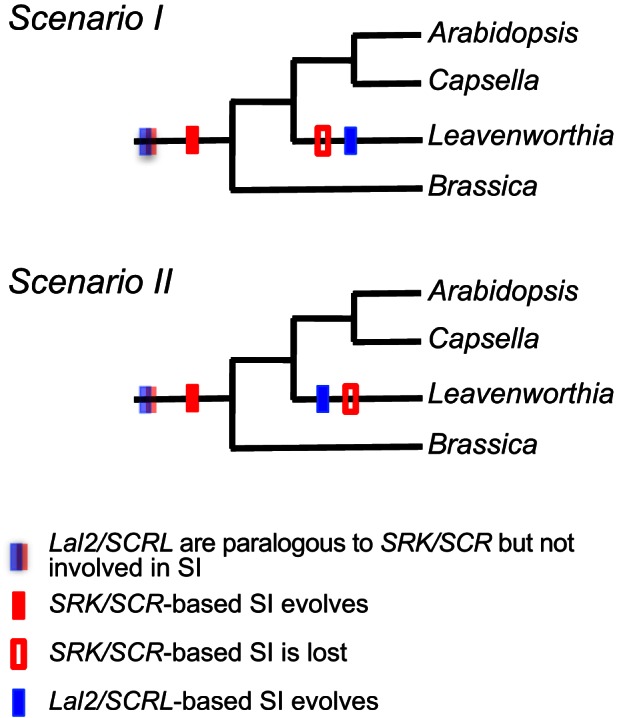
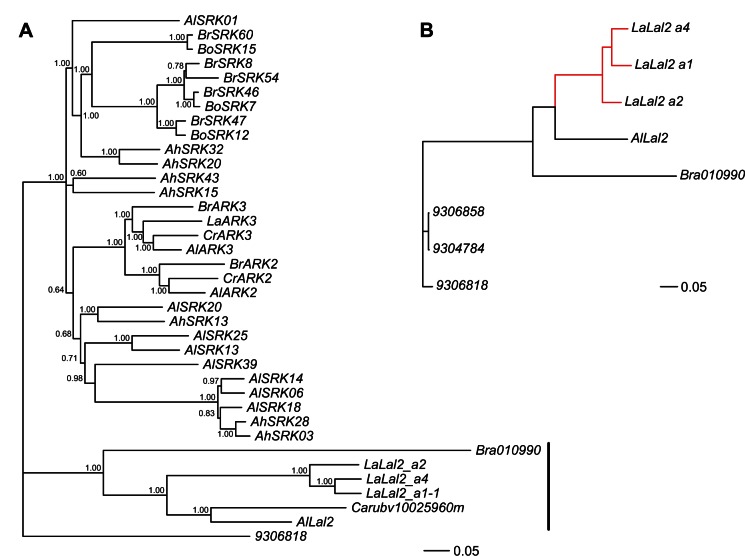
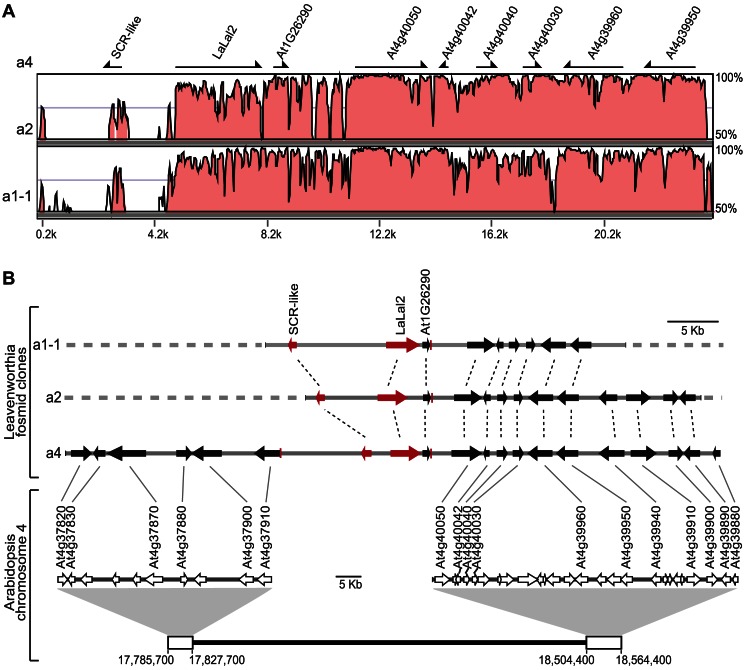
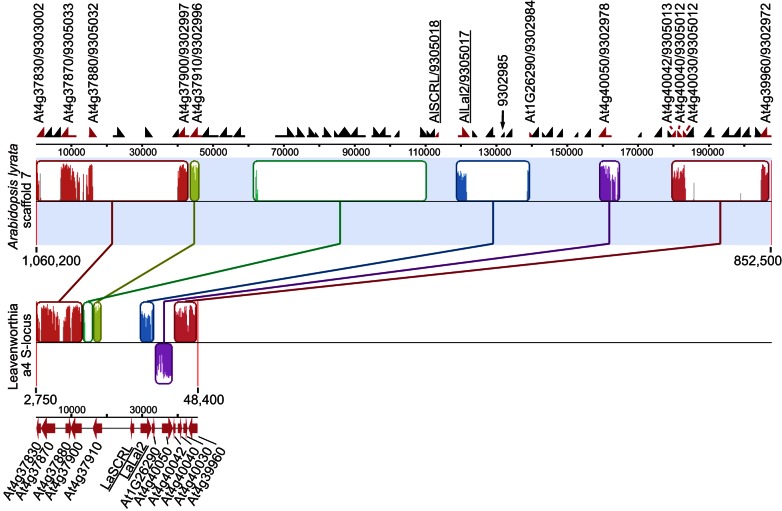
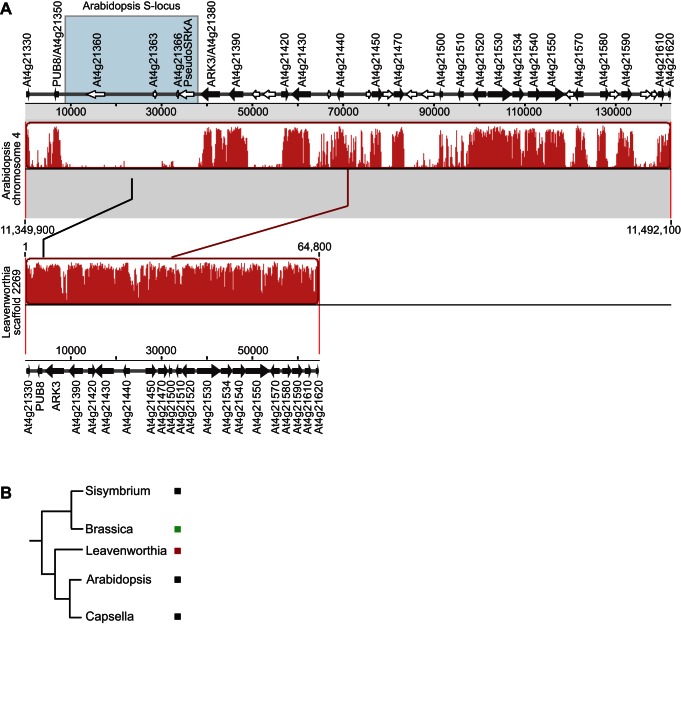
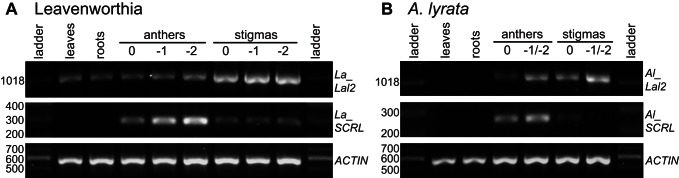
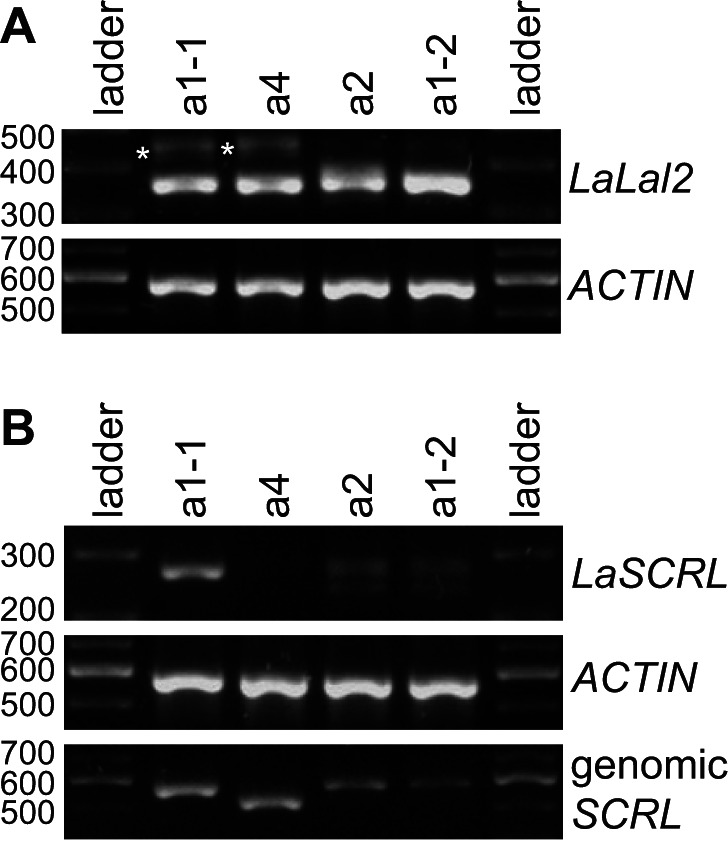
Self-incompatibility (SI) is the flowering plant reproductive system in which self pollen tube growth is inhibited, thereby preventing self-fertilization. SI has evolved independently in several different flowering plant lineages. In all Brassicaceae species in which the molecular basis of SI has been investigated in detail, the product of the S-locus receptor kinase (SRK) gene functions as receptor in the initial step of the self pollen-rejection pathway, while that of the S-locus cysteine-rich (SCR) gene functions as ligand. Here we examine the hypothesis that the S locus in the Brassicaceae genus Leavenworthia is paralogous with the S locus previously characterized in other members of the family. We also test the hypothesis that self-compatibility in this group is based on disruption of the pollen ligand-producing gene. Sequence analysis of the S-locus genes in Leavenworthia, phylogeny of S alleles, gene expression patterns, and comparative genomics analyses provide support for both hypotheses. Of special interest are two genes located in a non-S locus genomic region of Arabidopsis lyrata that exhibit domain structures, sequences, and phylogenetic histories similar to those of the S-locus genes in Leavenworthia, and that also share synteny with these genes. These A. lyrata genes resemble those comprising the A. lyrata S locus, but they do not function in self-recognition. Moreover, they appear to belong to a lineage that diverged from the ancestral Brassicaceae S-locus genes before allelic diversification at the S locus. We hypothesize that there has been neo-functionalization of these S-locus-like genes in the Leavenworthia lineage, resulting in evolution of a separate ligand-receptor system of SI. Our results also provide support for theoretical models that predict that the least constrained pathway to the evolution of self-compatibility is one involving loss of pollen gene function.
自交不亲和性(SI)是植物生殖系统的一种,在这种系统中,自身花粉管的生长受到抑制,从而防止了自交。SI 已经在几个不同的开花植物谱系中独立进化。在所有 Brassicaceae 物种中,已经详细研究了 SI 的分子基础,S 位点受体激酶(SRK)基因的产物在自我花粉排斥途径的初始步骤中起受体作用,而 S 位点富含半胱氨酸(SCR)基因的产物起配体作用。在这里,我们检验了 Brassicaceae 属 Leavenworthia 的 S 位点与该科其他成员之前表征的 S 位点是同源的假设。我们还检验了这样一种假设,即该组的自交亲和性是基于破坏花粉配体产生基因。Leavenworthia 的 S 位点基因序列分析、S 等位基因的系统发育、基因表达模式和比较基因组学分析均支持这两个假设。特别有趣的是,位于拟南芥 lyrata 非 S 位点基因组区域的两个基因,它们具有与 Leavenworthia 的 S 位点基因相似的结构域、序列和系统发育历史,并且与这些基因也具有同源性。这些拟南芥 lyrata 基因类似于构成拟南芥 lyrata S 位点的基因,但它们不能在自我识别中发挥作用。此外,它们似乎属于与祖先 Brassicaceae S 位点基因分化之前从祖先 Brassicaceae S 位点基因分化出来的谱系。我们假设,Leavenworthia 谱系中这些 S 位点样基因发生了新功能化,导致了 SI 的独立配体-受体系统的进化。我们的结果还为理论模型提供了支持,该模型预测,最不限制自我相容性进化的途径是涉及花粉基因功能丧失的途径。