Gossner J, Raab B W, Larsen J, Breitkreuz S
Department of Clinical Radiology, Evangelisches Krankenhaus Göttingen-Weende, An der Lutter 24, 37074 Göttingen, Germany.
Case Rep Orthop. 2013;2013:234278. doi: 10.1155/2013/234278. Epub 2013 Apr 9.
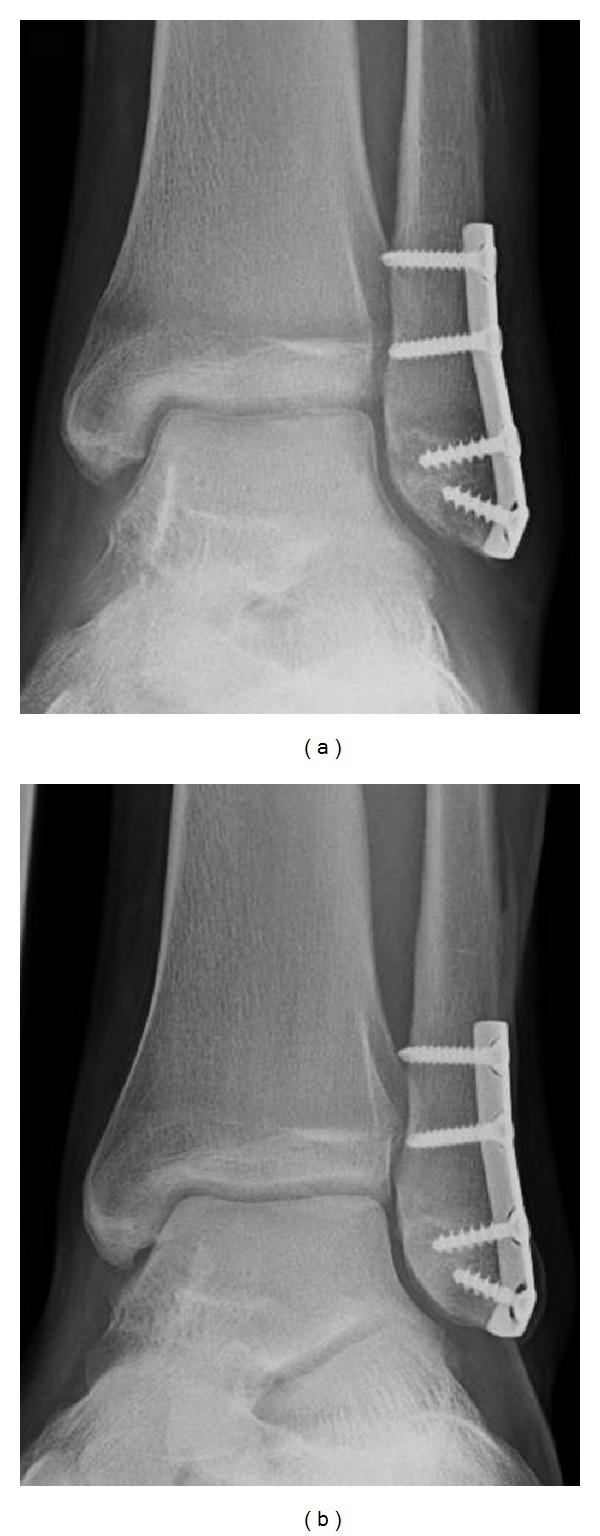
We report about four cases of marked subchondral osteopenia on followup radiography after trauma and prolonged disuse. This localized form of disuse osteopenia has not been reported in details beside the followup imaging of talar neck fractures, where it is known as the "Hawkins sign." Due to its unique morphology, it can be easily recognized as a benign finding in posttraumatic followup imaging and can be morphologically distinguished from severe complications like complex regional pain syndrome type 1 (Sudeck's disease) or periarticular osteopenia in infectious arthritis. It is important for the radiologist and orthopaedic surgeon to be aware of this form of disuse osteopenia in the proper clinical context.
我们报告了4例创伤及长期废用后随访X线片显示明显的软骨下骨质减少的病例。除了距骨颈骨折的随访影像学检查(其中这种情况被称为“霍金斯征”)外,这种局限性废用性骨质减少的形式尚未有详细报道。由于其独特的形态,在创伤后随访影像学检查中很容易被识别为良性表现,并且在形态上可与复杂区域疼痛综合征1型(苏戴克病)或感染性关节炎中的关节周围骨质减少等严重并发症相区分。放射科医生和骨科医生在适当的临床背景下了解这种废用性骨质减少的形式很重要。