School of Life and Health Sciences, Aston University, Birmingham, UK.
Diabetes Care. 2013 Jul;36(7):2098-106. doi: 10.2337/dc13-0182. Epub 2013 May 21.
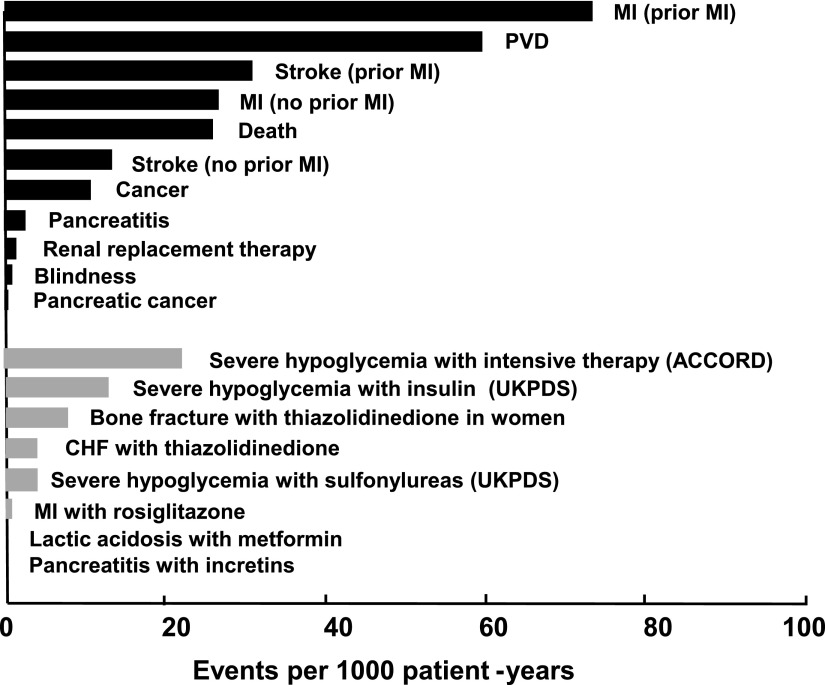
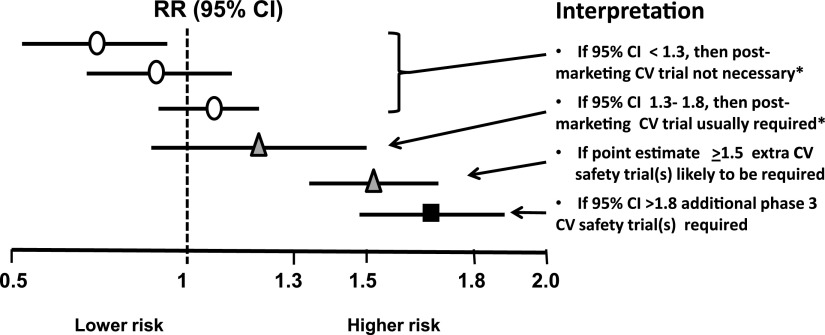
Detection and interpretation of adverse signals during preclinical and clinical stages of drug development inform the benefit-risk assessment that determines suitability for use in real-world situations. This review considers some recent signals associated with diabetes therapies, illustrating the difficulties in ascribing causality and evaluating absolute risk, predictability, prevention, and containment. Individual clinical trials are necessarily restricted for patient selection, number, and duration; they can introduce allocation and ascertainment bias and they often rely on biomarkers to estimate long-term clinical outcomes. In diabetes, the risk perspective is inevitably confounded by emergent comorbid conditions and potential interactions that limit therapeutic choice, hence the need for new therapies and better use of existing therapies to address the consequences of protracted glucotoxicity. However, for some therapies, the adverse effects may take several years to emerge, and it is evident that faint initial signals under trial conditions cannot be expected to foretell all eventualities. Thus, as information and experience accumulate with time, it should be accepted that benefit-risk deliberations will be refined, and adjustments to prescribing indications may become appropriate.
在药物开发的临床前和临床阶段,对不良信号的检测和解释为确定药物在实际情况下使用的适宜性的获益-风险评估提供了信息。这篇综述考虑了一些与糖尿病治疗相关的最新信号,说明了归因因果关系和评估绝对风险、可预测性、预防和控制的困难。个体临床试验必然受到患者选择、数量和持续时间的限制;它们可能引入分配和确定偏倚,并且通常依赖于生物标志物来估计长期临床结果。在糖尿病中,风险观点不可避免地受到新兴合并症和潜在相互作用的影响,这些因素限制了治疗选择,因此需要新的治疗方法和更好地利用现有治疗方法来解决长期糖毒性的后果。然而,对于某些治疗方法,不良反应可能需要几年时间才会出现,显然,在试验条件下微弱的初始信号不能期望预测所有情况。因此,随着时间的推移,信息和经验的积累,应该接受这样一个事实,即获益-风险的审议将得到完善,并且对处方适应症的调整可能变得合适。