National Key Laboratory of Cognitive Neuroscience and Learning, School of Brian and Cognitive Sciences, Beijing Normal University, Beijing, China.
PLoS One. 2013 May 16;8(5):e63183. doi: 10.1371/journal.pone.0063183. Print 2013.
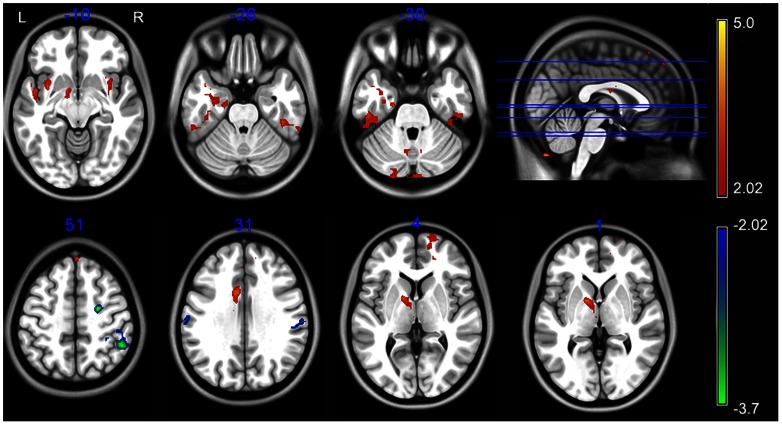
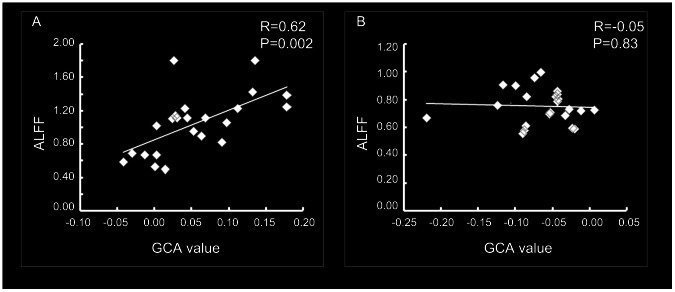
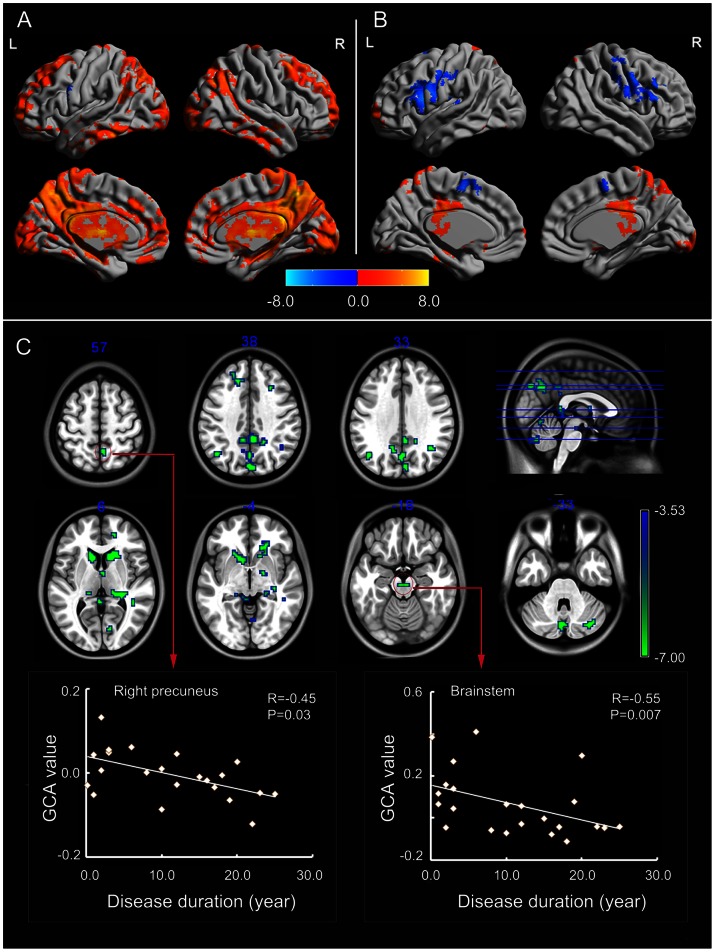
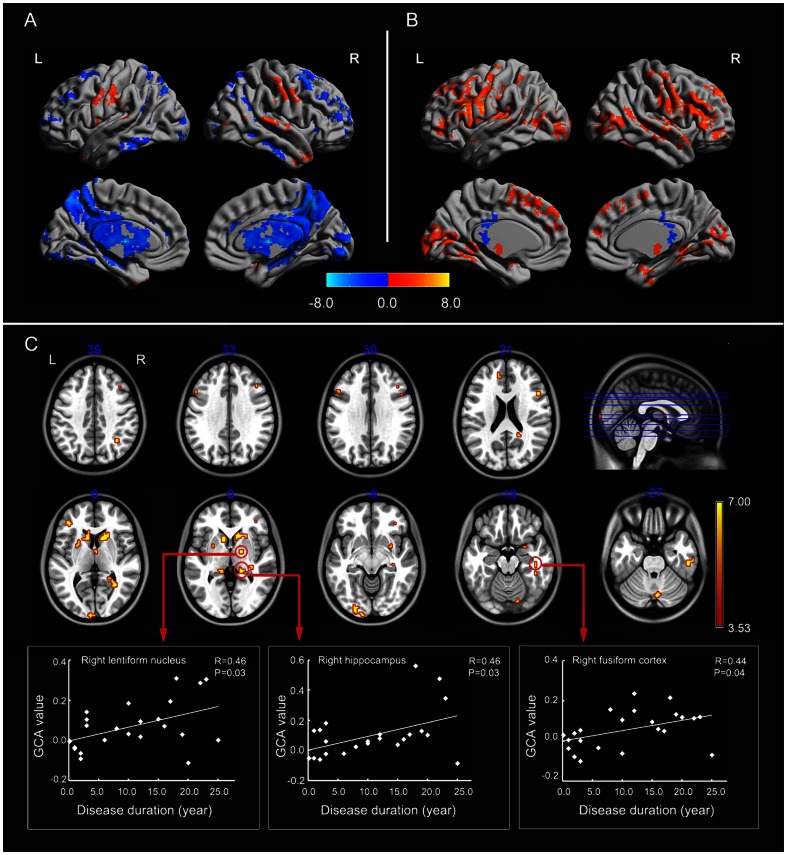
Although mesial temporal lobe epilepsy (mTLE) is characterized by the pathological changes in mesial temporal lobe, function alteration was also found in extratemporal regions. Our aim is to investigate the information flow between the epileptogenic zone (EZ) and other brain regions. Resting-state functional magnetic resonance imaging (RS-fMRI) data were recorded from 23 patients with left mTLE and matched controls. We first identified the potential EZ using the amplitude of low-frequency fluctuation (ALFF) of RS-fMRI signal, then performed voxel-wise Granger causality analysis between EZ and the whole brain. Relative to controls, patients demonstrated decreased driving effect from EZ to thalamus and basal ganglia, and increased feedback. Additionally, we found an altered causal relation between EZ and cortical networks (default mode network, limbic system, visual network and executive control network). The influence from EZ to right precuneus and brainstem negatively correlated with disease duration, whereas that from the right hippocampus, fusiform cortex, and lentiform nucleus to EZ showed positive correlation. These findings demonstrate widespread brain regions showing abnormal functional interaction with EZ. In addition, increased ALFF in EZ was positively correlated with the increased driving effect on EZ in patients, but not in controls. This finding suggests that the initiation of epileptic activity depends not only on EZ itself, but also on the activity emerging in large-scale macroscopic brain networks. Overall, this study suggests that the causal topological organization is disrupted in mTLE, providing valuable information to understand the pathophysiology of this disorder.
尽管内侧颞叶癫痫(mTLE)以内侧颞叶的病理变化为特征,但在颞叶外区域也发现了功能改变。我们的目的是研究致痫区(EZ)与其他脑区之间的信息流。对 23 例左侧 mTLE 患者和匹配对照组进行静息态功能磁共振成像(RS-fMRI)数据记录。我们首先使用 RS-fMRI 信号的低频波动幅度(ALFF)识别潜在的 EZ,然后在 EZ 和整个大脑之间进行体素级 Granger 因果分析。与对照组相比,患者表现出从 EZ 到丘脑和基底节的驱动作用减弱,反馈增强。此外,我们发现 EZ 与皮质网络(默认模式网络、边缘系统、视觉网络和执行控制网络)之间存在因果关系改变。EZ 对右侧顶下小叶和脑干的影响与疾病持续时间呈负相关,而右侧海马、梭状回和豆状核对 EZ 的影响呈正相关。这些发现表明,广泛的脑区与 EZ 表现出异常的功能相互作用。此外,EZ 中增加的 ALFF 与患者 EZ 上增加的驱动效应呈正相关,而对照组则没有。这一发现表明,癫痫活动的启动不仅取决于 EZ 本身,还取决于在大规模宏观脑网络中出现的活动。总的来说,这项研究表明,mTLE 中的因果拓扑组织被破坏,为理解这种疾病的病理生理学提供了有价值的信息。